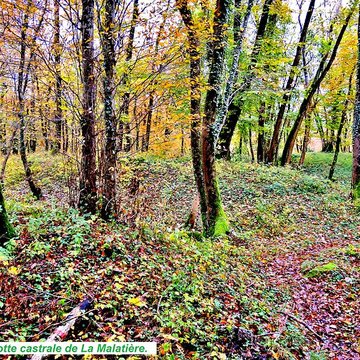
In the year one thousand, to guard against invasions Vikings, rose from "castral mots". The land was taken to foot, which was a ditch. The mots had a diameter at the base of 30 metres, a diameter at the top of 10 metres and a height between 4 and 15 metres. Easy to build, they were built by corvetable farmers.
At the top of the mound was a strong palissade, as well as a wood watchtower prefiguring the donjon. There was an assistant with a duckyard surrounded by a palisade. Traditionally, mott authority is exercised only within the limits of seigneurie, i.e. a kilometre approximately at round. These fortifications were amply sufficient to meet the military challenges of the six and ten centuries.
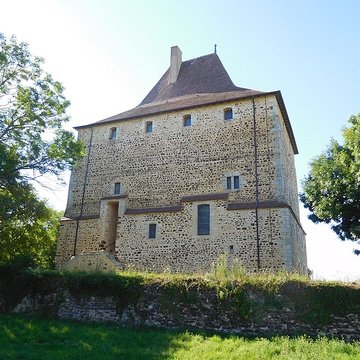
The feudal muff is therefore a primitive castle, a major element of the structure of the feudality in the medieval west. Subsequently, wood was gradually replaced by the "b" stone , particularly to avoid fires.
We felt it was essential to introduce them by region and department.