Logo Musée du Patrimoine

All French heritage classified by regions, departments and cities

Castles and Military Heritage Religious heritage Industrial heritage Heritage of cities Archaeological heritage Museums Attractions and tourist attractions The most beautiful villages The most beautiful monuments in France

Archaeological sites in Poitou-Charente

Retrouvez les 5 archaeological sites in Poitou-Charente recensés par Musée du Patrimoine de France.
Nous proposons également plusieurs hébergements en Poitou-Charente
Région Poitou-Charente

Sélection de 8 archaeological sites sur 5 en Poitou-Charente

The prehistoric site of the Quina in Gardes-le-Pontaroux
Sites archéologique
16320 Gardes-le-Pontaroux

The prehistoric site of the Quina, in Gardes-le-Pontaroux (Charente), is a major paleolithic deposit occupied by the Moustarian and the Aurignacian, famous for its flint tools and Neanderthal remains classified as Historic Monument in 1984.
Prehistoric transfer from Camp aux Anglais to Mouthiers-sur-Boëme
Éperon barré
16440 Mouthiers-sur-Boëme

The prehistoric break-up of Camp aux Anglais in Mouthiers-sur-Boëme is a barred spur occupied by Neolithic and Bronze Age, showing prehistoric fortified habitat in New Aquitaine.
Archaeological excavation site
Vestiges Gallo-romain
86320 Civaux

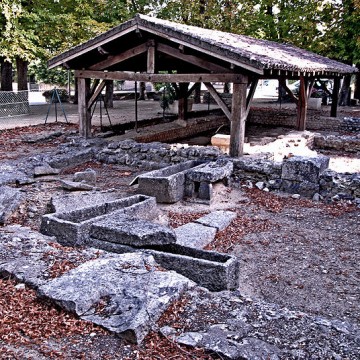
The archaeological excavation site of Civaux, in New Aquitaine, reveals remains of the 2nd and 5th centuries, including a Roman sanctuary and a Merovingian necropolis near the Palaeo-Christian church of the village.
Roc-aux-Sorciers d'Angles-sur-l'Anglin
Sites archéologique
86260 Angles-sur-l'Anglin

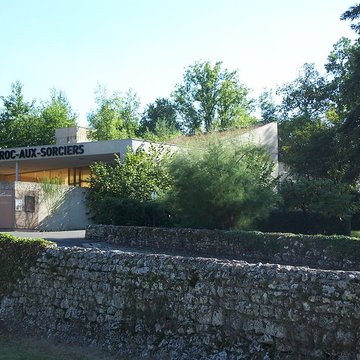
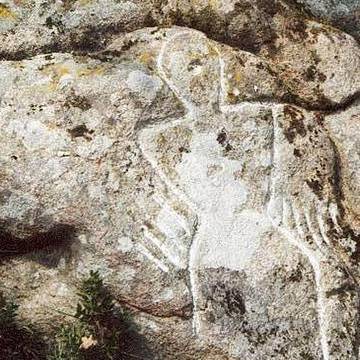
Roc-aux-Sorciers, a rock shelter decorated with 14 000-year-old Magdalenian sculptures, is located in Angles-sur-l'Anglin, New Aquitaine. This exceptional prehistoric site combines habitat and monumental parietal art.
Engraved rocks of Saint-Aubin-de-Baubigné in Mauléon
Sites archéologique
79700 Mauléon

The engraved rocks of Saint-Aubin-de-Baubigné at Mauléon are archaeological remains of the Iron Age, located in New Aquitaine. These carved blocks bear witness to an ancient occupation in the Deux-Sèvres.