Logo Musée du Patrimoine

All French heritage classified by regions, departments and cities

Castles and Military Heritage Religious heritage Industrial heritage Heritage of cities Archaeological heritage Museums Attractions and tourist attractions The most beautiful villages The most beautiful monuments in France

Churches of France

The churches belong to our collective memory. Each of us is attached to the church where he married, where he baptized his children, where he buried his parents. This is undoubtedly one of the most interesting heritages that can be visited. The memory of living together in a primitive community.

The term church is a generic term that refers to a Christian place of worship. So all the cathedrals, basilicas, abbeys, chapels... are also churches. In practice, therefore, a church is referred to as a "b" parish church, "the church of a village or neighbourhood of a city."

The Christians originally met in private mansions (Domus ecclesiae). From the fourth century on, the Christian religion became the official religion of the Roman Empire. Christians can therefore build public buildings to bring together the faithful (ecclesia or churches).

The construction of churches respond to different architectural styles:

  • Paleo-Christian churches ending with the Western Roman Empire in 476.
  • Preroman churches until the early Romanesque arts, around the year one thousand.
  • Romanesque churches from the year one thousand to 1150 (First Romanesque, Romanesque and Romano-Gothic).
  • Gothic churches from 1150, until the renaissance in 1500, with primitive gothic until 1230, the gothic radiating until 1400, finally the flamboyant and late gothic, which will coexist with the renaissance style until 1600.
  • Renaissance period, often mixed with flamboyant Gothic from 1500 to 1600.
  • Classical churches follow the classical period of the second renaissance and extends from 1620 to 1750. This period coincides with the Baroque period of the counter-reform. font-family: non-serif;">The neo-Gothic, neo-classical and neo-Roman churches will be built during the period 1750-1900.
  • Modern churches from 1900 to the present day. 

Relais-Historiques de France has identified more than 8800 churches classified as MH by regions, departments, but also according to the 6 sub-categories opposite.

font data-colorN/font

Sélection de 8 churches classified sur 8830 en France

Église Sainte-Marie-Madeleine de Saint-Sorlin-en-Bugey
Eglise
01150 Saint-Sorlin-en-Bugey

The Sainte-Marie-Madeleine church of Saint-Sorlin-en-Bugey, a Romanesque building rebuilt in primitive Gothic, stands in the Ain, in Auvergne-Rhône-Alpes, with 14th century lateral chapels and an apse of the 15th century.
Notre-Dame-de-Romigier de Manosque Church
Art roman provençal
04100 Manosque

The Church of Notre-Dame-de-Romigier, a 13th-XIVth-century Romanesque building in Manosque, was partially rebuilt in the 17th-XIXth centuries. Classified as a historical monument in 1980, it houses a Preroman black Virgin and a Paleo-Christian sarcophagus.
Assumption of Lhuis Church
Eglise romane
01680 Lhuis

The church of the Assumption of Lauis, a 12th century religious building, stands in the Ain on the border of Bugey and Dauphiné, under the name of Notre-Dame.
Saint Peter's Church of Loudun
Eglise gothique
86200 Loudun

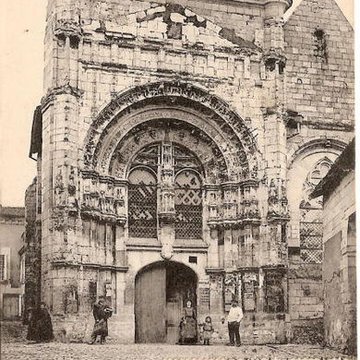
The Saint-Pierre de Loudun church, built between the 12th and 16th centuries, is a Catholic monument located in Vienna, New Aquitaine, marked by varied architectural styles and a turbulent history.
Church of the Nativity of the Holy Virgin of Bonneil
Eglise romane et gothique
02400 Bonneil

The church of the Nativity-de-la-Sainte-Vierge, a Gothic building of the twelfth and thirteenth centuries in Bonneil (Aisne), presents a nave, a transept and a medieval choir, partially rebuilt after 1914-1918.
Saint-Étienne de Frans Church
Eglise
01480 Frans

The church of Saint-Étienne de Frans, built between the 2nd half of the 15th and the 1st half of the 16th century, is a religious monument located in Frans, Ain, in Auvergne-Rhône-Alpes.
Church of Saint Sulpice of Pierrefonds
Architecture gothique flamboyant
60350 Pierrefonds

Saint Sulpice de Pierrefonds church, a Gothic and Romanesque building from the 13th to the 16th century, is distinguished by its flamboyant double nave and its medieval crypt with a thermal spring. Located in the Oise, it combines seigneurial history and religious heritage in Hauts-de-France.
Saint Antoine d'Ouroux Church
Eglise romane
69860 Deux-Grosnes

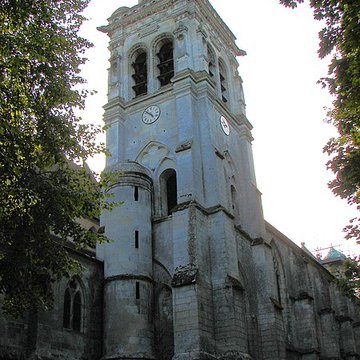
The Saint-Antoine d'Ouroux church, built in the 4th quarter of the 12th century, is a historical monument located in Deux-Grosnes, in the Rhône. Its classified bell tower bears witness to the Romanesque architecture of Beaujolais.
Who are we? Contact Data and GDPR Legal information Support the site

© 2014-2026

    Contact
  • Eolia Tech
    58 rue Lucie
    94600 Choisy Le Roi