Logo Musée du Patrimoine

All French heritage classified by regions, departments and cities

Castles and Military Heritage Religious heritage Industrial heritage Heritage of cities Archaeological heritage Museums Attractions and tourist attractions The most beautiful villages The most beautiful monuments in France

Churches of France

The churches belong to our collective memory. Each of us is attached to the church where he married, where he baptized his children, where he buried his parents. This is undoubtedly one of the most interesting heritages that can be visited. The memory of living together in a primitive community.

The term church is a generic term that refers to a Christian place of worship. So all the cathedrals, basilicas, abbeys, chapels... are also churches. In practice, therefore, a church is referred to as a "b" parish church, "the church of a village or neighbourhood of a city."

The Christians originally met in private mansions (Domus ecclesiae). From the fourth century on, the Christian religion became the official religion of the Roman Empire. Christians can therefore build public buildings to bring together the faithful (ecclesia or churches).

The construction of churches respond to different architectural styles:

  • Paleo-Christian churches ending with the Western Roman Empire in 476.
  • Preroman churches until the early Romanesque arts, around the year one thousand.
  • Romanesque churches from the year one thousand to 1150 (First Romanesque, Romanesque and Romano-Gothic).
  • Gothic churches from 1150, until the renaissance in 1500, with primitive gothic until 1230, the gothic radiating until 1400, finally the flamboyant and late gothic, which will coexist with the renaissance style until 1600.
  • Renaissance period, often mixed with flamboyant Gothic from 1500 to 1600.
  • Classical churches follow the classical period of the second renaissance and extends from 1620 to 1750. This period coincides with the Baroque period of the counter-reform. font-family: non-serif;">The neo-Gothic, neo-classical and neo-Roman churches will be built during the period 1750-1900.
  • Modern churches from 1900 to the present day. 

Relais-Historiques de France has identified more than 8800 churches classified as MH by regions, departments, but also according to the 6 sub-categories opposite.

font data-colorN/font

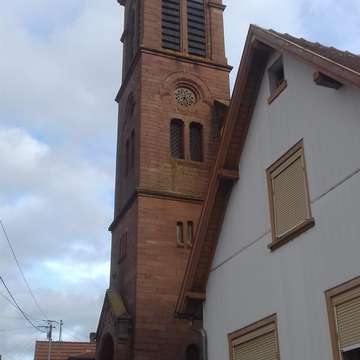
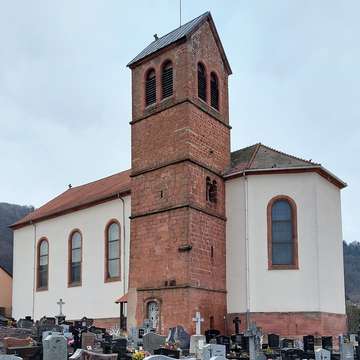
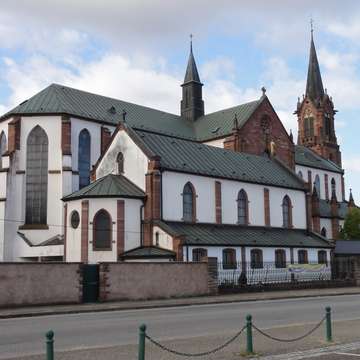
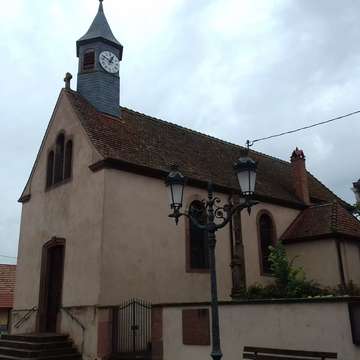
Sélection de 8 churches classified sur 8830 en France

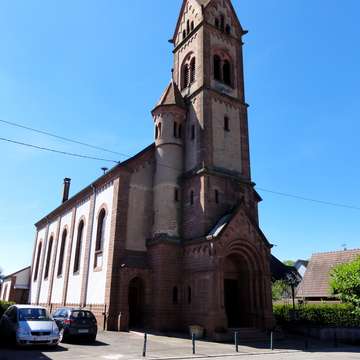
Church of Saint James-le-Majeur of Gundershoffen

67110 Gundershoffen

The church of Saint-Jacques-le-Majeur de Gundershoffen, a neo-Roman building of the early twentieth century, stands in the north of Alsace. It replaces an old simultaneous church, symbol of local religious tensions.
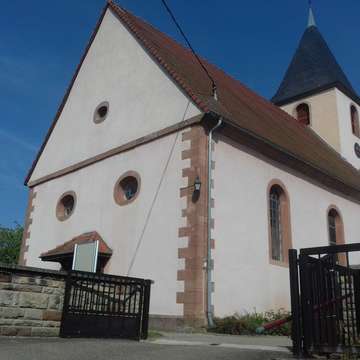
Church of St. Vit of Griesbach

67110 Gundershoffen

The Church of St. Vit of Griesbach, located in Gundershoffen, Alsace, is a 15th century neo-Roman religious building, still shared between Catholic and Lutheran cults today.
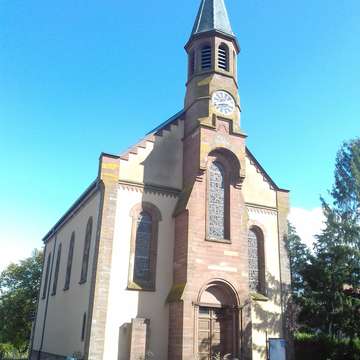
Saint-Wendelin Church of Eberbach

67110 Gundershoffen

The St.Wendelin Church of Eberbach, located in Gundershoffen in the Greater East Region, is a religious building whose exact period of construction remains undetermined.
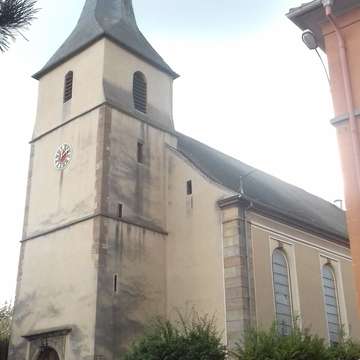
Saint Michael's Church of Gunstett

67360 Gunstett

Gunstett St. Michael's Church is a religious building located in the village of Gunstett in the Greater East Region. Its history and construction period remain to be clarified.
Church of Saint Martin of Goersdorf

67360 Gœrsdorf

The Church of St Martin of Goersdorf is a religious building located in the commune of Goersdorf, in the Greater East Region. Its precise history remains to be documented.
Church of Saint Matthieu of Haegen

67700 Haegen

The Church of Saint-Matthew of Haegen is a religious building located in the commune of Haegen, in the Greater East Region. Its history and construction period remain to be clarified.
Basilica Notre-Dame de Marienthal de Haguenau

67500 Haguenau

The Notre-Dame de Marienthal Basilica, located in Haguenau (Bas-Rhin), is the oldest Marian shrine in Alsace, founded in the 13th century by hermits of the Guillemites. This historic pilgrimage site, marked by centuries of devotion and unrest, houses two miraculous statues of the Virgin and a rich history linked to Mary Leszczynska, Queen of France.
Saint-Wendelin Church of Harthouse

67500 Haguenau

Harthouse's Saint-Wendelin Church, located in Haguenau in the Greater East Region, is a religious building whose exact period of construction remains undetermined.