Logo Musée du Patrimoine

All French heritage classified by regions, departments and cities

Castles and Military Heritage Religious heritage Industrial heritage Heritage of cities Archaeological heritage Museums Attractions and tourist attractions The most beautiful villages The most beautiful monuments in France

Protestant churches in Charente-Maritime

Retrouvez les 5 Protestant churches in Charente-Maritime recensés par Musée du Patrimoine de France.
Nous proposons également plusieurs hébergements en Charente-Maritime
Département

Sélection de 8 protestant churches sur 5 en Charente-Maritime

Protestant Temple of La Rochelle
Protestant Temple
17000 La Rochelle

The Protestant temple of La Rochelle, a 17th-century convent of the Recollets, is an emblematic place of worship located on Rue Saint-Michel, a witness to the religious history of Rochelais and the Reformation in New Aquitaine.
Protestant Temple of Cozes
Protestant Temple
17120 Cozes

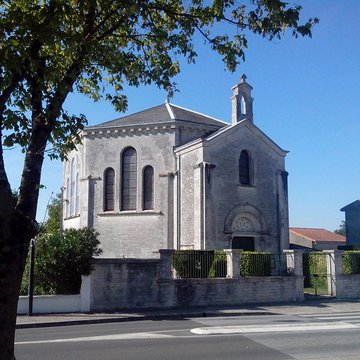
The Protestant temple of Cozes, built in the early 19th century in this commune of Charente-Maritime, is a rare example of Protestant religious architecture in the Poitou-Charentes region, marked by its neoclassical facade and its original liturgical furniture.
Protestant Temple of Saint-Sulpice-de-Royan
Protestant Temple
17200 Saint-Sulpice-de-Royan

The Protestant temple of Saint-Sulpice-de-Royan, built in the 3rd quarter of the 19th century, is a rare neo-Roman octagonal building located in New Aquitaine, famous for its unique architecture and history linked to the Reformation.
First Protestant Temple of Saints
Protestant Temple
17100 Saintes

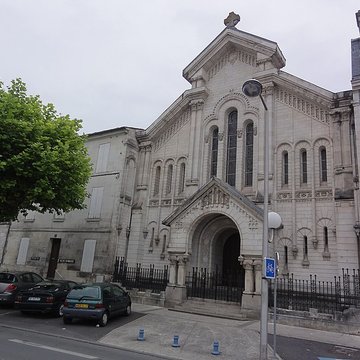
The Protestant temple of Saintes, built in the early 20th century in this town of Charente-Maritime, combines neo-Roman, neo-Byzantine and art nouveau styles. Ranked a historic monument in 1998, it bears witness to a Protestant community active since the 16th century.
Protestant Temple of Royan
Protestant Temple
17200 Royan

The Protestant temple of Royan, a modernist building of the mid-20th century, stands in this town of New Aquitaine. Reconstructed after 1945, it combines concrete, stone and metal in a clean style emblematic of post-war architectural renewal.