Logo Musée du Patrimoine

All French heritage classified by regions, departments and cities

Castles and Military Heritage Religious heritage Industrial heritage Heritage of cities Archaeological heritage Museums Attractions and tourist attractions The most beautiful villages The most beautiful monuments in France

Canal du Midi

The occitan heritage is an issue, the Canal du Midi consists of 34 works classified as historical monuments. Among these you will find canal bridges, simple, round, double, triple, quadruple locks, spanners, weirs, aqueducts, tunnels,...

The south-south canal connects Toulouse to the Mediterranean Sea since the 17th century. From the 19th century, the Garonne Canal, which links Bordeaux to Toulouse, extended the Canal du Midi. All of the two channels are referred to as the "B" channel of the Two Seas. It thus provided a waterway from the Atlantic Ocean to the Mediterranean Sea.

Colbert authorized the commencement of work in October 1666. The site lasted from 1666 to 1681, during the reign of Louis XIV, under the supervision of Pierre-Paul Riquet. Since 1996, it has been included in the UNESCO World Heritage List. 

It was considered essential to present the books to you by region and by department.

Find out more about the midday channel with Wikipedia.

le Industrial heritage of France

Canal du Midi

Sélection de 8 canal du Midi works sur 34 en France

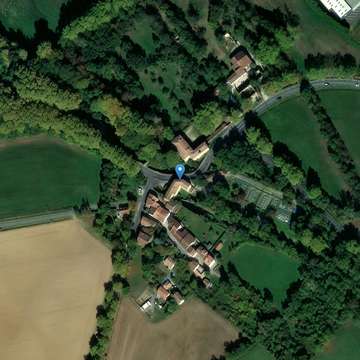
Canal du Midi : Epanchoir du Fer de Mulet
Canal du midi
34310 Capestang

The Epanchoir du Fer de Mulet, a 17th century hydraulic structure, is part of the Canal du Midi in Capestang, Occitanie. It illustrates the engineering of this period for water management.
Canal du Midi : intake of Pont-Crouzet

81540 Sorèze

The intake of Pont-Crouzet, a key element of the Canal du Midi, dates from the 18th and 19th centuries and is located in Sorèze, Occitanie. Hydraulic work modified over the centuries, it feeds the channel of the Plain.
Canal du Midi

11700 Azille

The Canal du Midi, a 17th century hydraulic masterpiece located in Occitanie, links Toulouse to the Mediterranean. Ranked at UNESCO, this 241 km royal canal, designed by Pierre-Paul Riquet, revolutionized river transport in France.
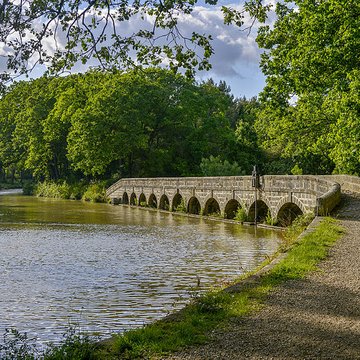
Canal du Midi : Pont-channel de l'Orbiel
Canal du midi
11800 Trèbes

The canal bridge of the Orbiel, built at the end of the 17th century in Trèbes, is an aqueduct of the Canal du Midi crossing the river Orbiel. Ranked a historic monument in 1950, it illustrates the hydraulic engineering of Vauban.
Canal du Midi : Spanchoir de l'Argent-Double
Canal du midi
11700 La Redorte

The expanse of the Silver-Double, built in the 17th century in La Redorte, Occitanie, is a hydraulic structure of the Canal du Midi allowing to evacuate excess water. It has been listed as a historical monument since 1996.
Canal du Midi : Triple lock of Fontfile
Canal du midi
11700 Blomac

The triple lock of Fontfile, built around 1674 on the Canal du Midi, is a set of three locks located in Blomac, Occitanie. This 17th century historical monument illustrates the hydraulic engineering of Pierre-Paul Riquet.
Canal du Midi : Lock bridge and lock house of Gardouch
Canal du midi
31290 Gardouch

The Gardouch Lock, built in the 18th century on the Canal du Midi, is a hydraulic structure located in Gardouch in the Haute-Garonne, including a lock house and a canal bridge emblematic of the engineering period.
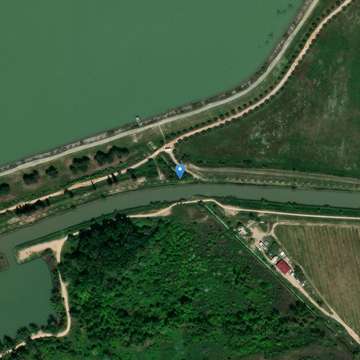
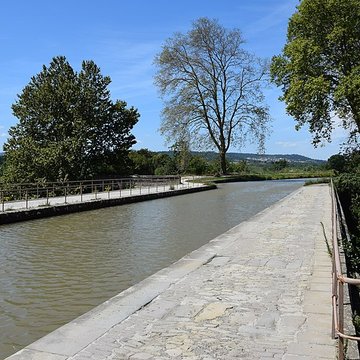
Canal du Midi : Pont-canal de l'Orb
Canal du midi
34500 Béziers

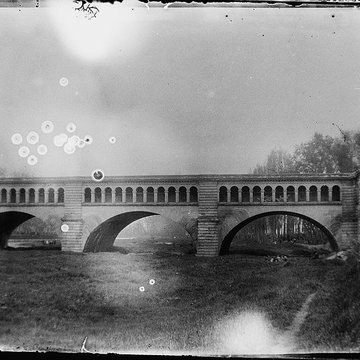
The canal bridge of the Orb, built in the 19th century in Béziers, is a major work of the Canal du Midi allowing to cross the river Orb in Occitanie.