Logo Musée du Patrimoine

All French heritage classified by regions, departments and cities

Saint-Maur de Bleurville Abbey dans les Vosges

Patrimoine classé
Patrimoine religieux
Abbatiale
Eglise romane

Saint-Maur de Bleurville Abbey

    Le Bourg
    88410 Bleurville

Timeline

Haut Moyen Âge
Moyen Âge central
Bas Moyen Âge
Renaissance
Temps modernes
Révolution/Empire
XIXe siècle
Époque contemporaine
1000
1100
1200
1700
1800
1900
2000
1026-1050
Construction of the abbey
6 juillet 1050
Consecration by Leo IX
1128
Departure of Benedictines
1790
Revolutionary closure
1974-1990
Restoration by Father Pierrat
1986
Historical Monument
Aujourd'hui
Aujourd'hui

Key figures

Renard II - Count of Toul and founder Abbey commander (XI century).
Léon IX - Pope consecrator Consecrate the church in 1050.
Mérannus - Clerc of the 10th century Translate the relics of martyrs.
Abbé Paul Pierrat - Restaurant restaurant (XX century) Saved the abbey between 1974-1990.
Berthaire et Athalein - Martyrs comtois Relics venerated in the abbey.

Origin and history

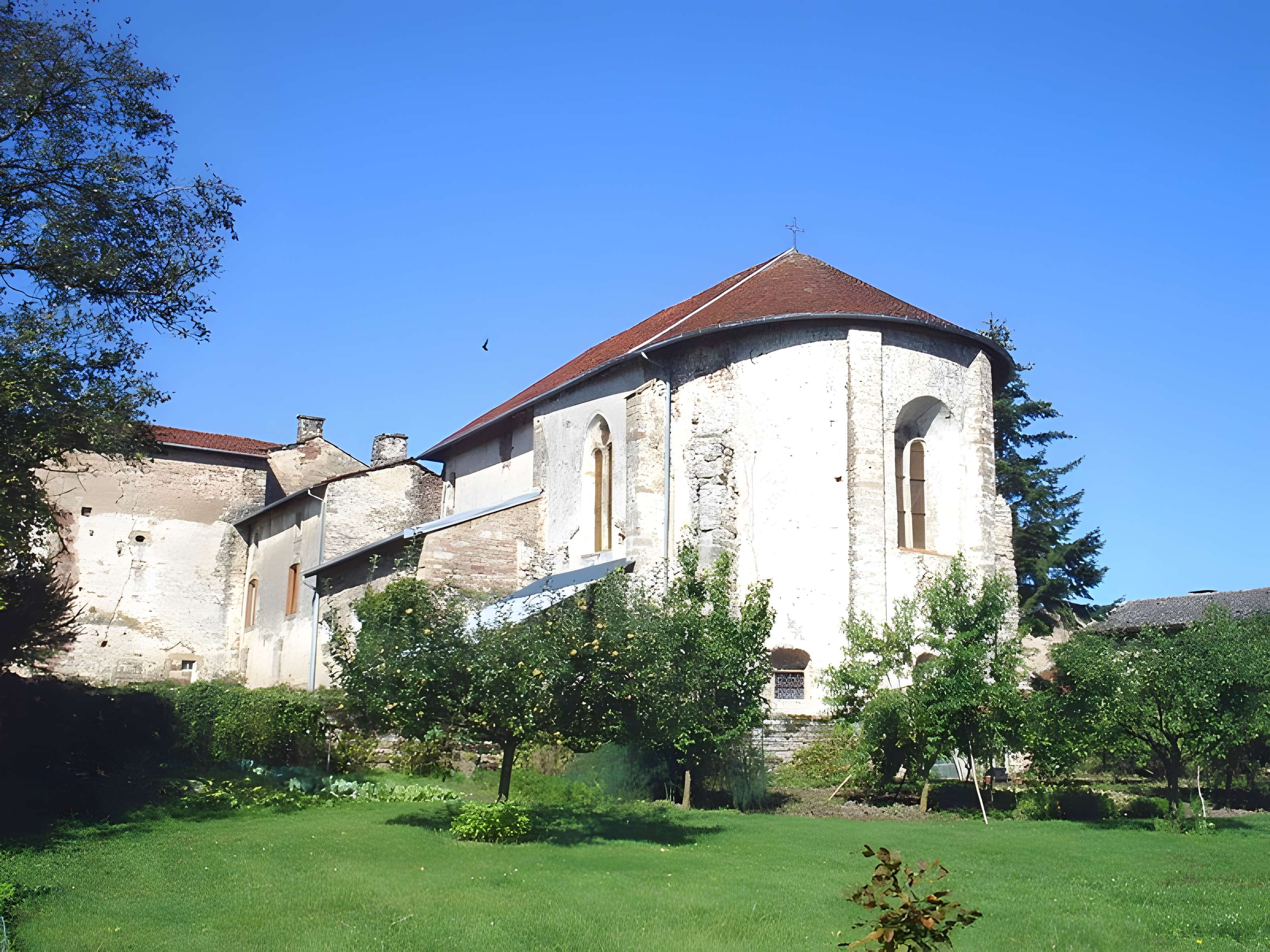
The Abbey of Saint-Maur de Bleurville, located in the Vosges department (Grand Est region), finds its origins in the early 11th century. Built between 1026 and 1050 on the foundations of an older Carolingian church, it was consecrated by Pope Leo IX in 1050. Founded by Renard II, Count of Toul and Lord of Bleurville, it initially houses a community of Benedictines charged with venerating the relics of the Comte martyrs Berthaire and Athalein, translated in the 10th century since Faverney (Haute-Saône). The Sabbath becomes a major pilgrimage site, with a liturgical feast celebrated every July 6.

In 1128, the nuns left the monastery, which became a priory dependent on Saint-Mansuy Abbey in Toul. Benedictine monks remained there until the French Revolution in 1790. The crypt, dated from the first quarter of the 11th century, is a rare example of primitive Romanesque architecture, with its columns of various shapes (round, square, octagonal) and its three windows in full hang. The high church, partially rebuilt in the 15th and 16th centuries, dominates a sloped terrain, integrating Gothic and Renaissance elements.

In the 18th century, the priory declined after its attachment to Varangéville-Saint-Nicolas-de-Port, its revenues being diverted to the Basilica of Saint-Nicolas-de-Port and the Primatiale of Nancy. The Revolution led to the permanent closure of the monastery. In the 19th century, the abbey, threatened with ruin, was saved between 1974 and 1990 by Father Paul Pierrat. Today, the site belongs to the association Les Amis de Saint-Maur, which has set up a museum of religious life and popular piety in the former prioral home.

Archaeological excavations revealed earlier traces of occupation: a prehistoric tool-sized workshop (300,000 B.C.) near the Rocks of Mulot, a place of neolithic worship dedicated to the sun, and Gallo-Roman substructures under the Prince's Square, vestige of a villa with thermal baths (I-II centuries). These discoveries highlight the strategic importance of Bleurville, located at the crossroads of the Lorraine, Champagne and Franc-Comtoise roads, and marked by a cultural continuity since Prehistory.

In 1986, the Abbey was listed as a Historic Monument and is distinguished by its composite architecture, combining primitive, Gothic and Renaissance novels. The crypt, particularly remarkable, measures 10 meters side by side with an apse of 5 meters in diameter. Its rough square columns and summary capitals are evidence of rapid construction, perhaps linked to the urgency of protecting relics. Nearby, the Priory Saint-Berthaire (18th century), former home of the monks, illustrates the traditional Lorrain architecture with its "foil" (room of appartment) and its woodwork.

The site is part of a broader historical landscape, including the Rocks of the Mulot (neolithic and medieval crosses), the oak of the Saints (multisacular tree linked to the relics of martyrs), and Gallo-Roman remains. These elements underscore the spiritual and economic role of Bleurville, formerly linked to the Darney Forest's glasswork and pilgrimages. Today, the abbey remains an active cultural place, welcoming concerts and exhibitions organized by the Association des Amis de Saint-Maur.

External links