Construction of menhir Néolithique (≈ 4100 av. J.-C.)
Estimated period of erection of the monument.
4 juin 1962
MH classification
MH classification 4 juin 1962 (≈ 1962)
Protection for historical monuments.
Aujourd'hui
Aujourd'hui
Aujourd'hui Aujourd'hui (≈ 2025)
Position de référence.
Heritage classified
Menhir de Lanvar (cad. AC 392): by order of 4 June 1962
Key figures
Charles-Tanguy Le Roux - Archaeologist
Qualifies the menhir as a neolithic "marker".
Origin and history
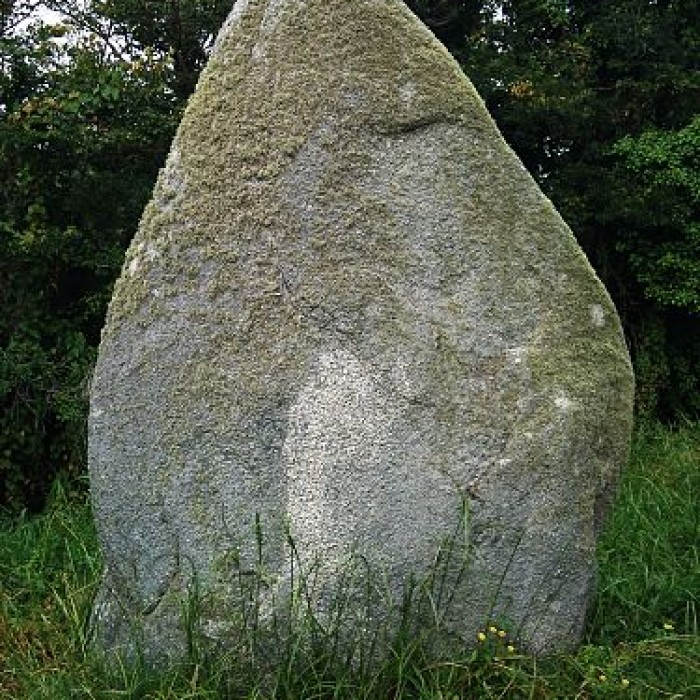
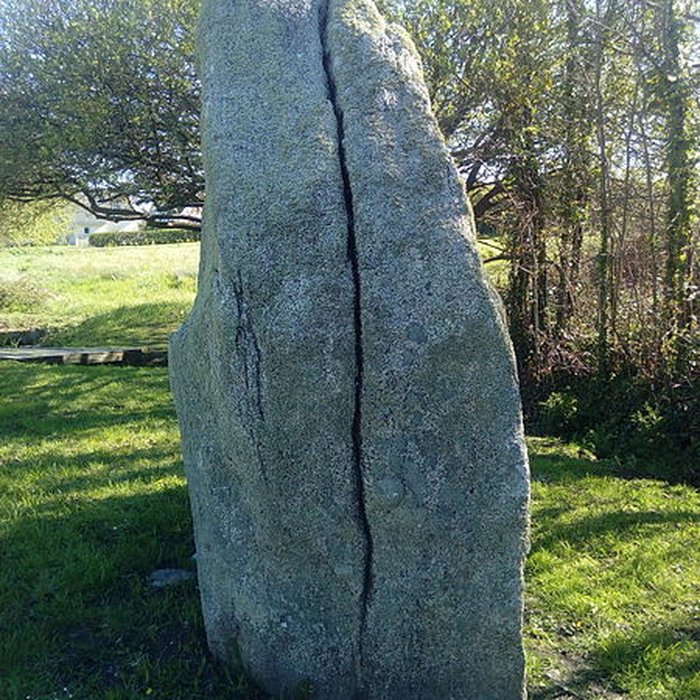
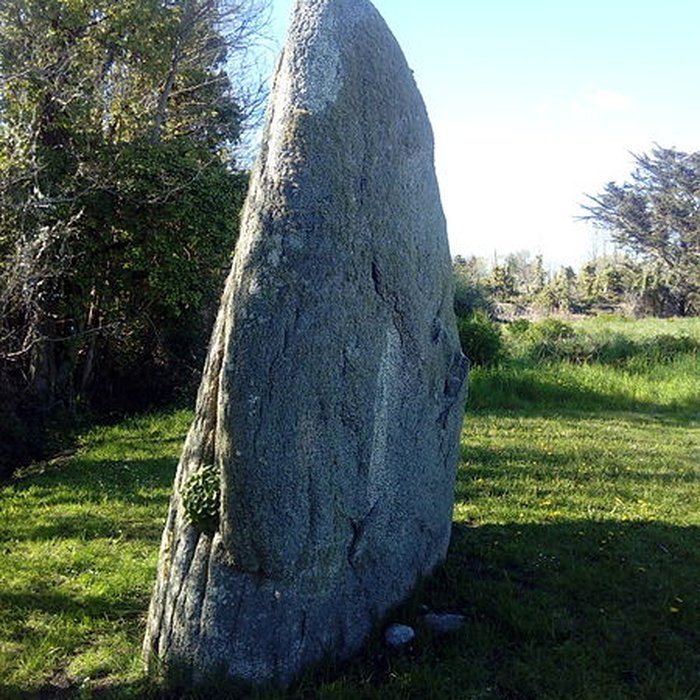
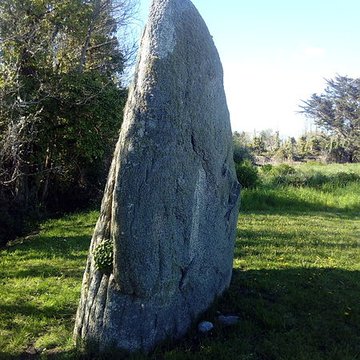
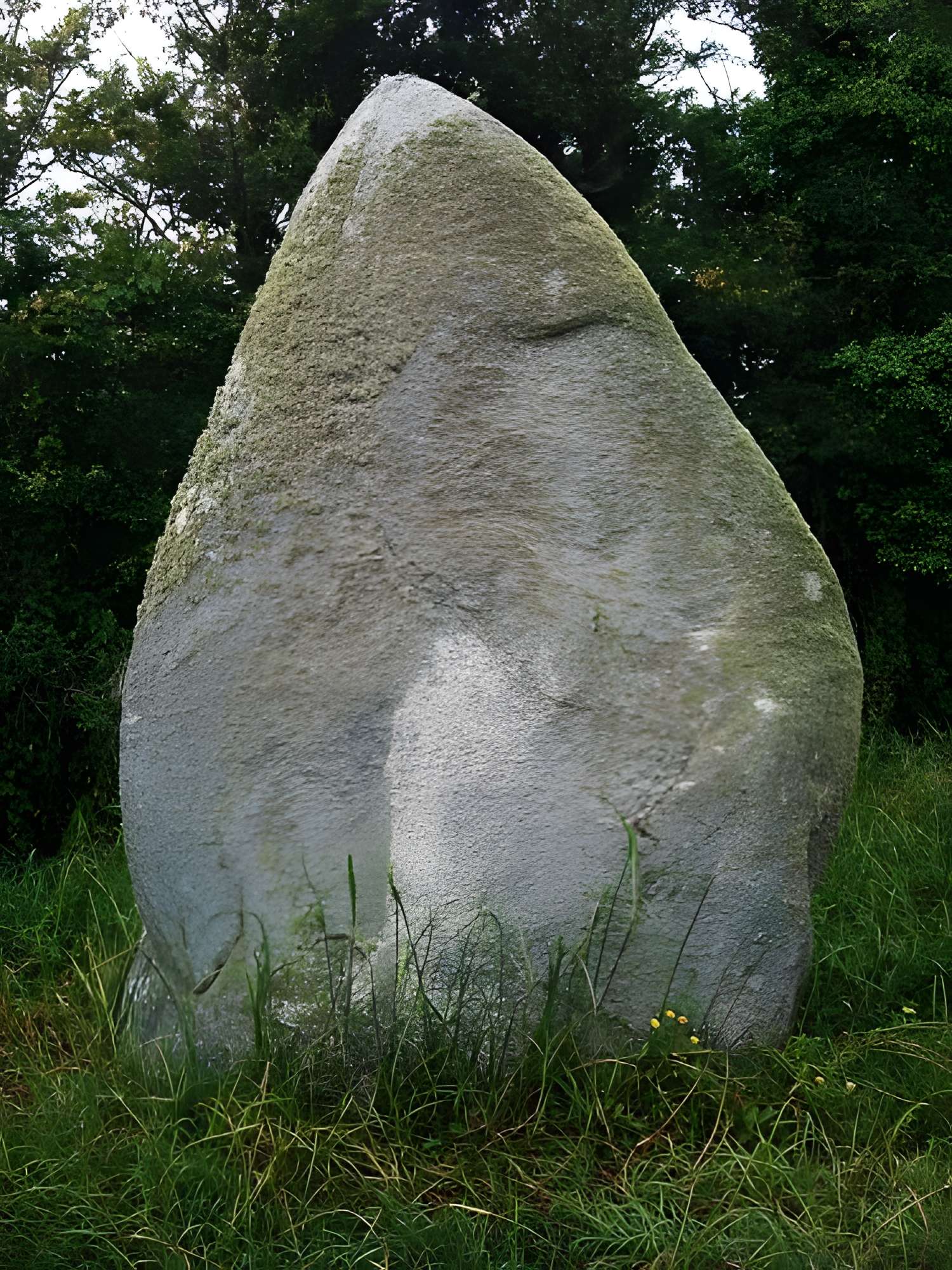
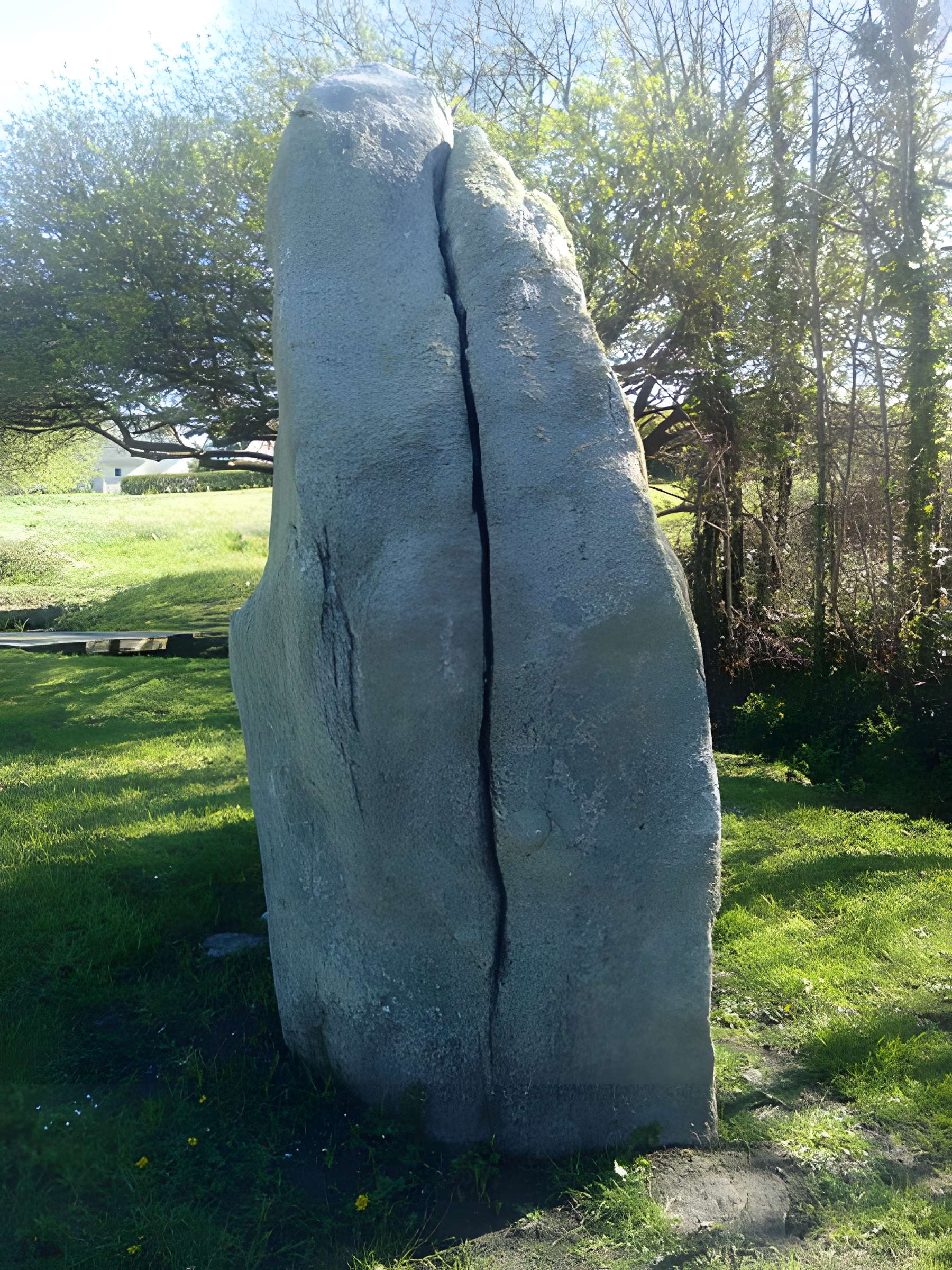
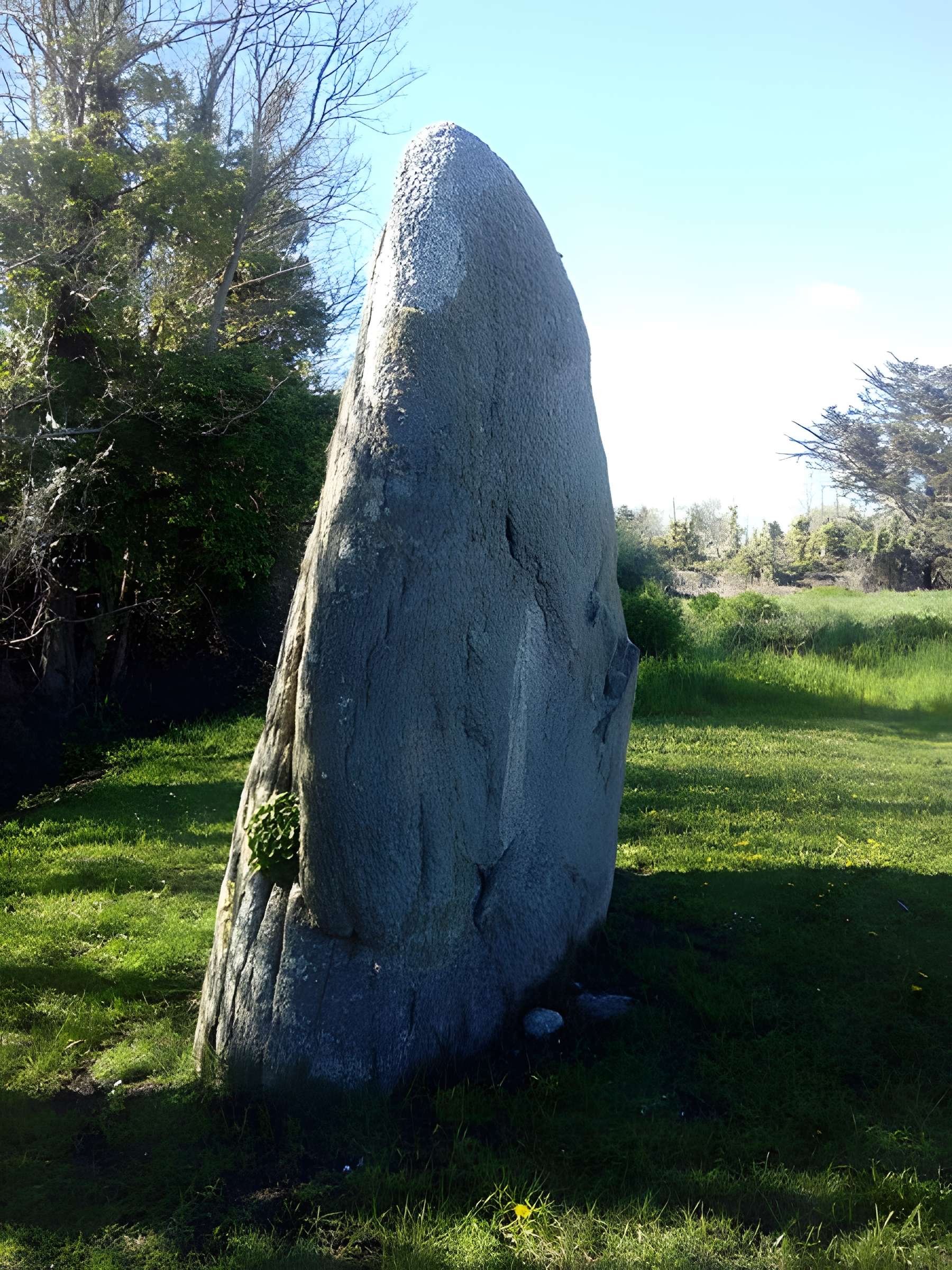
The Lanvar Menhir is a megalithic monument located in the city of Guilvinec, in the Finistère department of Britain. Built during the Neolithic period, it stands at more than 3 meters high, for 2 meters wide and about 1 meter thick, carved in granite. Accessible via a hiking trail (variant of GR 34), it is located along a stream, on a private plot near a wooden bridge, in the rue du Menhir.
Ranked as historical monuments on 4 June 1962, this menhir is considered a "marker" by archaeologist Charles-Tanguy Le Roux. Its location, near a water point, suggests a function both practical (signalization) and symbolic (sacred place). The stone could thus have played a role in the spatial or ritual organization of local neolithic communities.
The available sources, including The Heritage of the Communes of Finistère (1998) and the Bulletin of the Archaeological Society of Finistère (1961), confirm its importance in the Breton megalithic landscape. Today, the menhir remains visible from the public highway, although located on a private property. Its exact location is referenced in the Merimée database under the code Insee 29072 (Guilvinec).








Announcements
Please log in to post a review