Logo Musée du Patrimoine

All French heritage classified by regions, departments and cities

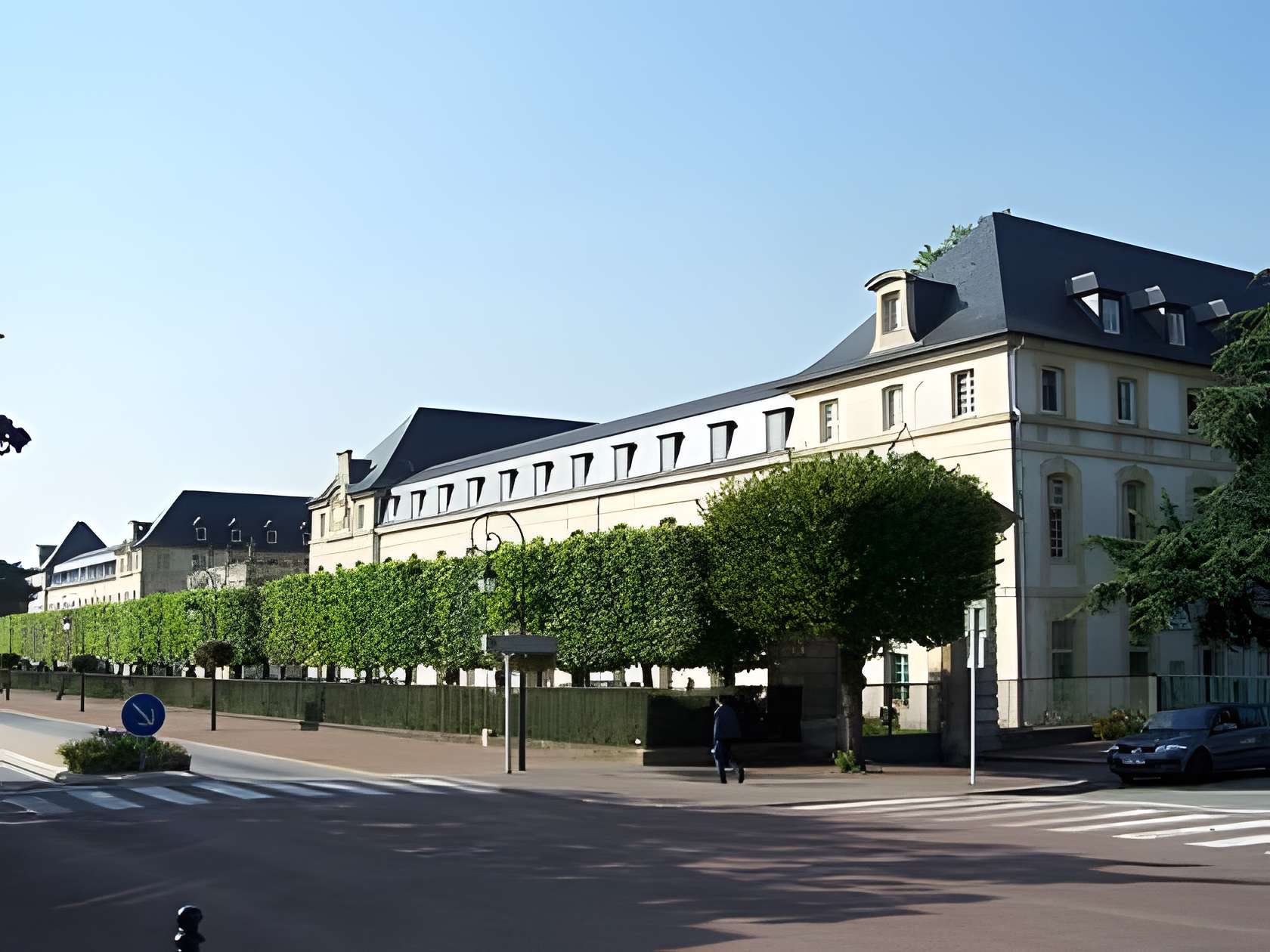
Museum of the Military High School of Saint-Cyr-l'École dans les Yvelines

Musée
Musée de l'armée Française

Museum of the Military High School of Saint-Cyr-l'École

    2 Avenue Jean Jaurès
    78210 Saint-Cyr-l'École

Timeline

Temps modernes
Révolution/Empire
XIXe siècle
Époque contemporaine
1700
1800
1900
2000
1686
Fondation de la Maison royale de Saint-Louis
1793
Closing of the Royal House
1808
Installation of the Military Special School
1944
Allied bombardments
1966
Opening of the current military school
1977
Opening of the museum
Aujourd'hui
Aujourd'hui

Key figures

Louis XIV - King of France Founded the Royal House of Saint-Louis in 1686.
Madame de Maintenon - Secret wife of Louis XIV Initiator and Director of the Royal House.
Jules Hardouin-Mansart - Architect Designed the buildings of the Royal House.
Napoléon Ier - Emperor of the French The Military Special School was established in 1808.
César - Sculptor Author of the colour mast installed in 1970.
Charles de Gaulle - Former student and president Supported the reconstruction of the high school in 1966.

Origin and history

The Musée du lycée militaire de Saint-Cyr-l'École is located in a historic site with many educational and military vocations. Founded in 1686 under the reign of Louis XIV as the Royal House of Saint-Louis, the establishment was intended to educate the young girls of impoverished noble families, especially those whose fathers had died in combat. Initiated by Madame de Maintenon, this ambitious project aimed to train future mothers to rebuild the French nobility. The buildings, designed by Jules Hardouin-Mansart, included a chapel, dormitories, study rooms and spaces dedicated to arts and science learning, reflecting an innovative pedagogical approach for the time.

After the French Revolution, the site was transformed into a military hospital (1793-1796), then a military college in 1800 under Napoleon Bonaparte, marking the beginning of his male and military vocation. In 1808 the Special Military School of Saint-Cyr was established there, training officers for the imperial armies. This change reflected the Empire's growing need for competent military cadres. The school became a symbol of rigour and excellence, attracting students from the nobility and bourgeoisie, and playing a key role in the conflicts of the 19th and 20th centuries, especially during the two world wars.

The site suffered heavy damage during the 1944 Allied bombings, which destroyed much of the historic buildings. After the war, it was decided not to re-establish the Military Special School there, but to establish a military high school there in 1966 for the children of military and civil servants. The museum, inaugurated in 1977 in the Archives Hall, preserves objects, uniforms and documents bearing witness to this rich history. It allows students and visitors to discover the military and educational heritage of the place, while perpetuating the memory of the generations formed there.

The architecture of the high school combines original elements, such as the partially preserved chapel and the Archives Pavilion, with modern reconstructions of the 1960s. The park, designed in French, houses statues of Napoleonic Marshals and memorials, including a mast of colours carved by Caesar. These elements recall the prestigious past of the site, while integrating into a contemporary educational setting. The high school now welcomes students from the second to preparatory classes, perpetuating a tradition of academic and military excellence.

Among the traditions of the high school, some date back to the Military Special School, such as the celebration of December 2, the anniversary of the Battle of Austerlitz, or the " Corniche Pol Lapeyre", which brings together students preparing for the competitions of the major military schools. These practices, as well as commemorative ceremonies and sporting activities, reinforce the sense of belonging to an institution charged with history. The museum plays a central role in transmitting this memory, exhibiting artifacts and organizing educational events for students and the public.

External links

Conditions of visit

  • Conditions de visite : Ouvert toute l'année
  • Contact organisation : 01 30 61 61 35 ou 01 39 24 88 88