Logo Musée du Patrimoine

All French heritage classified by regions, departments and cities

Church of the Invention-de-la-Sainte-Croix of Kaysersberg dans le Haut-Rhin

Patrimoine classé
Patrimoine religieux
Eglise romane et gothique
Haut-Rhin

Church of the Invention-de-la-Sainte-Croix of Kaysersberg

    Place de l'Église
    68240 Kaysersberg
Église de lInvention-de-la-Sainte-Croix de Kaysersberg

Timeline

Moyen Âge central
Bas Moyen Âge
Renaissance
Temps modernes
Révolution/Empire
XIXe siècle
Époque contemporaine
1200
1300
1400
1500
1800
1900
2000
1227
Acquisition by Hohenstaufen
XIIe siècle
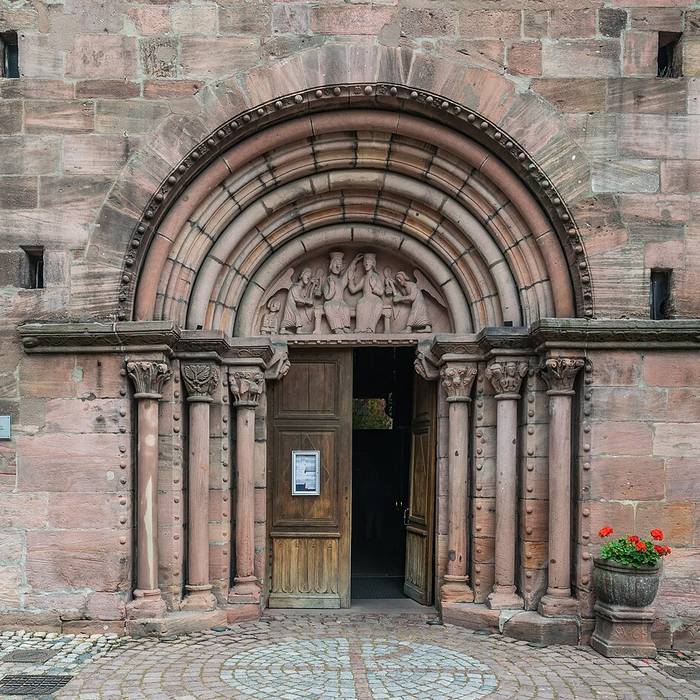
Construction of transept and portal
1459
Oak belfry
1448-1522
Major expansions
1824
Construction of the current bell tower
1932
Registration for historical monuments
1985
Complete classification
Aujourd'hui
Aujourd'hui

Key figures

Woelfelin de Haguenau - Size of the initial oratory Originating the first extensions.
Alexandre Chassain - 18th century architect Correcting the slope of the roof.
Louis Pétin - 19th century architect Uplifting of the bell tower in 1826-1829.
D. Poisat - Architect restorer (XIXe) Major renovations around 1850.

Origin and history

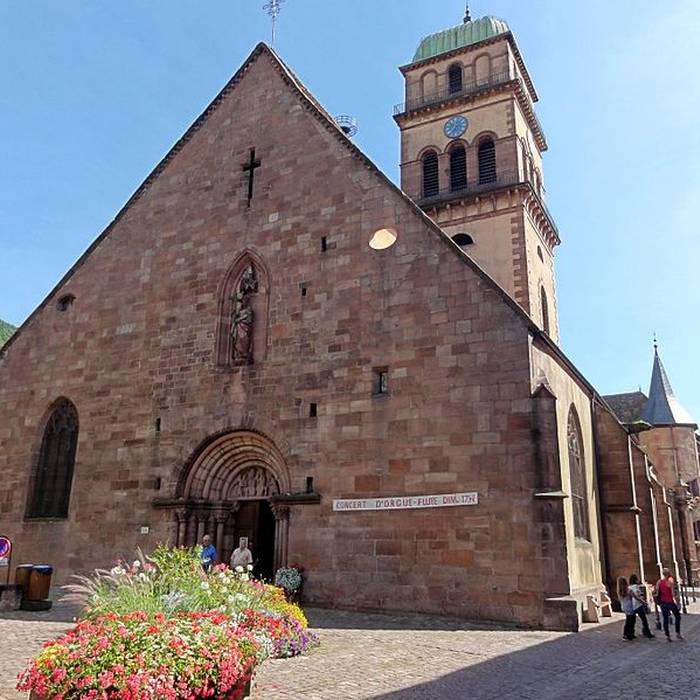
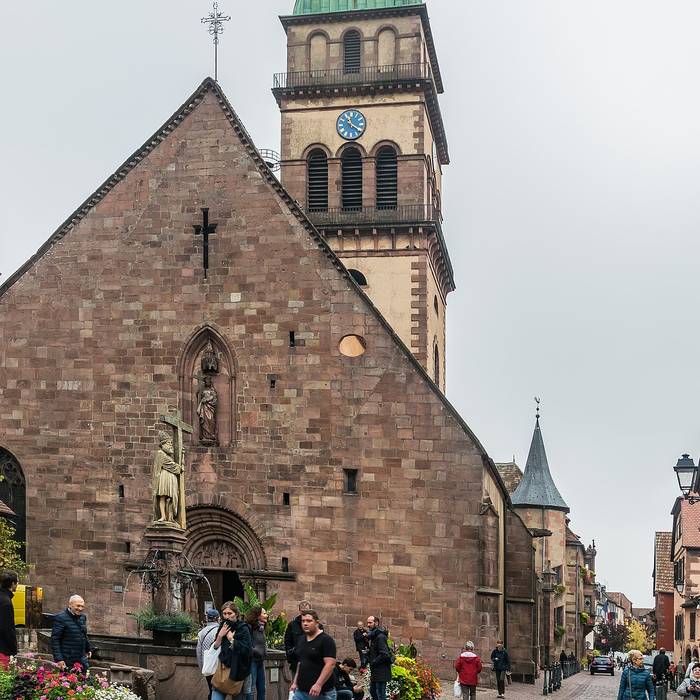
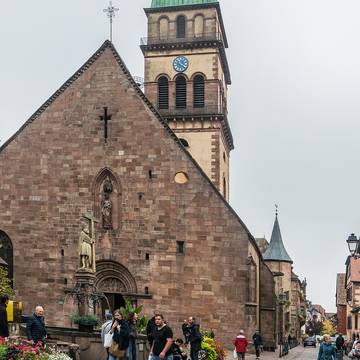
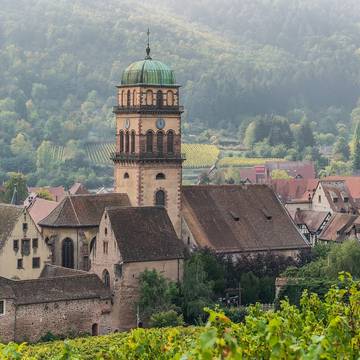
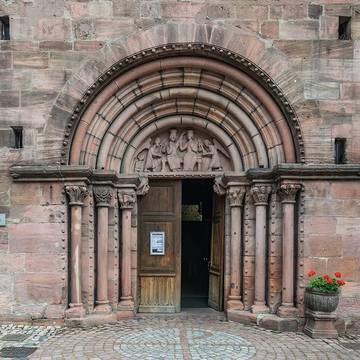
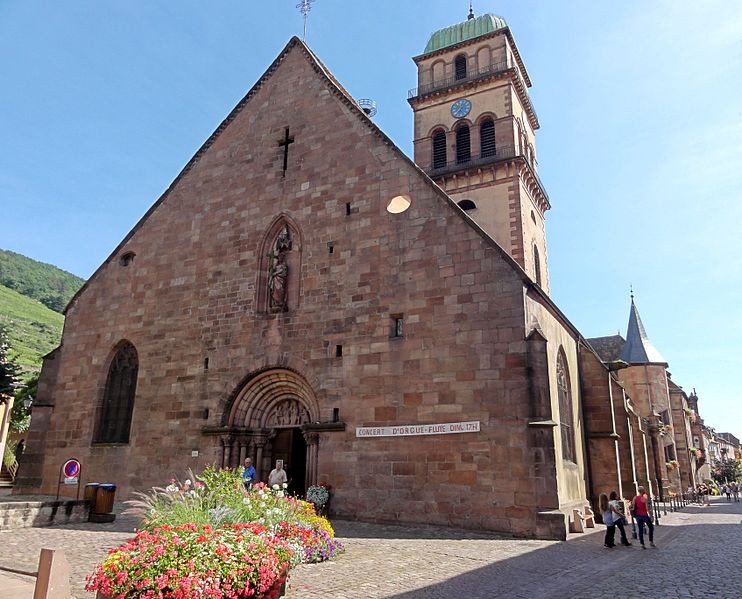
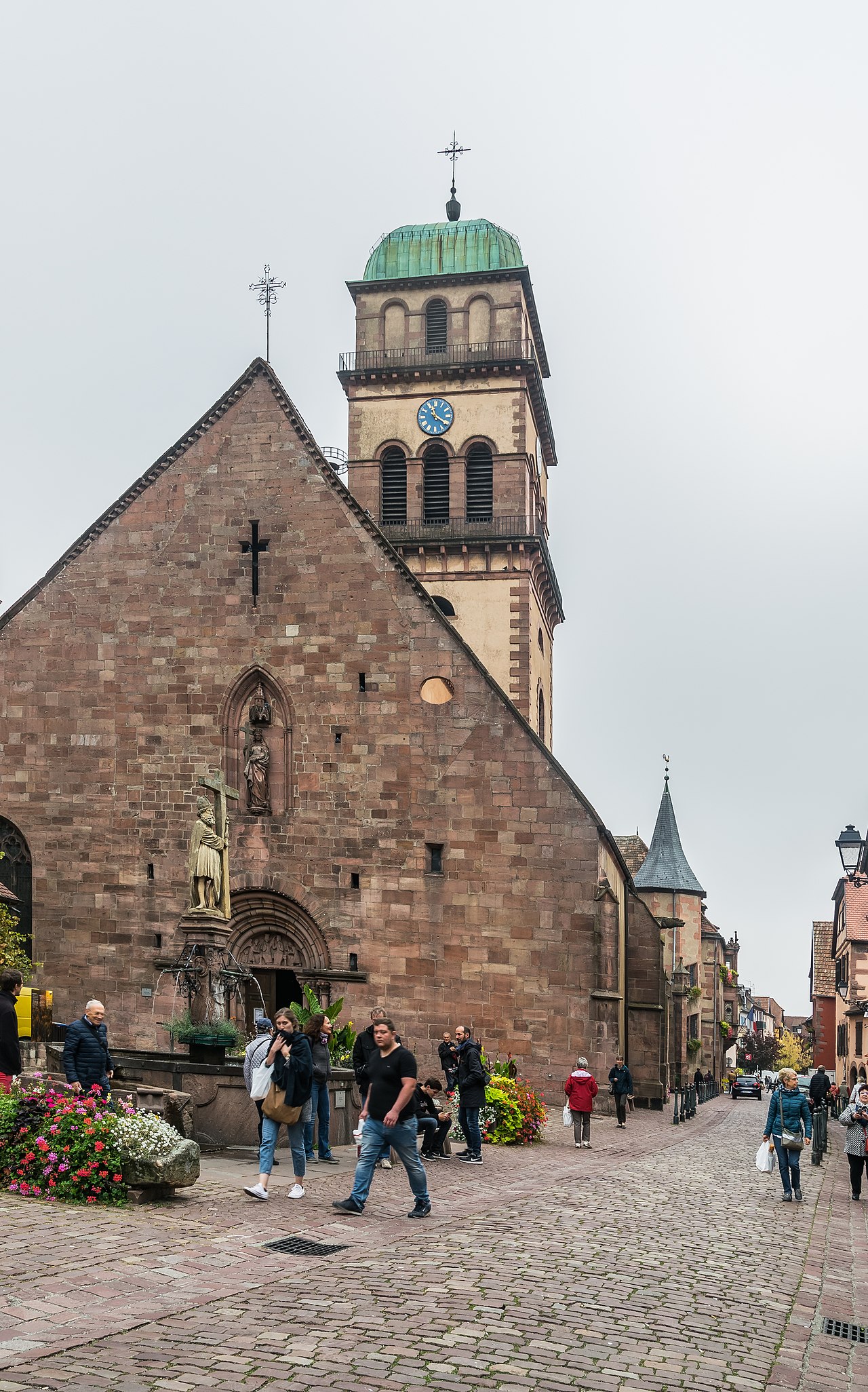
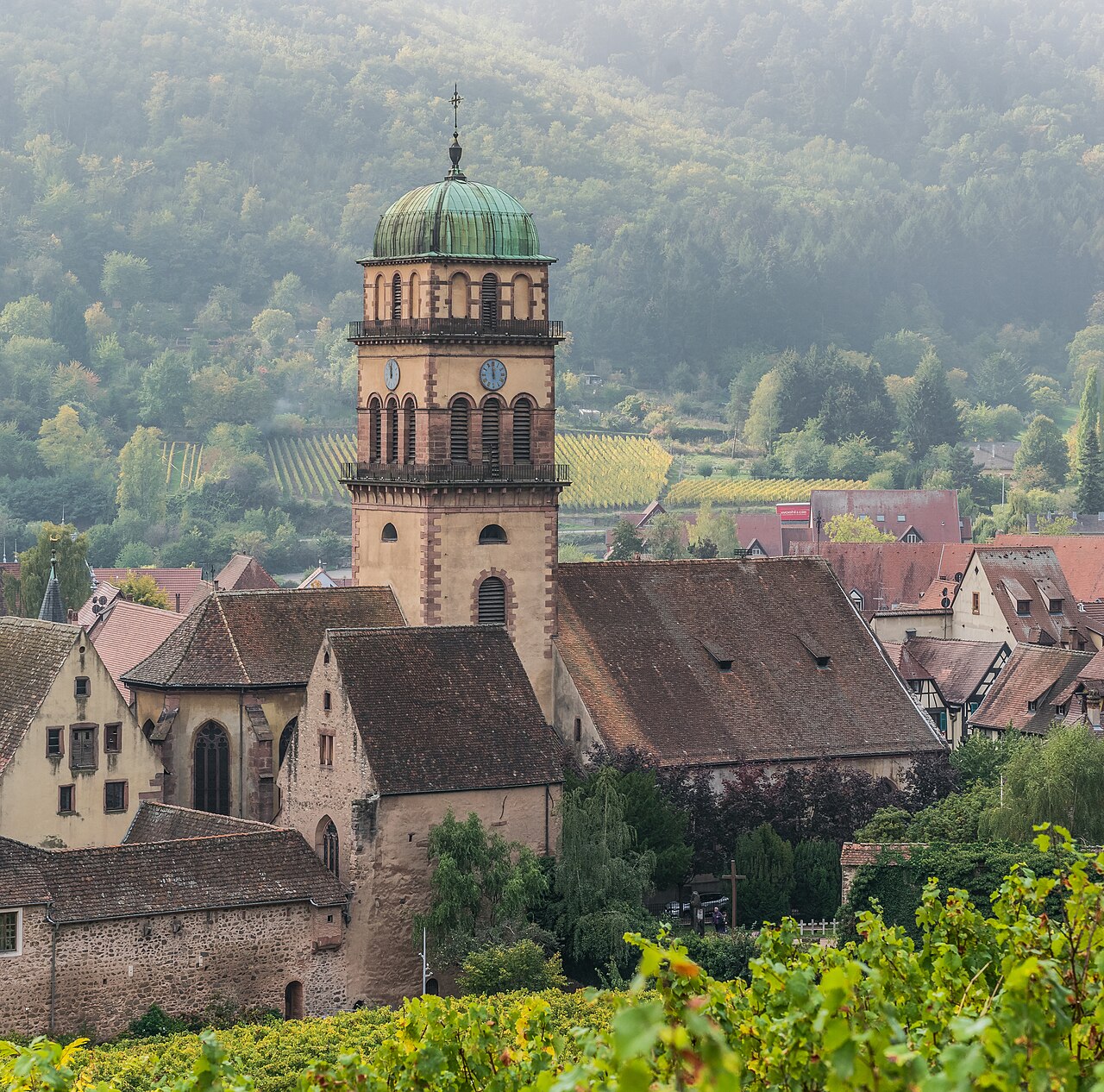
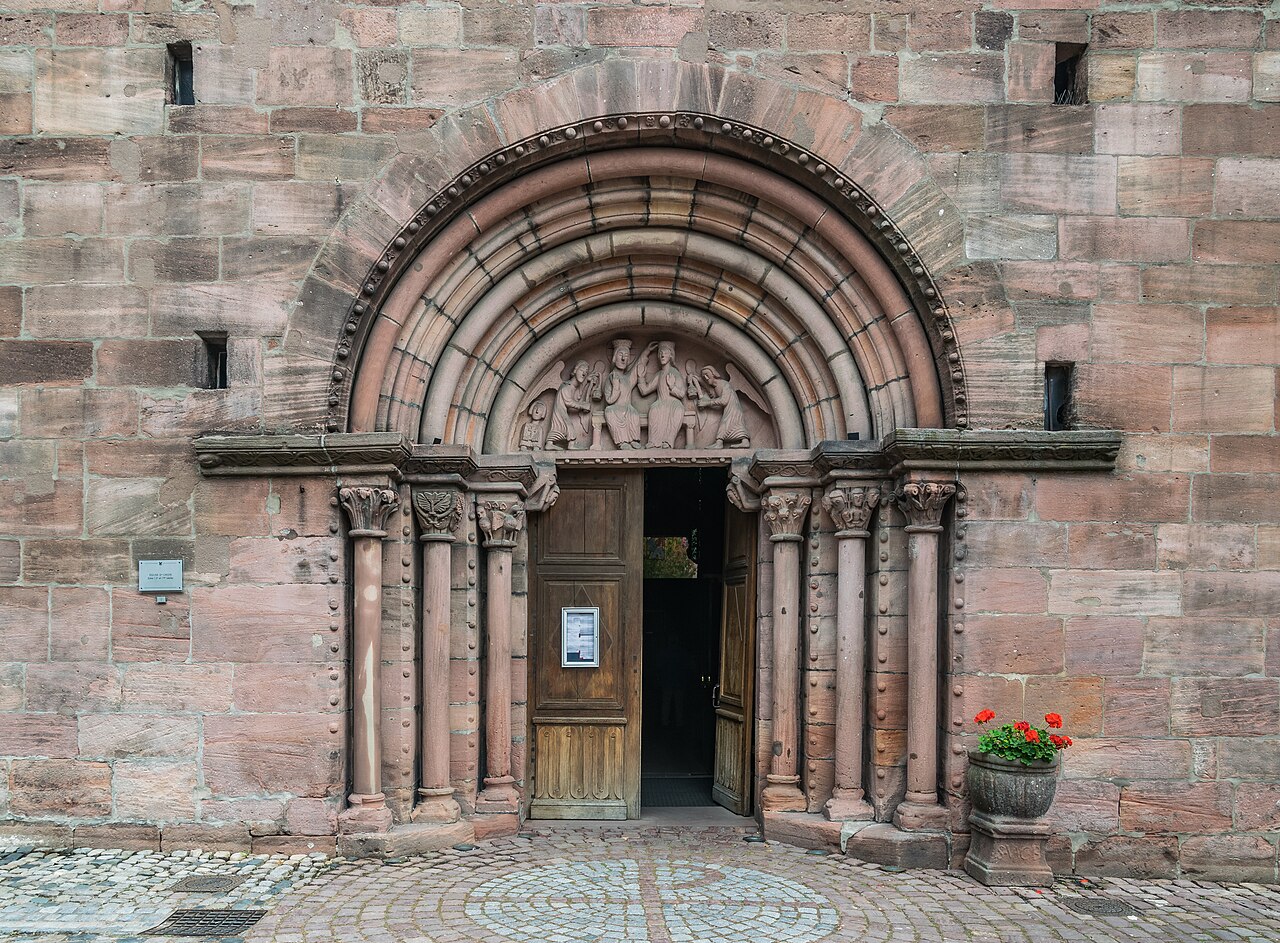
The Invention-de-la-Sainte-Croix Church, located in Kaysersberg, Upper Rhine, is a historical monument whose oldest parts date back to the 12th century. The transept and the western portal, with its tympanum representing the crowning of the Virgin, date back to this time. The nave, built in the 13th century, and the lower side, added in the 15th and 16th centuries, illustrate the architectural evolution of the building, marked by Romanesque and Gothic influences. The building was initially dedicated to the Virgin before being dedicated to the Invention of the Holy Cross from 1401 onwards.

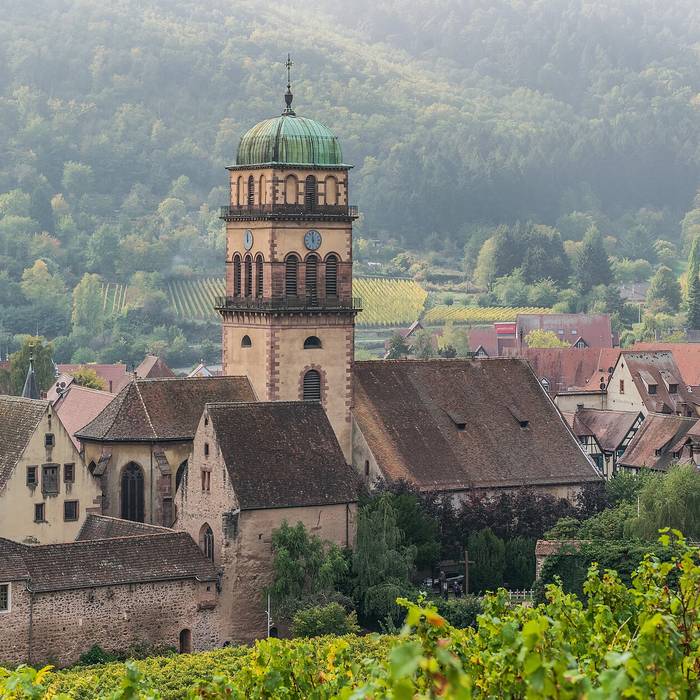
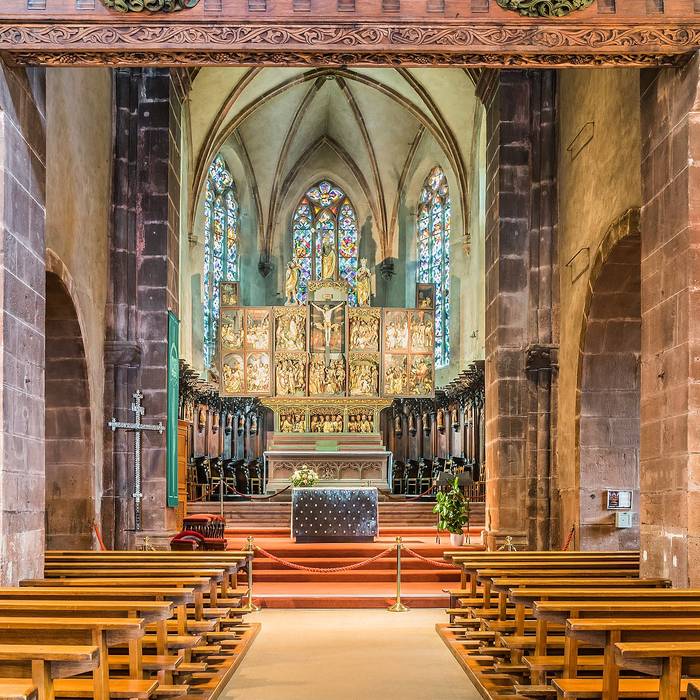
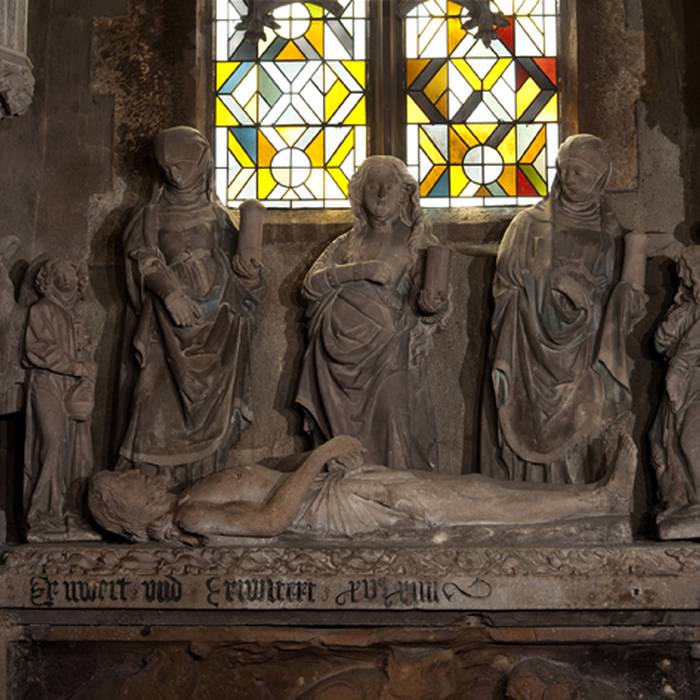
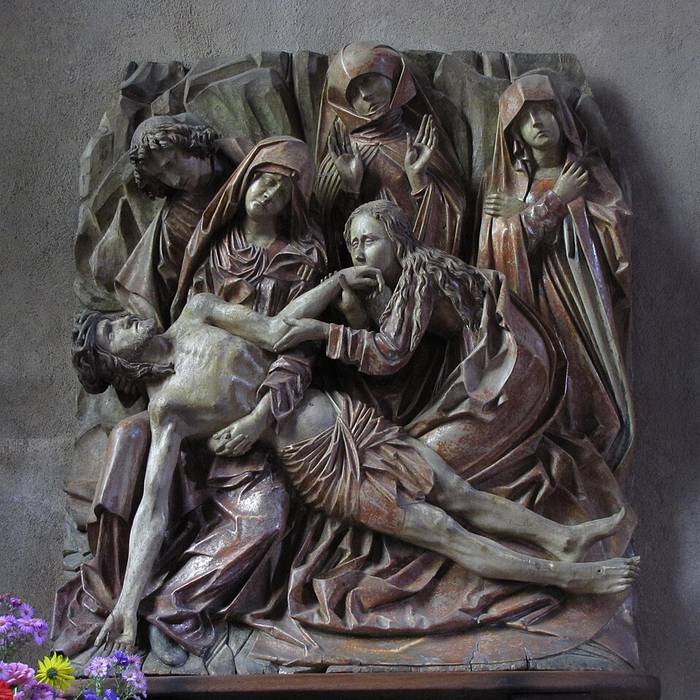
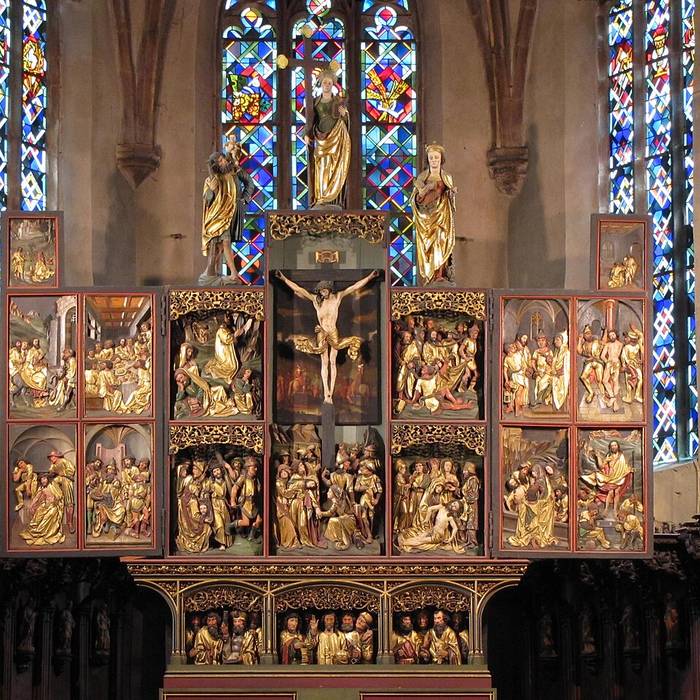
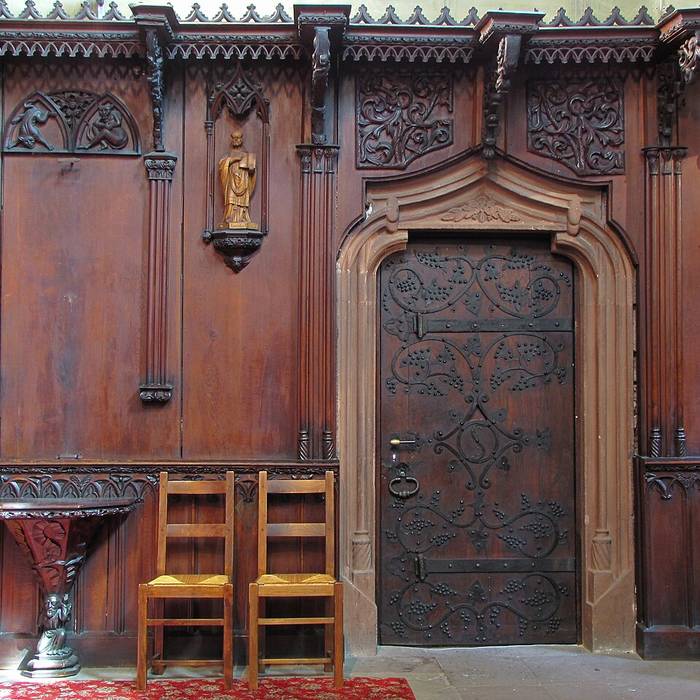
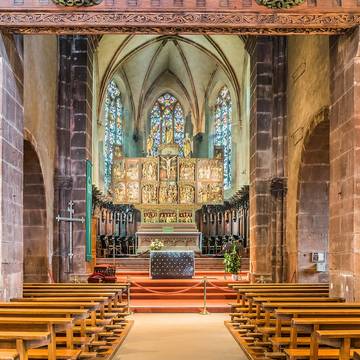
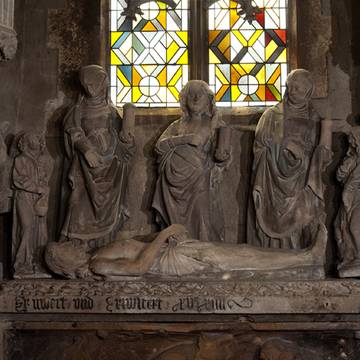
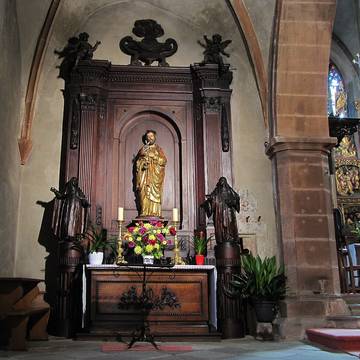
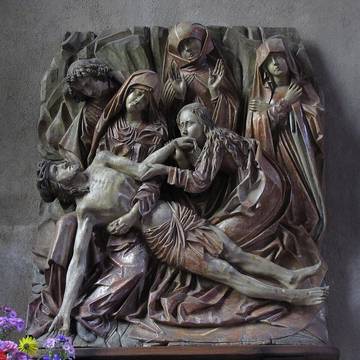
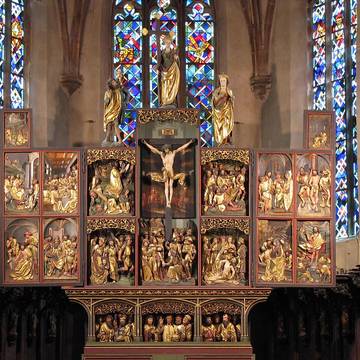
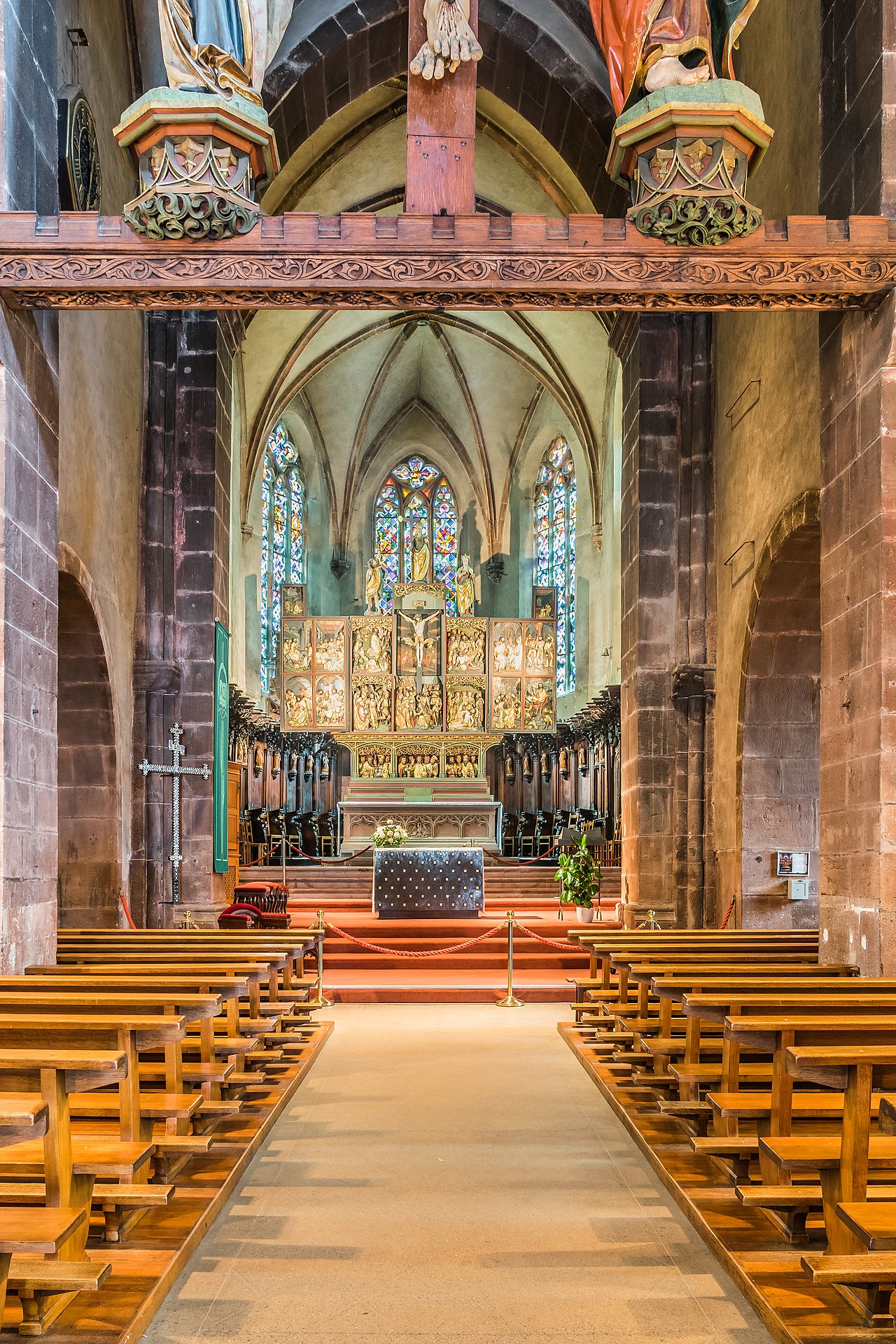
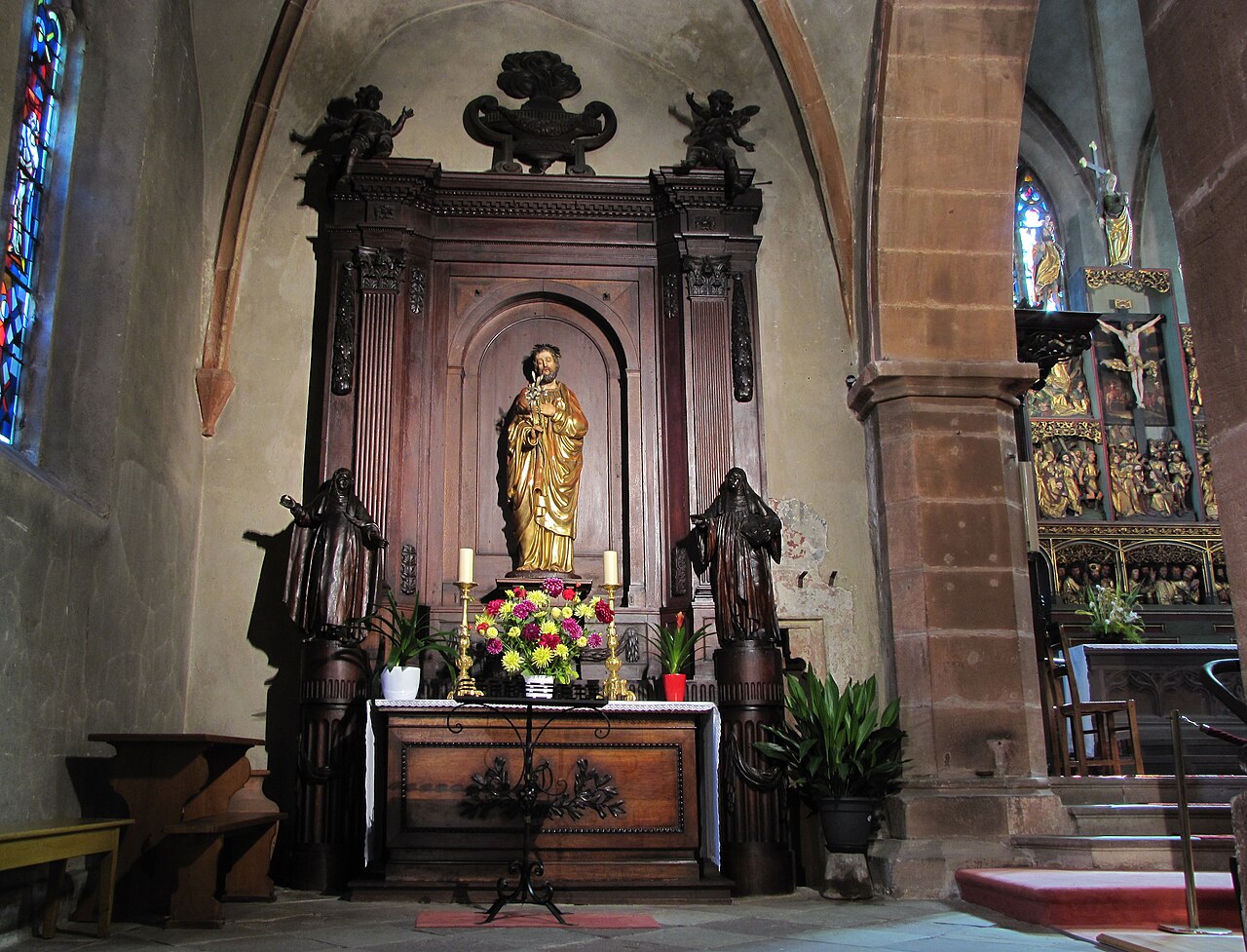
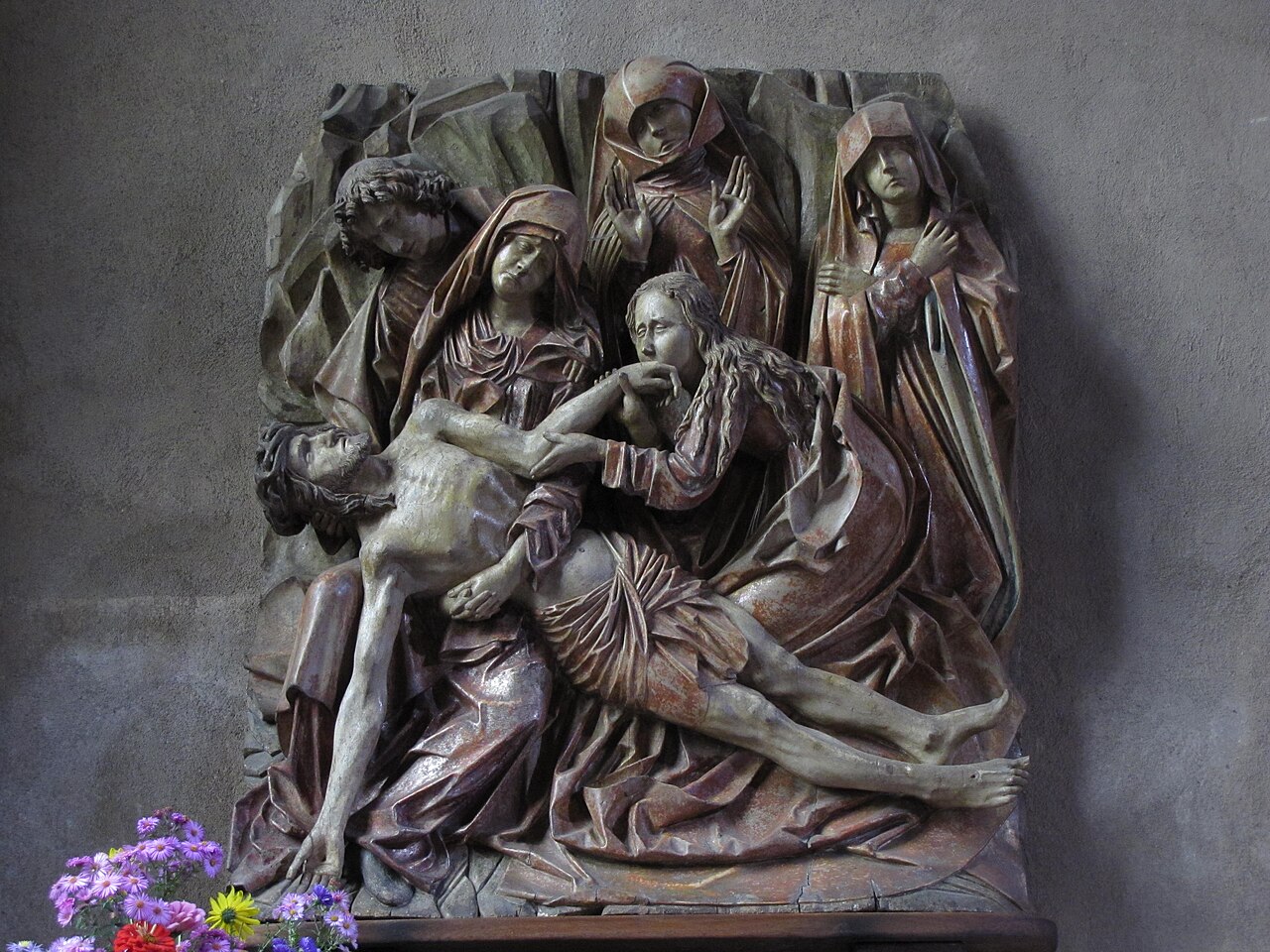
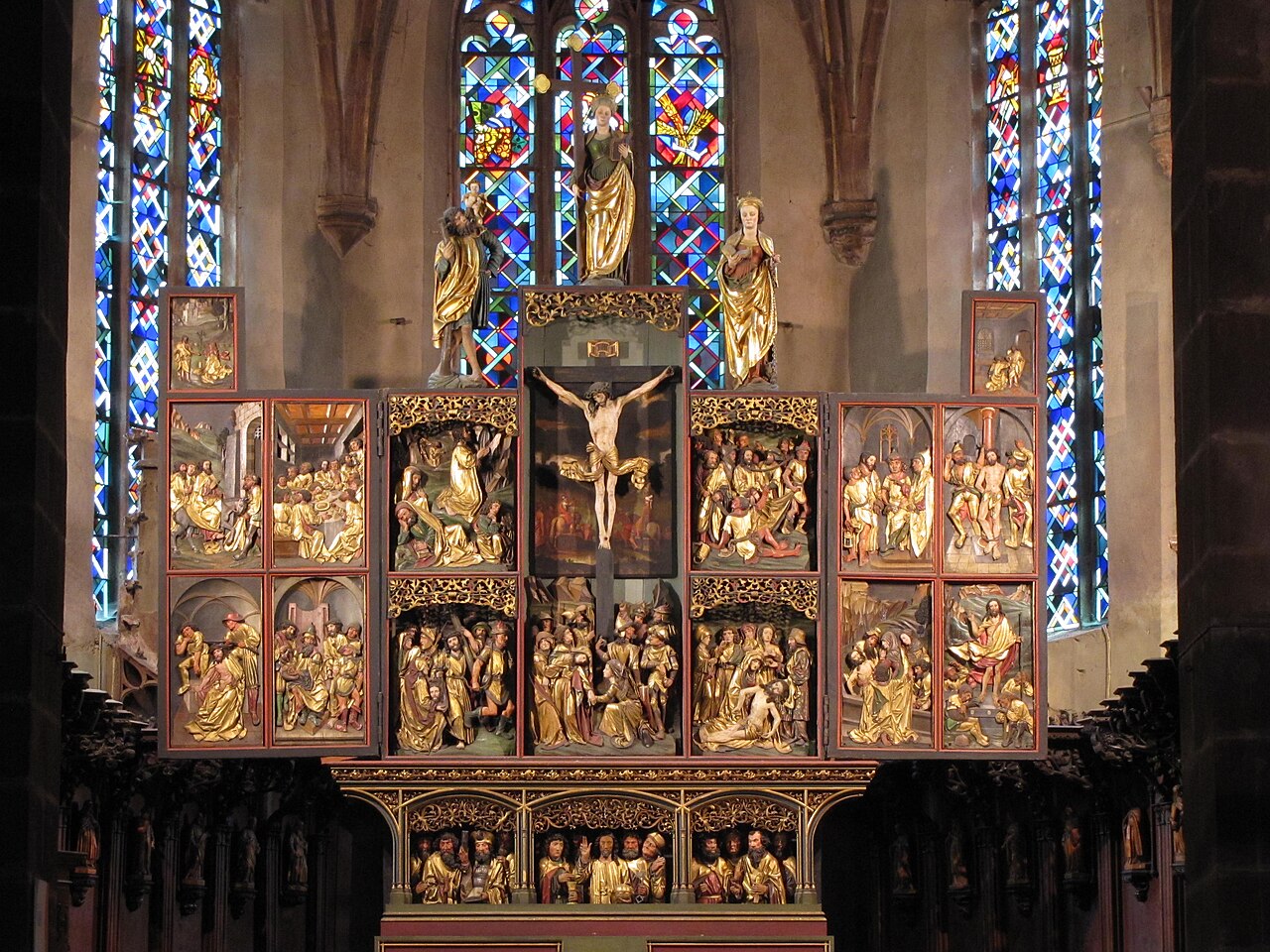
The choir, raised on an crypt, and the vaults of the forechoeur date from the 15th century, while the bell tower, erected in 1824, dominates the medieval transept. The church underwent several restoration campaigns, notably in the 19th century, where structural and decorative changes were made. The carved decor, combining Romanesque, Gothic and Renaissance styles, bears witness to the artistic richness of the building.

The church was listed as a historical monument in 1932, and was classified in 1985. Its history is linked to the acquisition of the Kaysersberg site by the Hohenstaufen in 1227, and its architecture reflects the successive transformations, from the initial oratory enlarged by Woelfelin de Haguenau to neo-Gothic additions and modern restorations. Protected elements include the bell tower and the entire building, with the exception of the building.

Historical sources mention major works between 1448 and 1522, with arches crossed by warheads and an oak belfry dated 1459. The structure of the nave, replaced in 1508, and the modifications of the 19th century, such as the elevation of the bell tower and the reconstruction of the sacristy, complete the architectural history of this emblematic monument of Alsace.

External links