Initial construction limite XVe–XVIe siècles (≈ 1650)
Northeast part, late Gothic stronghold.
XVIIe siècle
Expansion and decors
Expansion and decors XVIIe siècle (≈ 1750)
Addition of inner towers and stuccos.
XVIIIe siècle
Partial Demolition
Partial Demolition XVIIIe siècle (≈ 1850)
A turret removed during modifications.
2006
Registration MH
Registration MH 2006 (≈ 2006)
Total protection of the castle and annexes.
Aujourd'hui
Aujourd'hui
Aujourd'hui Aujourd'hui (≈ 2025)
Position de référence.
Heritage classified
In total, the castle and its related buildings, including the soil of the corresponding plot (Box D 420): inscription by order of 21 September 2006
Key figures
Information non disponible - Unidentified owners
No names listed in the sources.
Origin and history
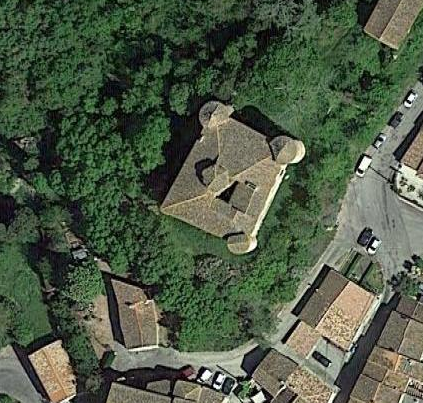
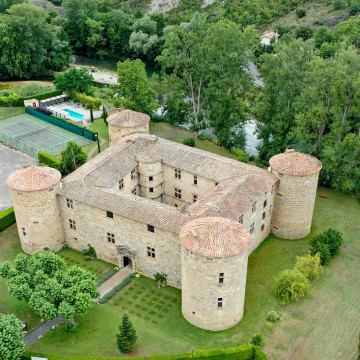
Villarzel Castle is a brick building located in the village of Villarzel-du-Razès, in the department of Aude, in Occitanie region. Built at the edge of the 15th and 16th centuries, then enlarged in the 17th century, it illustrates the architectural evolution between the late Middle Ages and the modern era. Its oldest part, in the northeast, evokes a strong house of small village knight, with a ground floor including room and kitchen, and a floor served by a Gothic staircase. The rooms preserve 17th-century studded decorations, notably on French doors, fireplaces and ceilings.
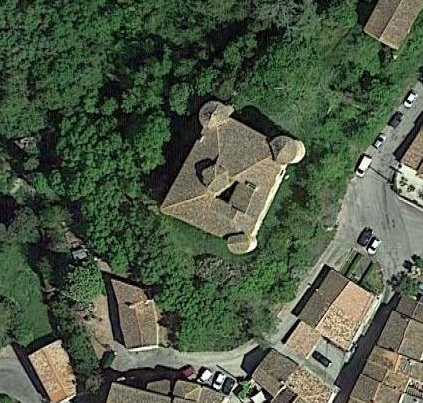
The castle initially consists of a house flanked by three turrets, one of which was demolished in the 18th century during the extension to the southwest. This addition, prior to the 18th century, doubles the initial volume and incorporates two new towers, partially preserved. The whole dominates the village, reflecting the social status of its owners, probably local lords or rural knights. The monument, which was fully listed as historic monuments in 2006, also includes its ancillary buildings and the soil of the corresponding plot.
The architecture of the castle blends defensive elements inherited from the Middle Ages, such as turrets and stairway in view, with elements of comfort characteristic of the 17th and 18th centuries, such as French ceilings and studded decorations. These developments reflect a desire to adapt to the aristocratic lifestyles of the modern era, while maintaining a modest initial structure. The castle, although partially redesigned, remains a representative example of the small rural fortifications of Languedoc.
Today, Villarzel Castle is protected for its heritage interest, both for its history and for its hybrid architectural features. Its inscription in 2006 underscores its value as a witness to social and aesthetic transformations between the late Middle Ages and the classical era. Available sources, including Monumentum and Wikipedia, confirm its role in the historical landscape of Aude, without specifying the names of its owners or the significant events that take place there.






Announcements
Please log in to post a review