First entry 1157 (≈ 1157)
Castle as property of Bauffremont
XIIIe siècle
Reconstruction of courtyards
Reconstruction of courtyards XIIIe siècle (≈ 1350)
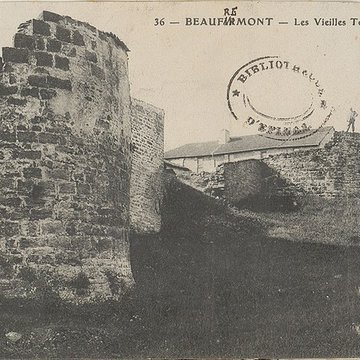
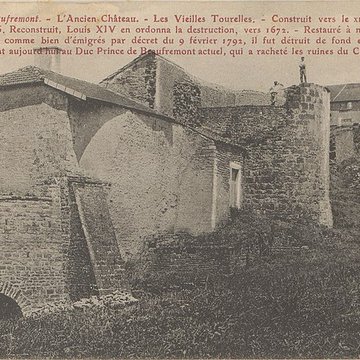
The oldest northern vestiges
1607
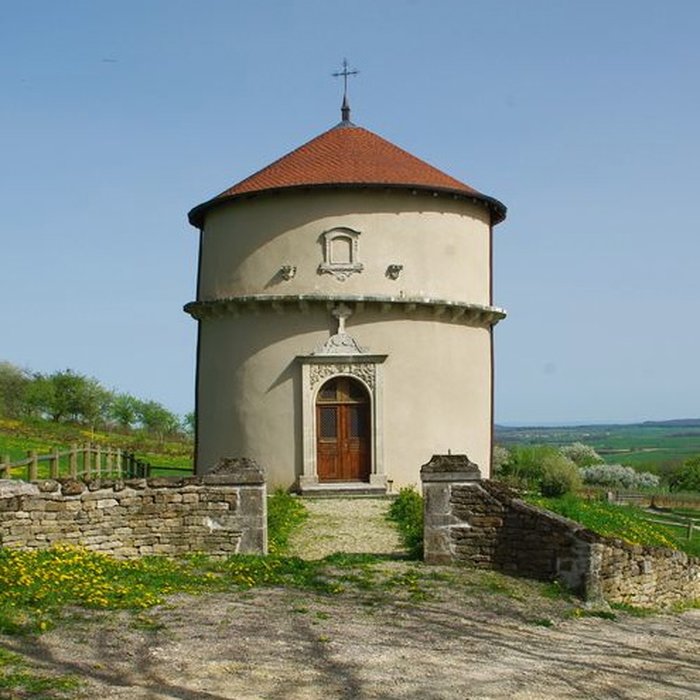
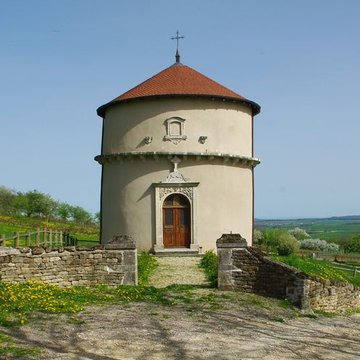
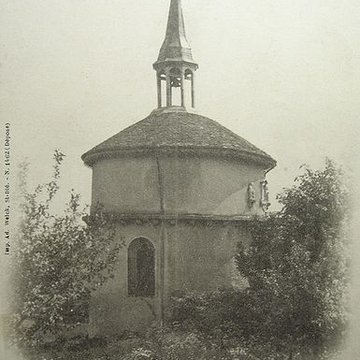
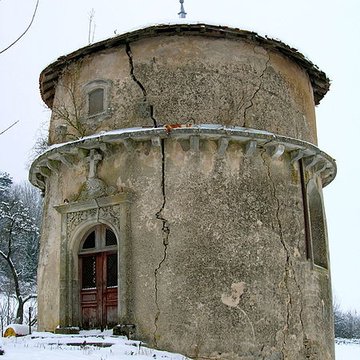
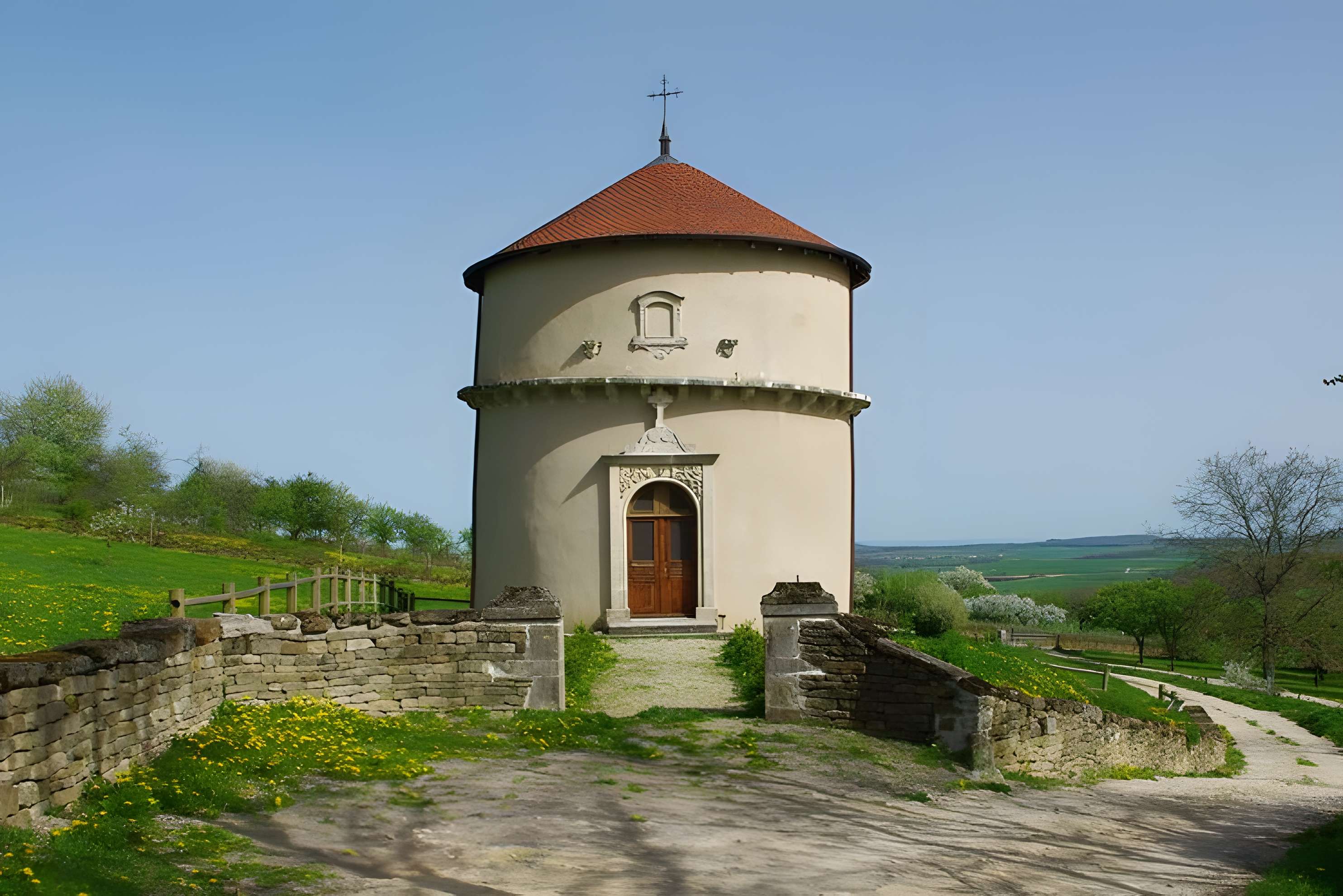
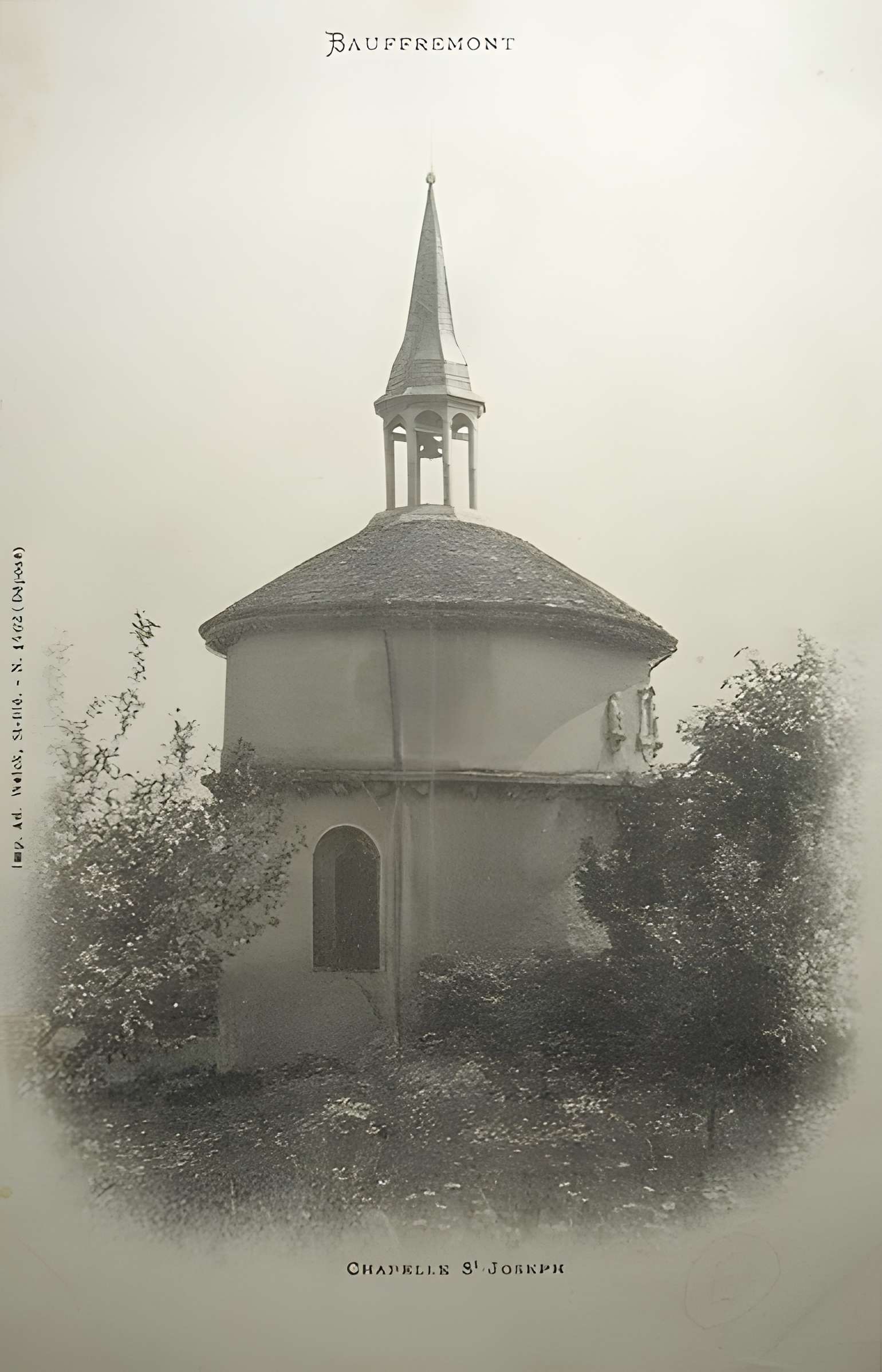
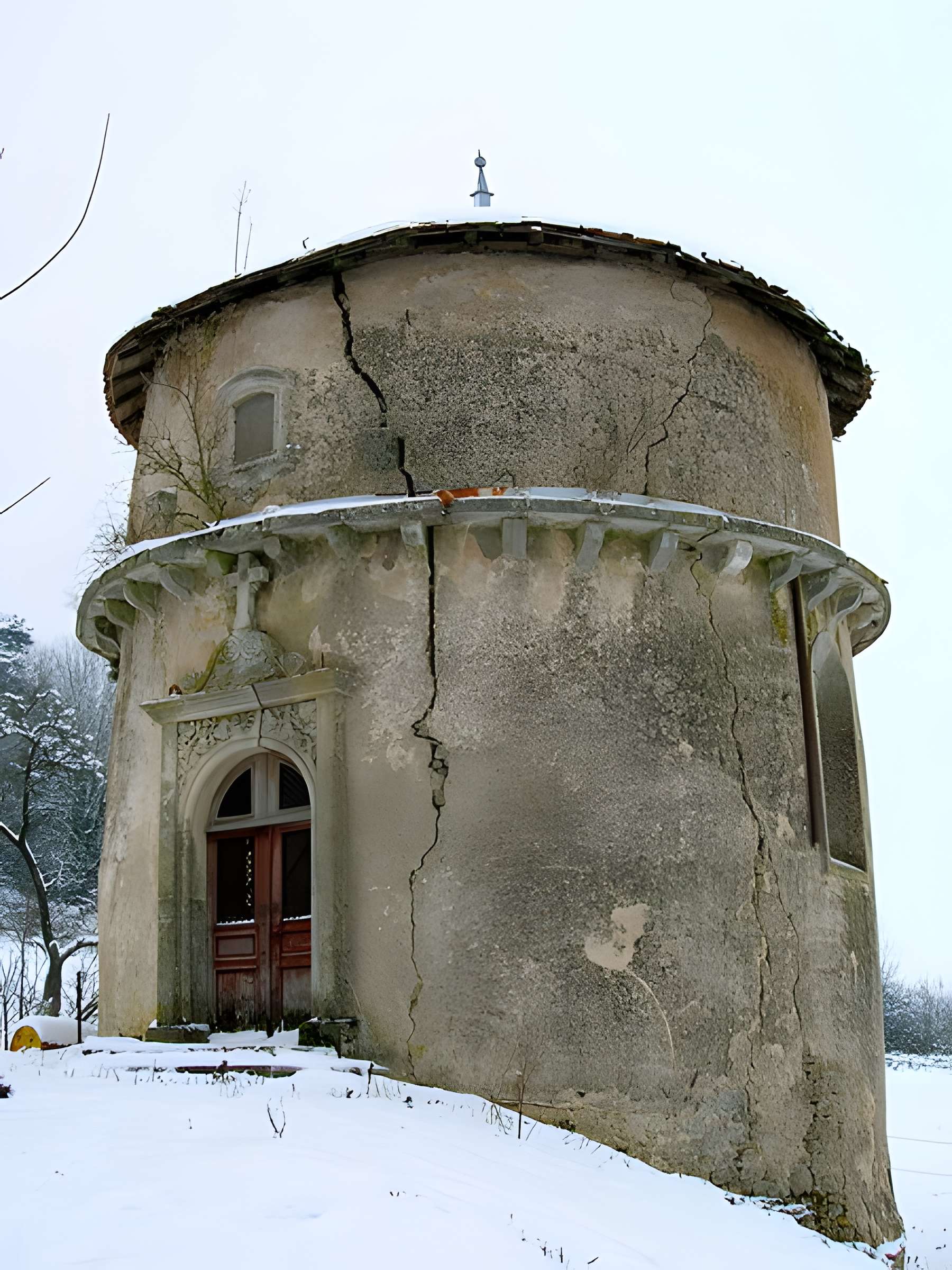
Construction of the dovecote
Construction of the dovecote 1607 (≈ 1607)
Date worn by a banner
fin XVe - début XVIe siècle
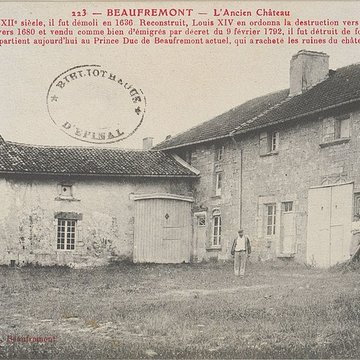
Reconstruction of the house
Reconstruction of the house fin XVe - début XVIe siècle (≈ 1625)
"New Maysonnement" for Claude d'Arberg
1634
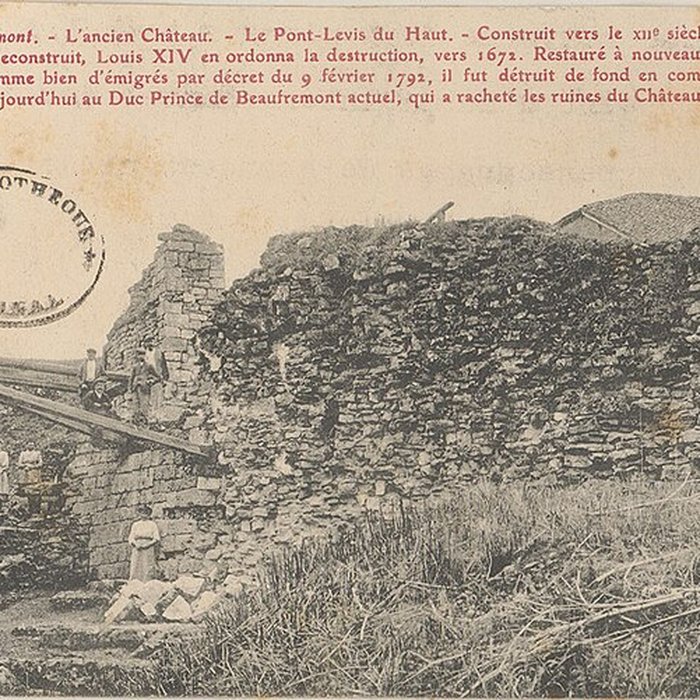
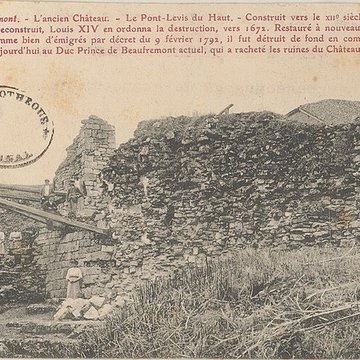
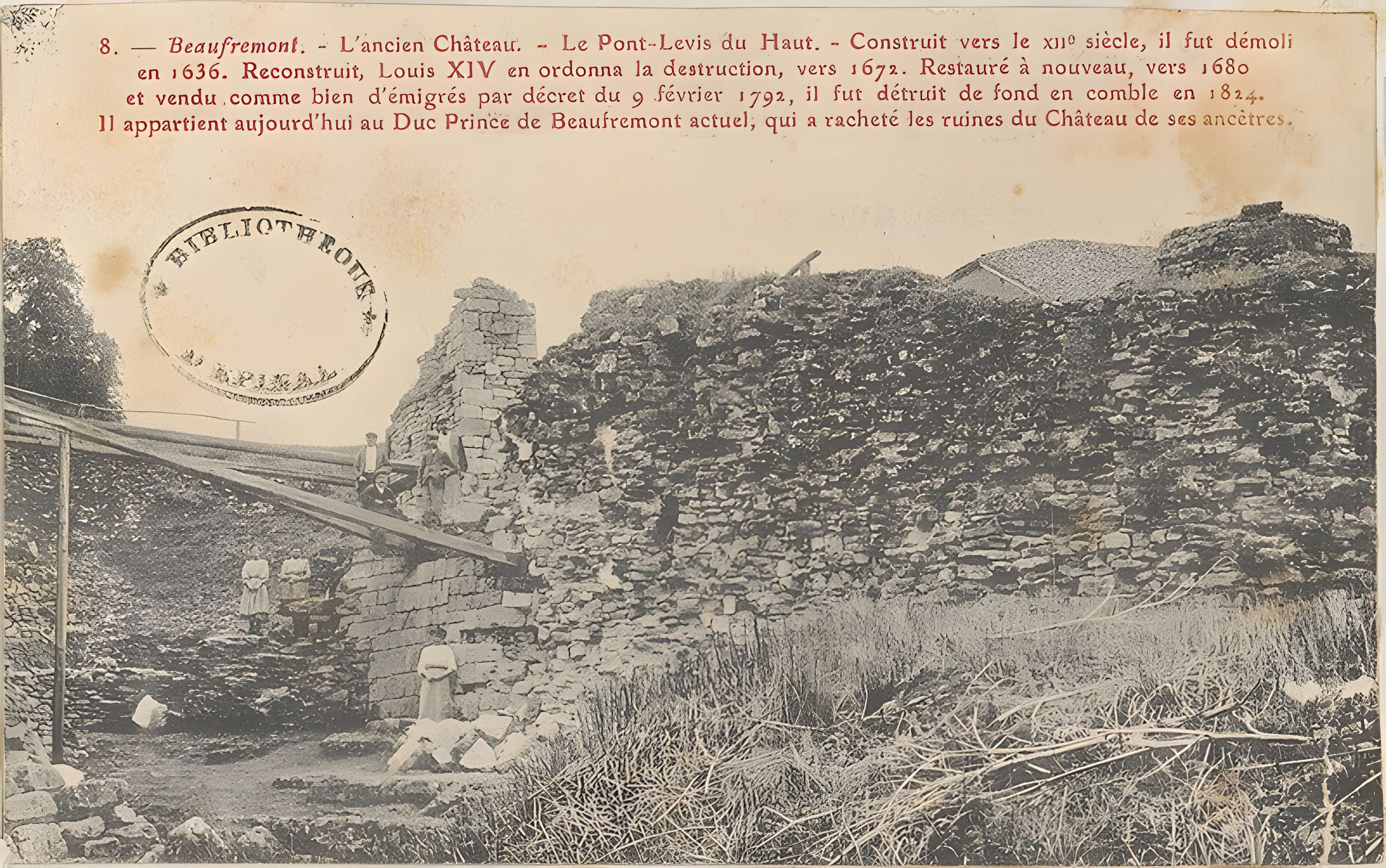
Dismantling of the castle
Dismantling of the castle 1634 (≈ 1634)
During the Thirty Years War
30 septembre 1994
Historical monument classification
Historical monument classification 30 septembre 1994 (≈ 1994)
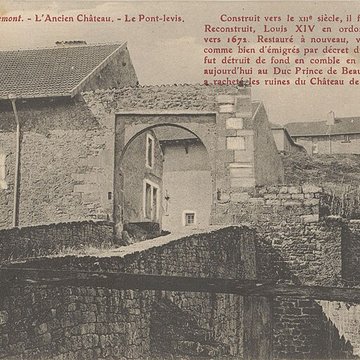
Jackets and floor with ditches
Aujourd'hui
Aujourd'hui
Aujourd'hui Aujourd'hui (≈ 2025)
Position de référence.
Heritage classified
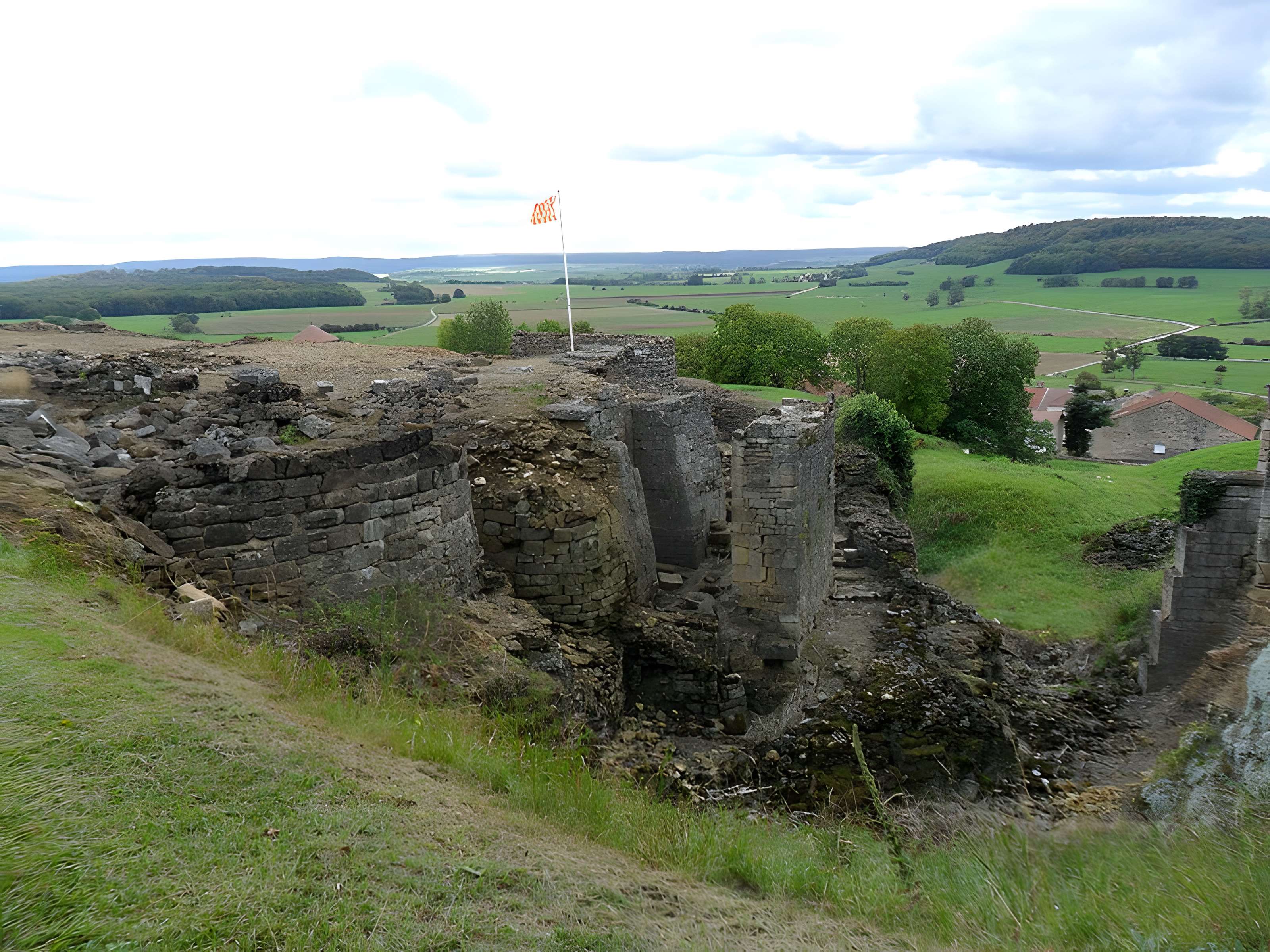
Vestiges of the enclosure and the seigneurial house as well as the entire ground with the ditches and the counterscarp (Box B 724 to 727, 730, 731): classification by decree of 30 September 1994
Key figures
Famille de Bauffremont - Original owner
Cited from 1157 as owner of the castle
Claude d'Arberg - Suspected Sponsor
Reconstruction of the house at the end of 15th century
Origin and history
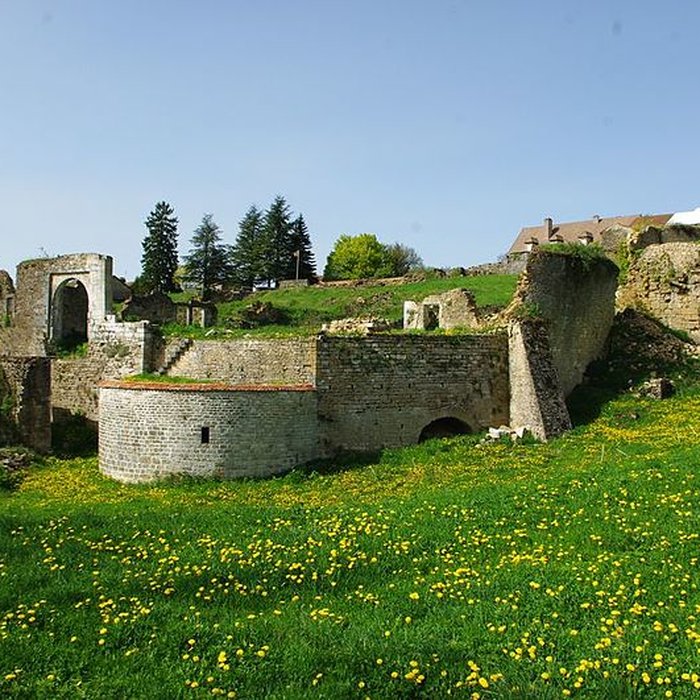
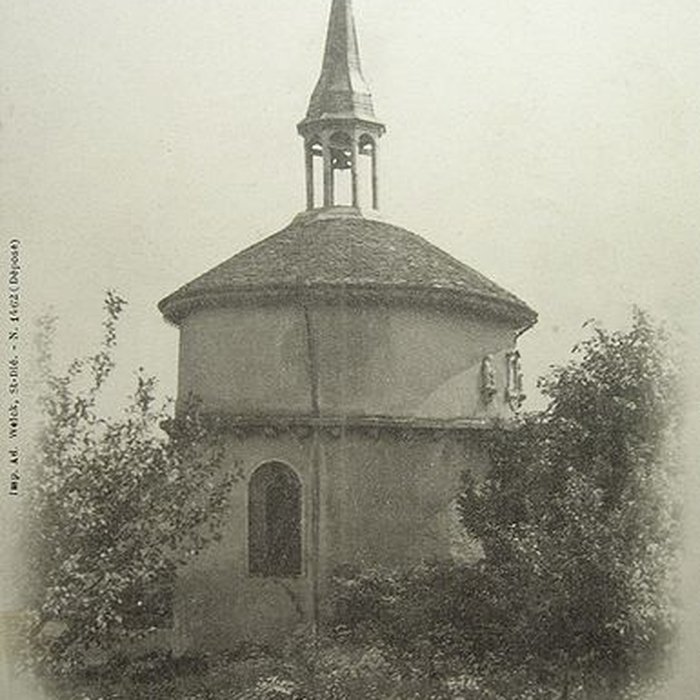
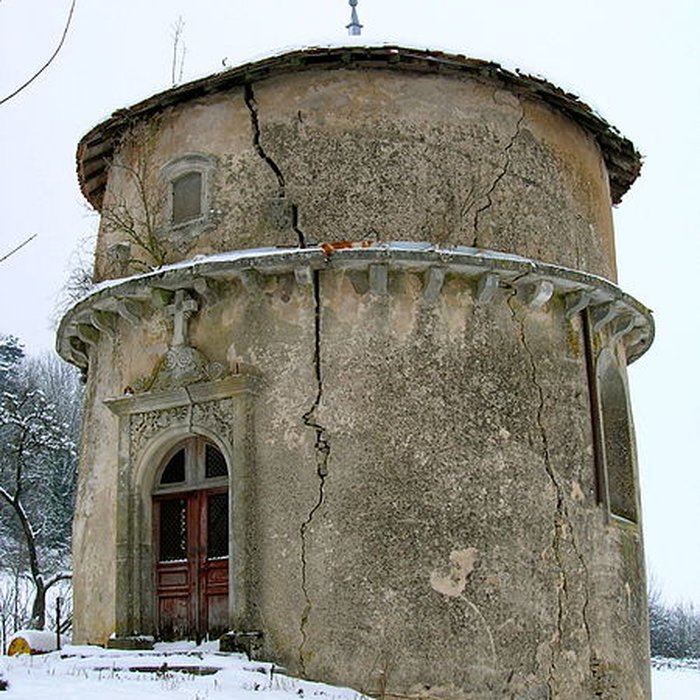
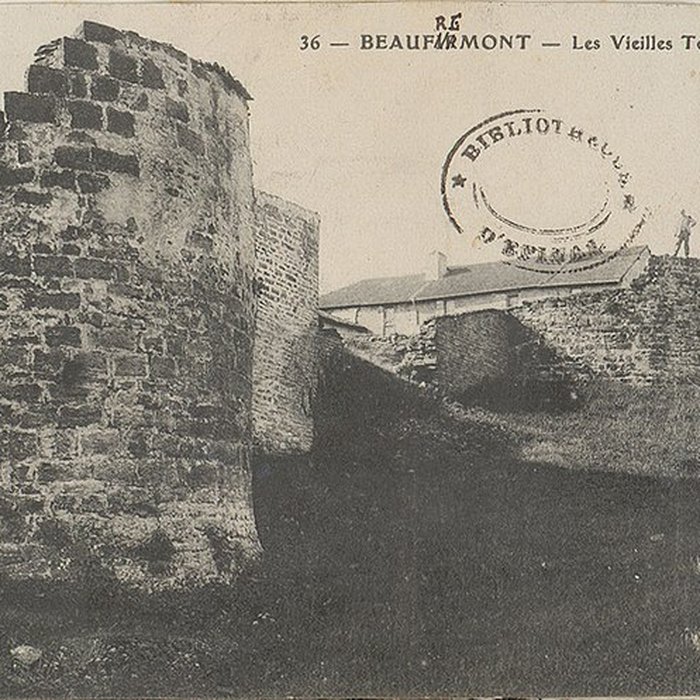
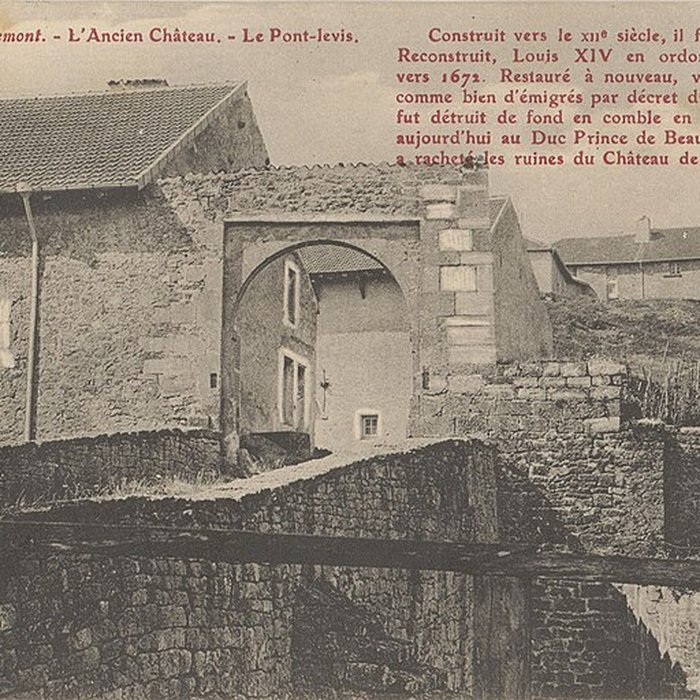
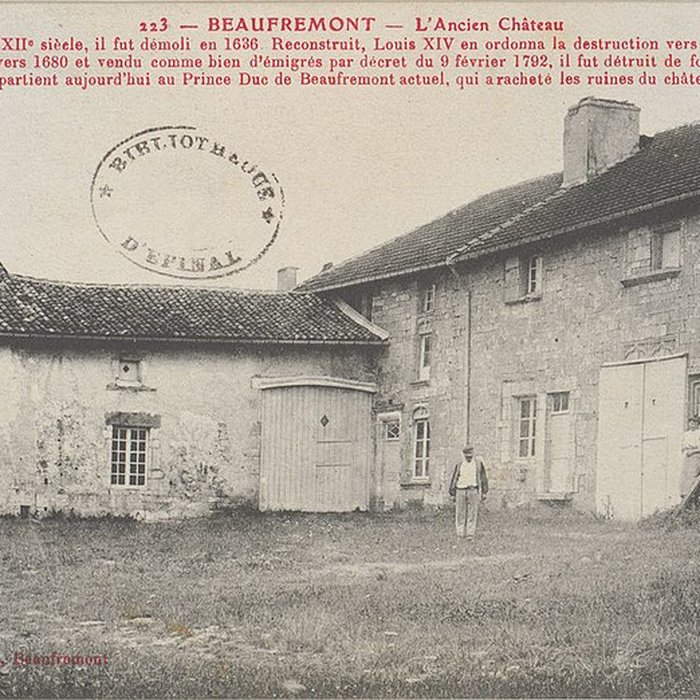
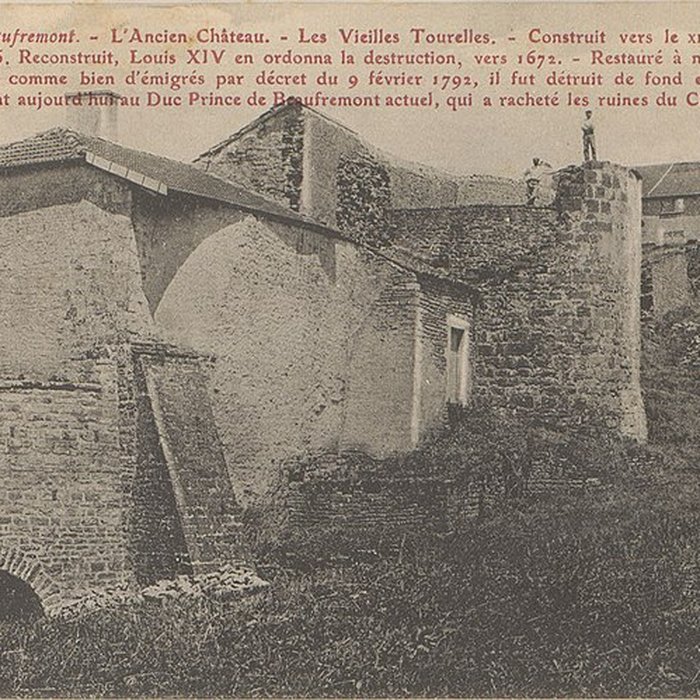
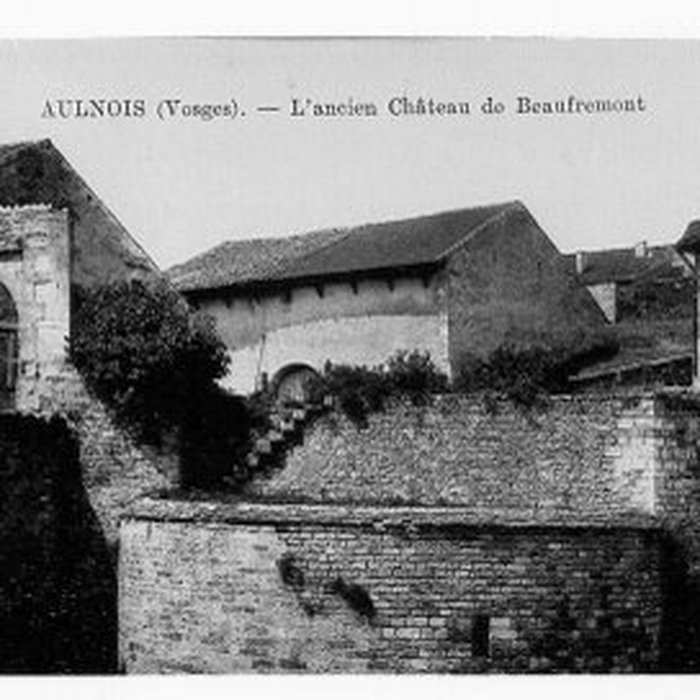
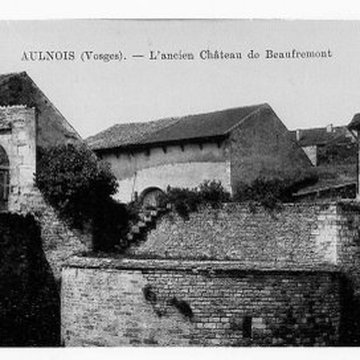
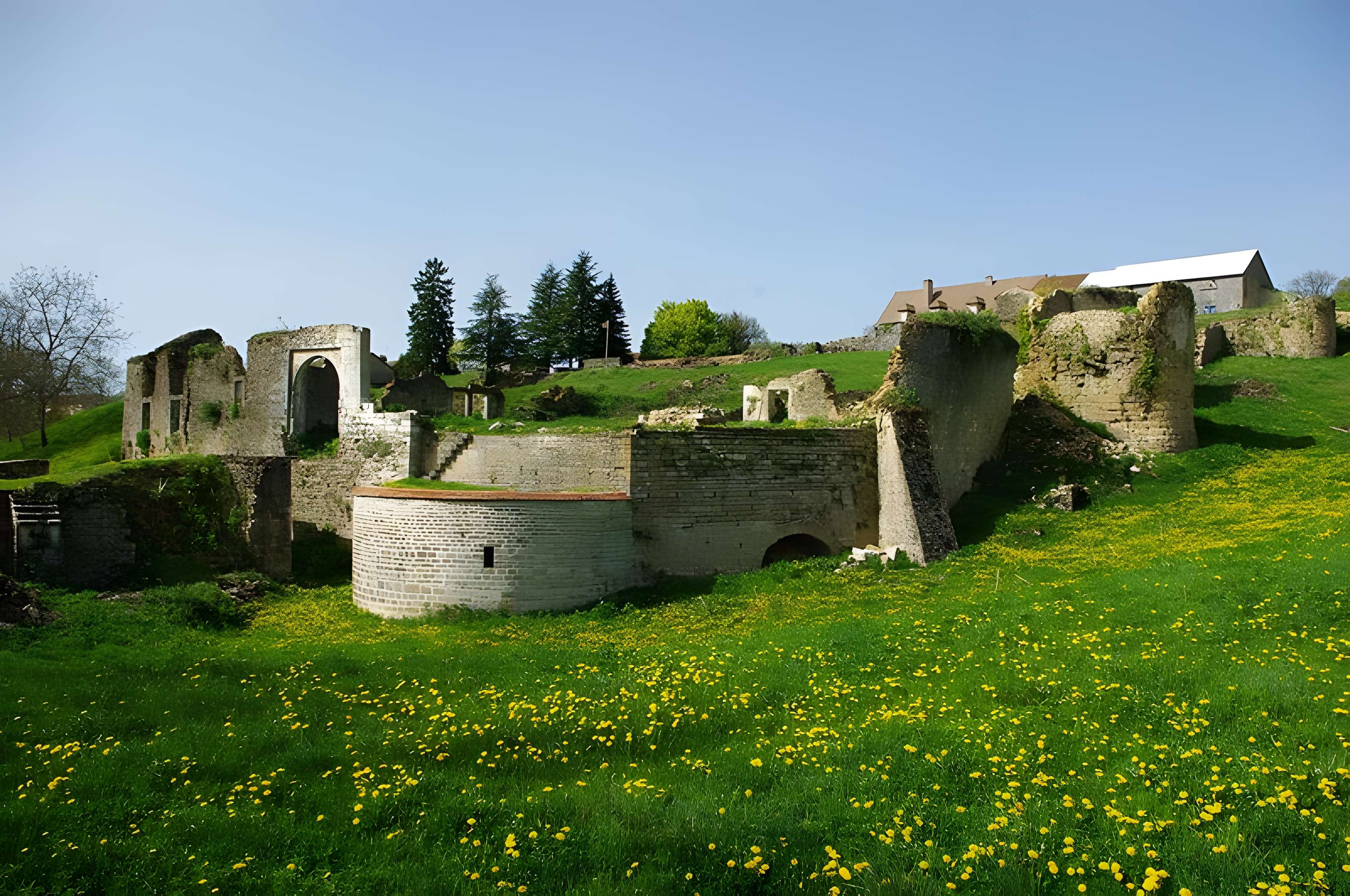
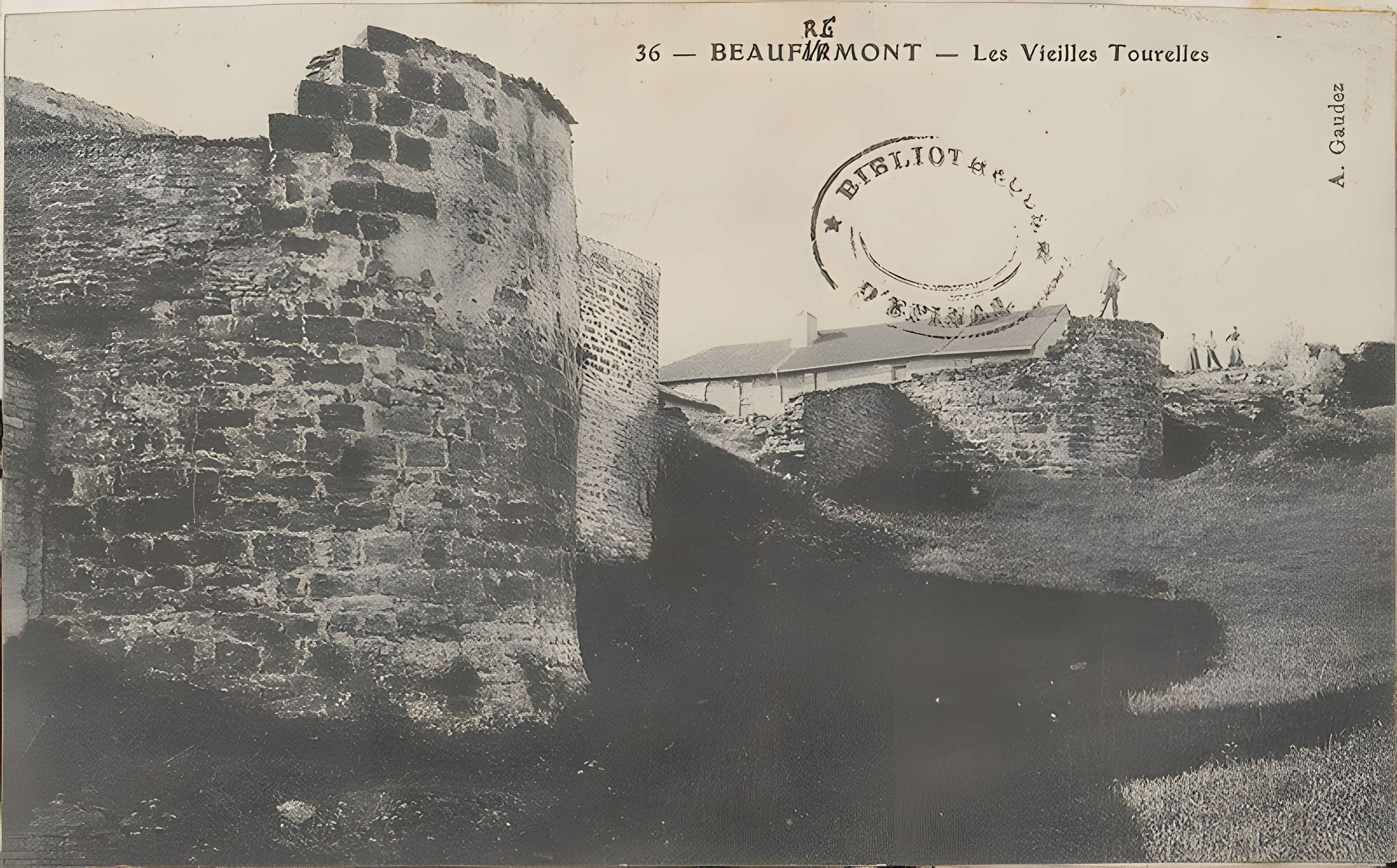
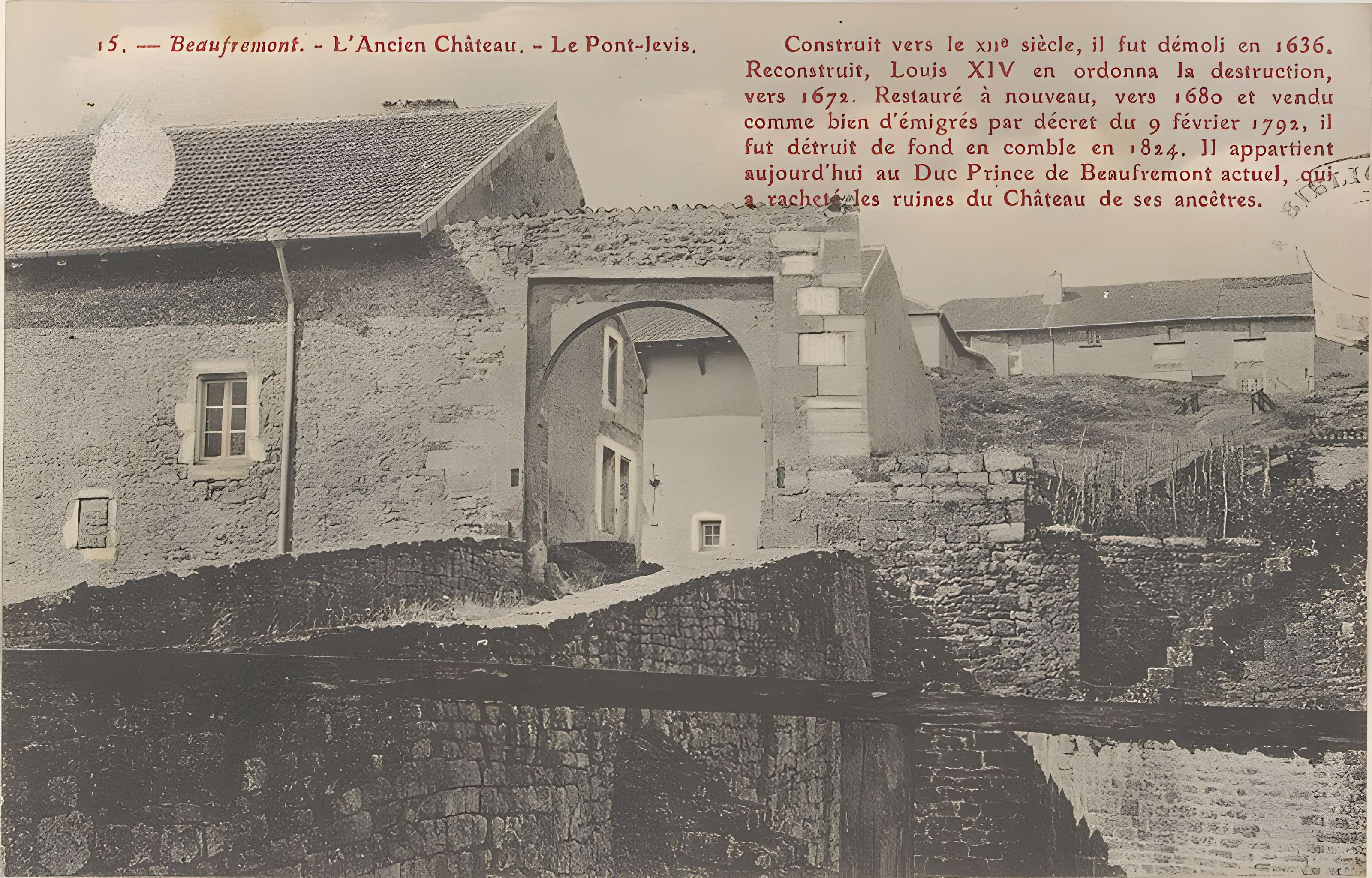
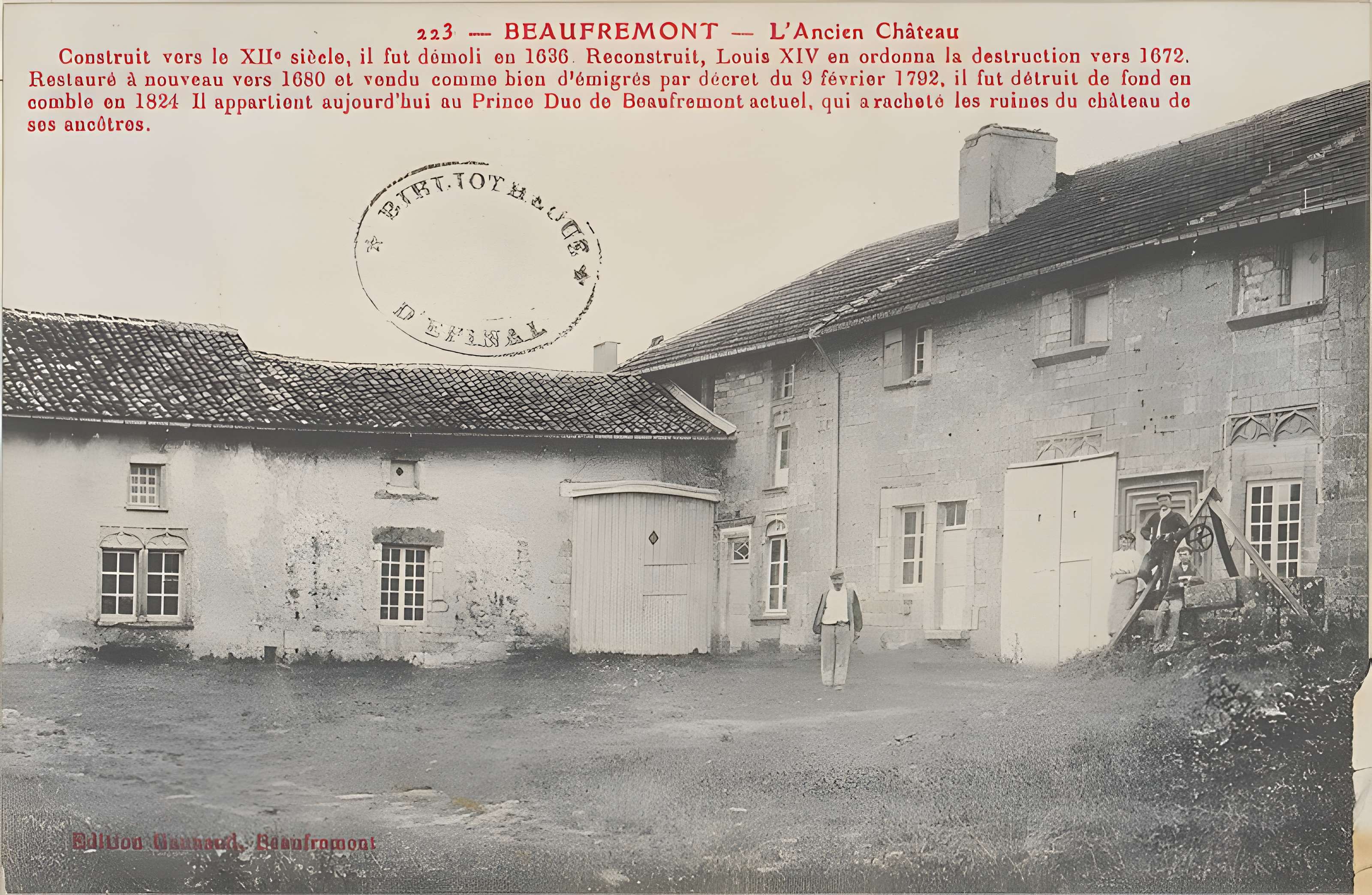
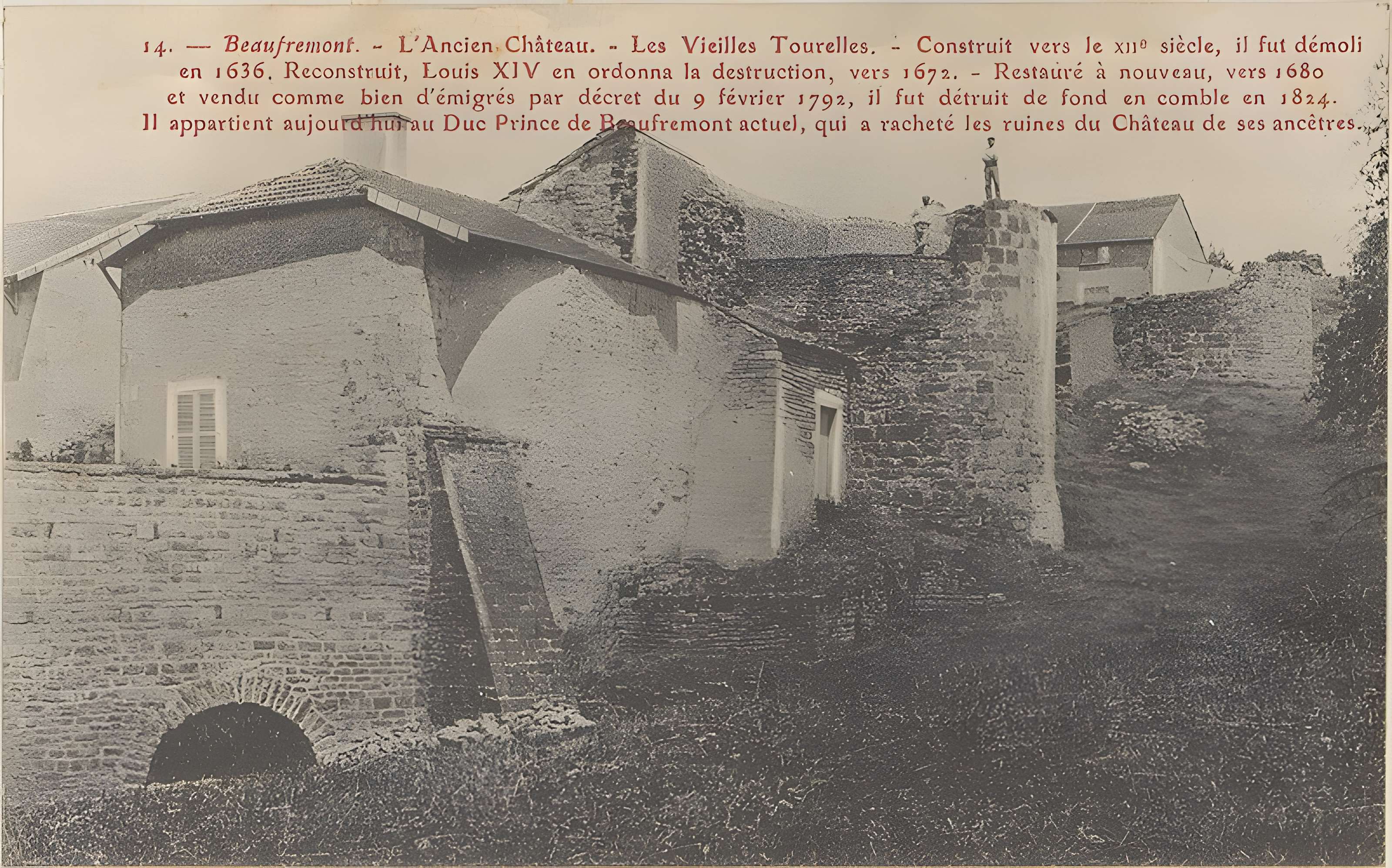
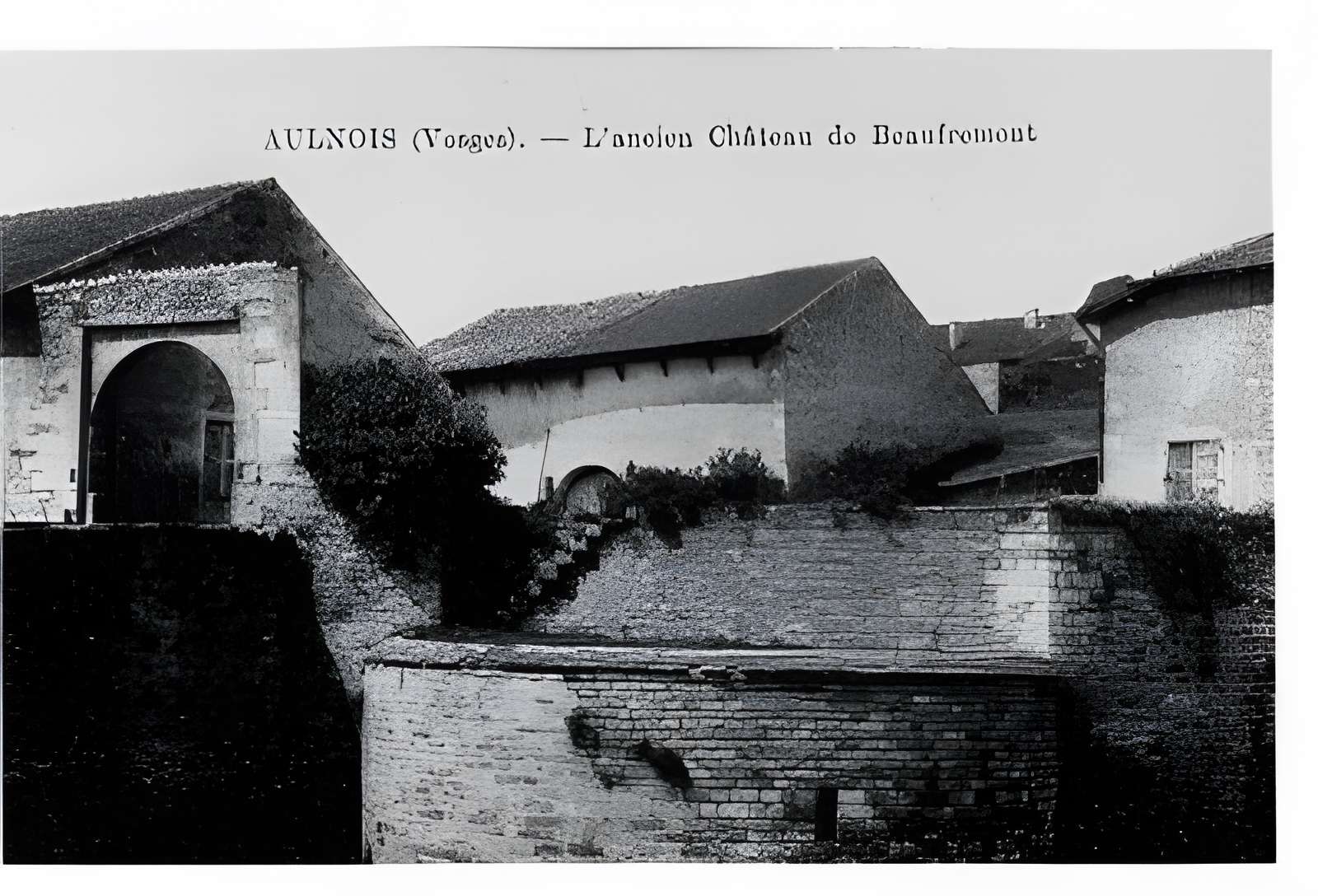
Beaufremont Castle, located in the eponymous commune west of the Vosges (Great East), is a castle mentioned since 1157 as property of the Bauffremont family. Its origins date back to the 12th century, but its current structures date mainly from the 13th, 14th and 15th centuries, with vestiges of courtines and a seigneurial house rebuilt in the late 15th or early 16th century. The dovecote, built in 1607 outside the walls, was transformed into a Saint Joseph chapel much later.
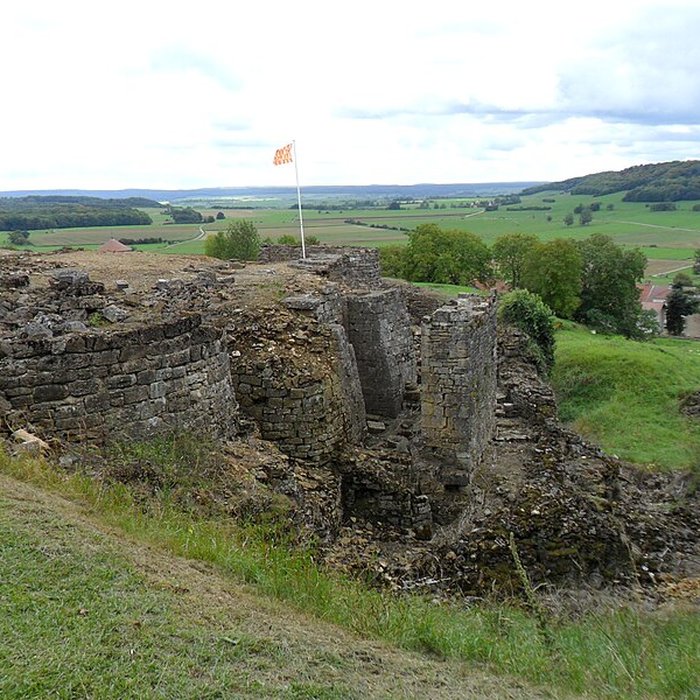
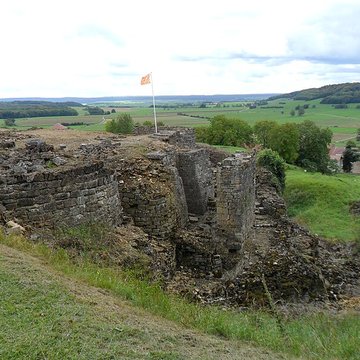
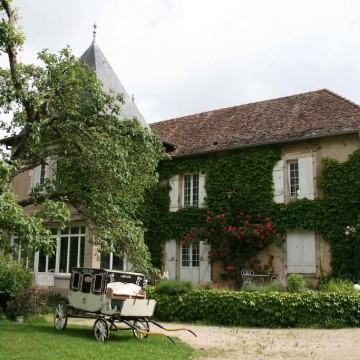
The castle underwent major transformations, including the reconstruction of the house ("new Maysing") for Claude d'Arberg, and was dismantled in 1634 during the Thirty Years War. In the 19th century, a body in return was added, while an extension of the house was built in the 20th century. The remains of the enclosure, house, ditches and counterscarp have been classified as historical monuments since 1994.
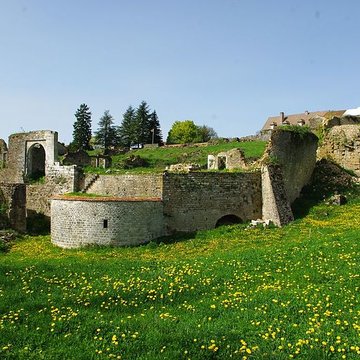
Among the notable architectural elements are a vaulted kitchen (coquina), a variety of vaults (segmentary, full-fine, warhead) and characteristic roofs (long panels, conical for the dovecote). The site, now privately owned, preserves traces of its medieval and Renaissance past, despite the ruins and later additions.
Historical sources, such as the inventory of 1566 or the work of Canon Frutaz, attest to its importance for the Bauffremont family. The castle illustrates the evolution of fortifications and seigneurial habitation in Lorraine, between the Middle Ages and the modern era, while suffering the destructions of conflicts, such as the Thirty Years' War.






Announcements
Please log in to post a review