Logo Musée du Patrimoine

All French heritage classified by regions, departments and cities

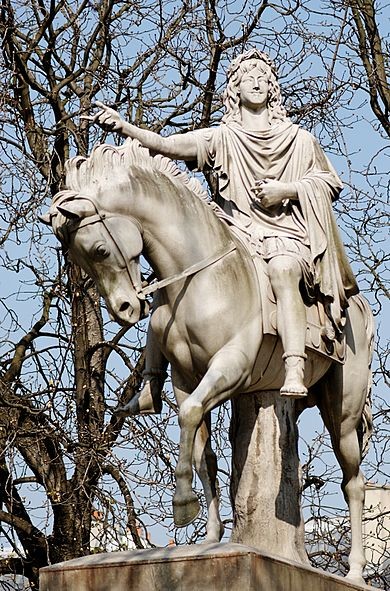
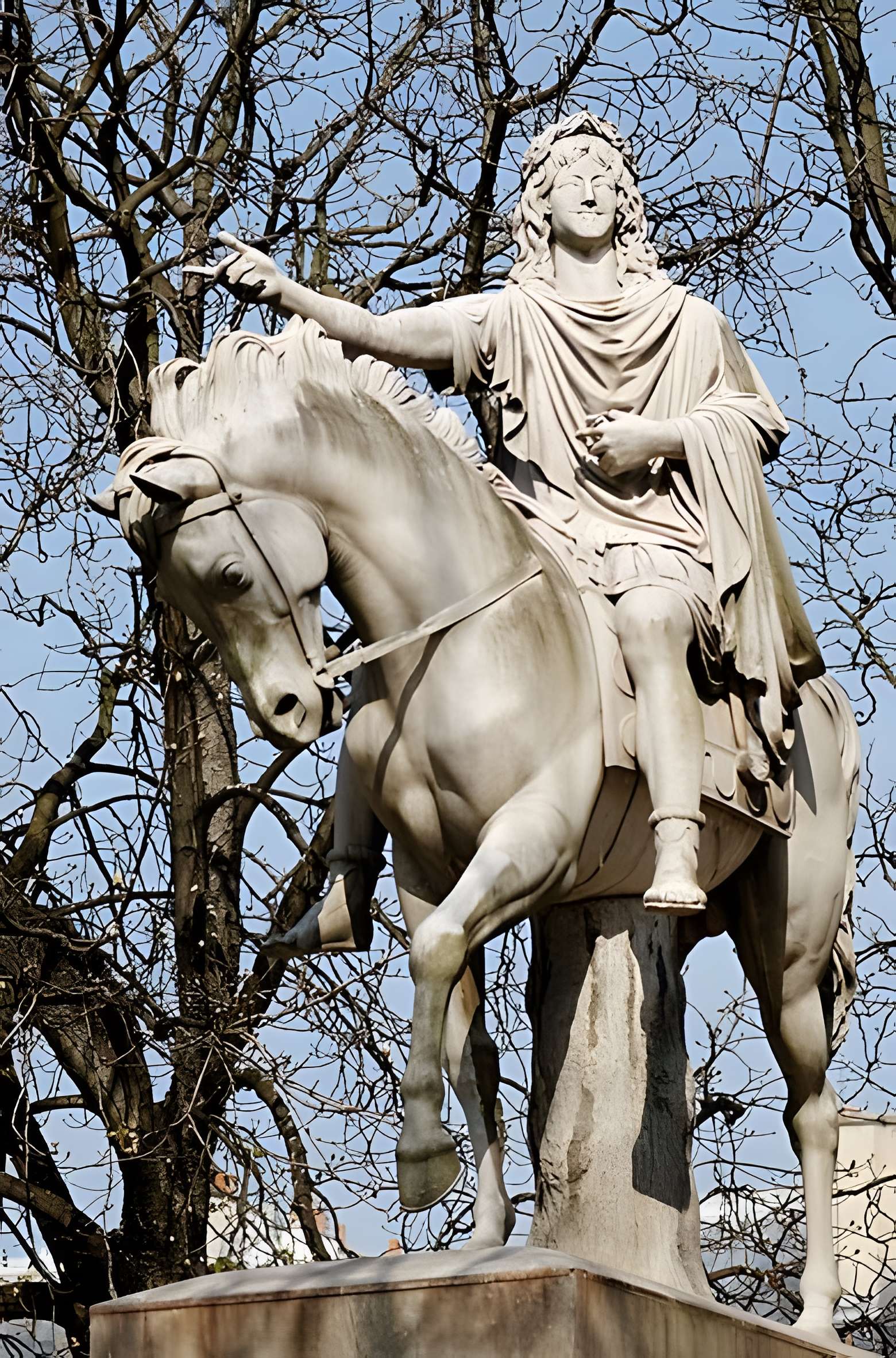
Equestrian statue of Louis XIII in Paris

Patrimoine classé
Statue
Paris

Equestrian statue of Louis XIII in Paris

    Place des Vosges
    75004 Paris

Timeline

Renaissance
Temps modernes
Révolution/Empire
XIXe siècle
Époque contemporaine
1600
1700
1800
1900
2000
1560
Horse control
1639
Inauguration first statue
1792
Revolutionary destruction
1821
Creation of new statue
1825
Current installation
Aujourd'hui
Aujourd'hui

Key figures

Cardinal de Richelieu - Sponsor Order the first statue in 1634.
Catherine de Médicis - Initial sponsor Order the horse for Henry II in 1560.
Pierre II Biard - Sculptor Realizes the first statue in 1639.
Jean-Pierre Cortot - Sculptor Author of the current statue in 1821.
Charles Dupaty - Modeller Created the model used by Cortot in 1816.
Daniele da Volterra - Sculptor Realize the initial horse for Henry II.
Michel-Ange - Art adviser Refuses Catherine de Medici's command.

Origin and history

The equestrian statue of Louis XIII is a white marble work made in 1821 by Jean-Pierre Cortot, after a model by Charles Dupacy dating back to 1816. It was installed in 1825 in the centre of square Louis-XIII (place des Vosges), replacing a previous bronze statue commissioned by Richelieu in 1634. This first monument, inaugurated in 1639, used a horse originally carved for Henry II by Daniele da Volterra and John of Bologna, on a commission from Catherine de Medici. Louis XIII's effigy had been added.

The original statue, melted during the French Revolution to make cannons, was intended to prevent frequent duels on the Place Royale (current Place des Vosges). The current model depicts Louis XIII dressed as Roman emperor, holding the reins of a horse whose posture is supported by a tree trunk to avoid collapse. The pedestal is surrounded by wrought iron grills.

The history of this statue reflects French political upheavals: its destruction in 1792 symbolizes the fall of the monarchy, while its reconstruction in 1825, under the Restoration, marks a return to the royal tribute. The initial horse, commissioned by Catherine de Medici to Michelangelo (who refused for age), was finally made by da Volterra, illustrating the artistic links between France and Italy during the Renaissance.

External links