Initial construction XVe siècle (≈ 1550)
Building of the main body and round tower.
1er quart XVIIe siècle
Postwar Restoration of Religion
Postwar Restoration of Religion 1er quart XVIIe siècle (≈ 1725)
Renovation by Jean Dubois, decorated chapel.
XIXe siècle
Developments by J.B. Rames
Developments by J.B. Rames XIXe siècle (≈ 1865)
Restoration after agricultural use.
2 juillet 2010
Registration for Historic Monuments
Registration for Historic Monuments 2 juillet 2010 (≈ 2010)
Total protection of the castle and outbuildings.
Aujourd'hui
Aujourd'hui
Aujourd'hui Aujourd'hui (≈ 2025)
Position de référence.
Heritage classified
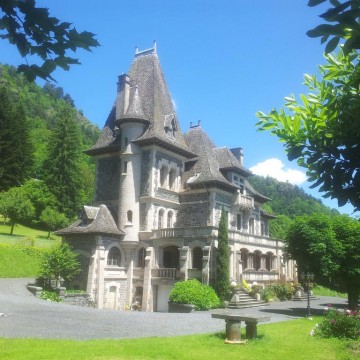
The entire castle, including its interior decorations as well as the chapel tower, the communes and terraces (Box OH 24, 26, 27): inscription by decree of 2 July 2010
Key figures
Jean Dubois - Owner-restaurant
Renovate the castle in the 17th century.
Jean-Baptiste Rames - Geologist and owner
Set up the castle in the 19th century.
Origin and history
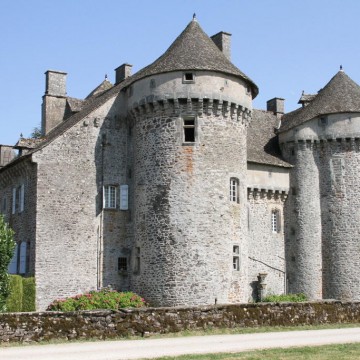
Vals Castle, located at the bottom of the valley of the Etze in Saint-Santin-Cantalès, is a fortified building dating mainly from the 15th century. Its quadrangular structure, complemented by a round tower with round path and commons, reflects the cantalian defensive architecture, marked by the use of volcanic bellows and lauze roofs. The site, partially damaged during the Wars of Religion, was restored in the early seventeenth century by Jean Dubois, who added a chapel decorated with murals.
In the 19th century, the castle changed hands and was acquired by geologist Jean-Baptiste Rames, who undertook new developments to restore the building, then transformed into a farm. Rames' work allowed to preserve interior elements such as painted decorations on the first floor. Today, the castle belongs to the Label family and has been protected as historical monuments since 2010, including its terraces, tower and commons.
The building illustrates the evolution of seigneurial residences in Haute-Auvergne, moving from a defensive function to an aristocratic residence and then to a farm. Its inscription as a historic monument underscores its heritage importance, both for its architecture and for its history linked to religious conflicts and social transformations of past centuries. Local materials, such as volcanic stone, and traditional construction techniques make it a representative example of the Cantalian built heritage.