Logo Musée du Patrimoine

All French heritage classified by regions, departments and cities

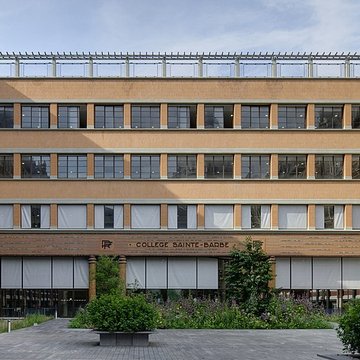
Sainte-Barbe College in Paris à Paris 1er dans Paris 5ème

Patrimoine classé
Collège

Sainte-Barbe College in Paris

    4 Rue Valette
    75005 Paris 5e Arrondissement
State ownership
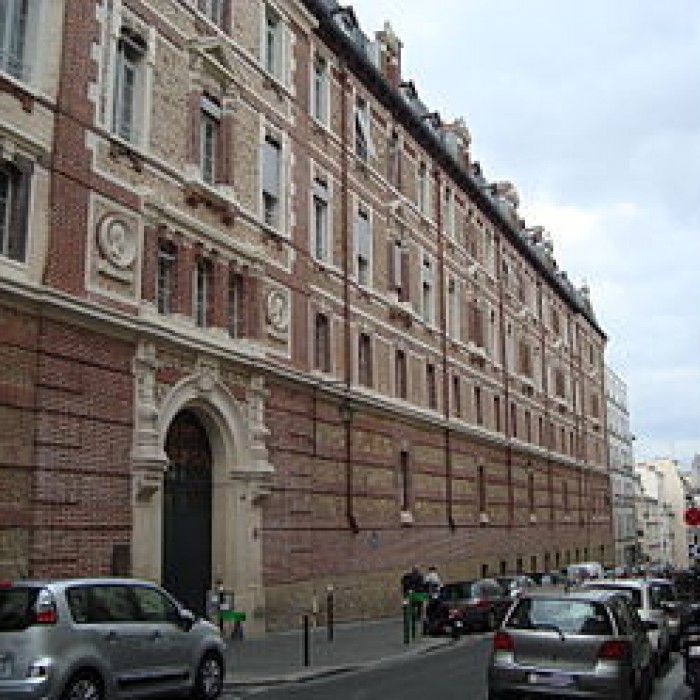
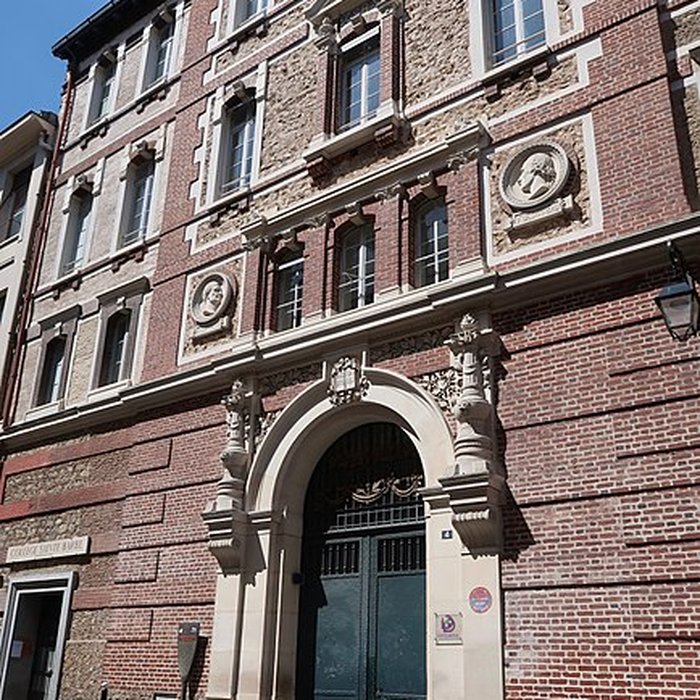
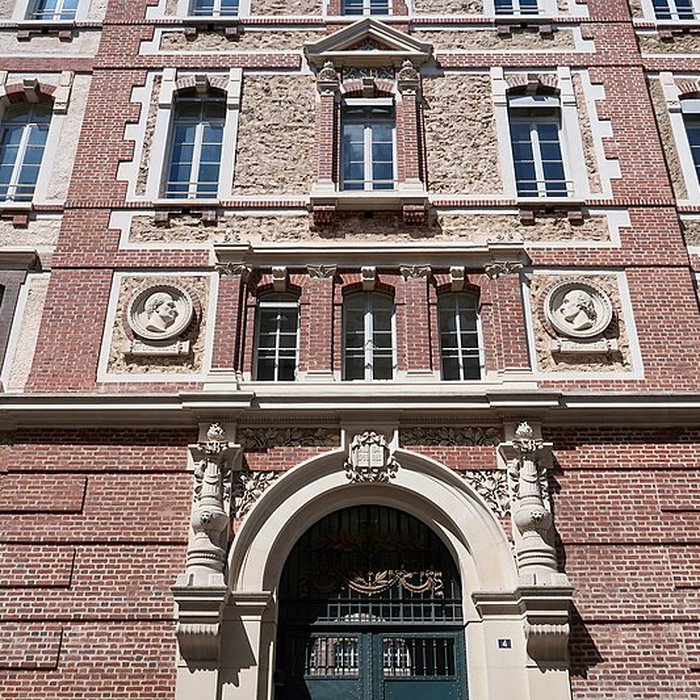
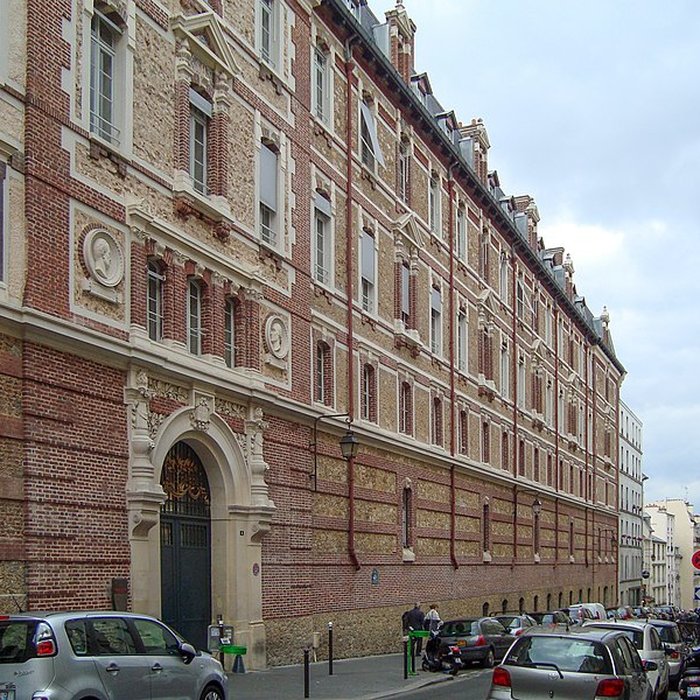
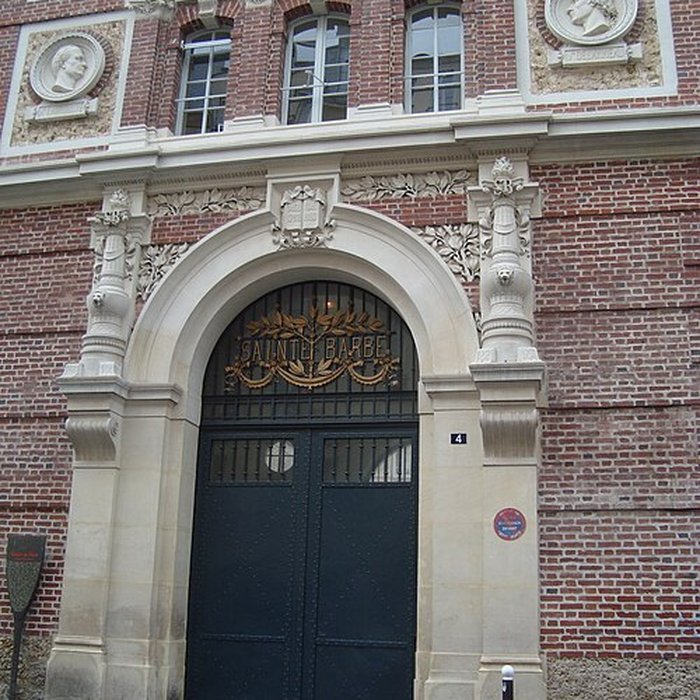
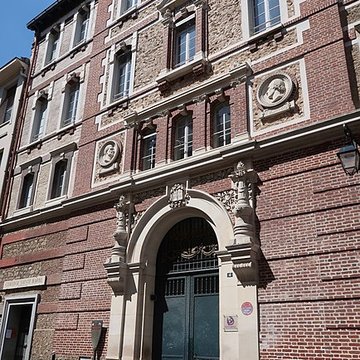
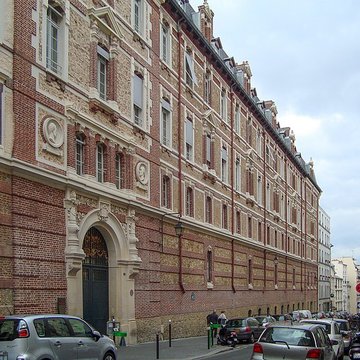
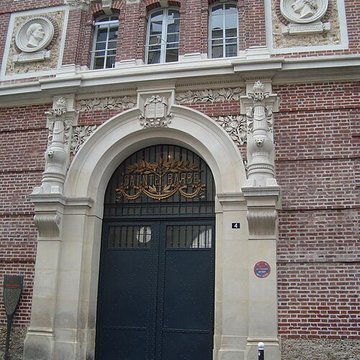
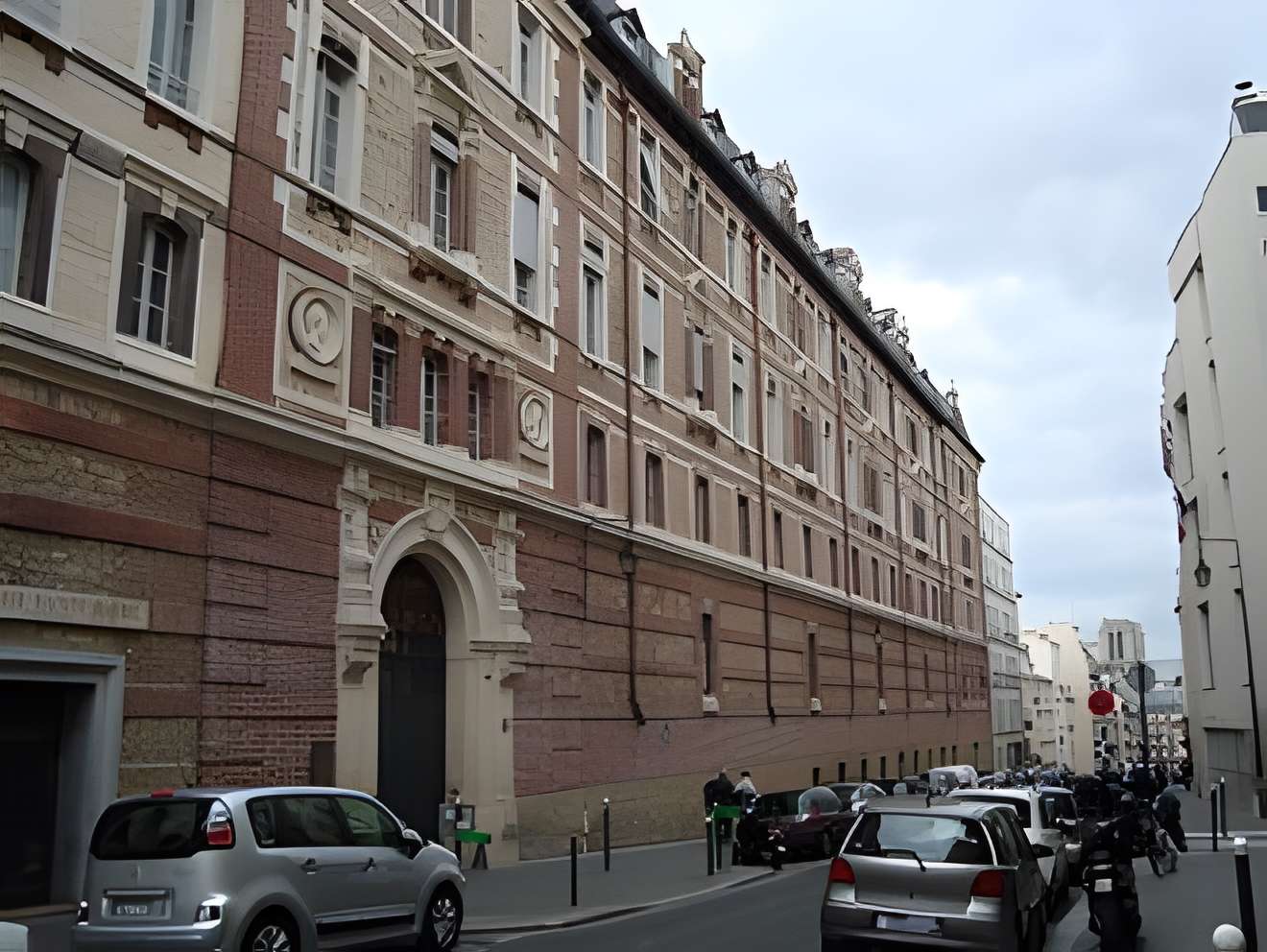
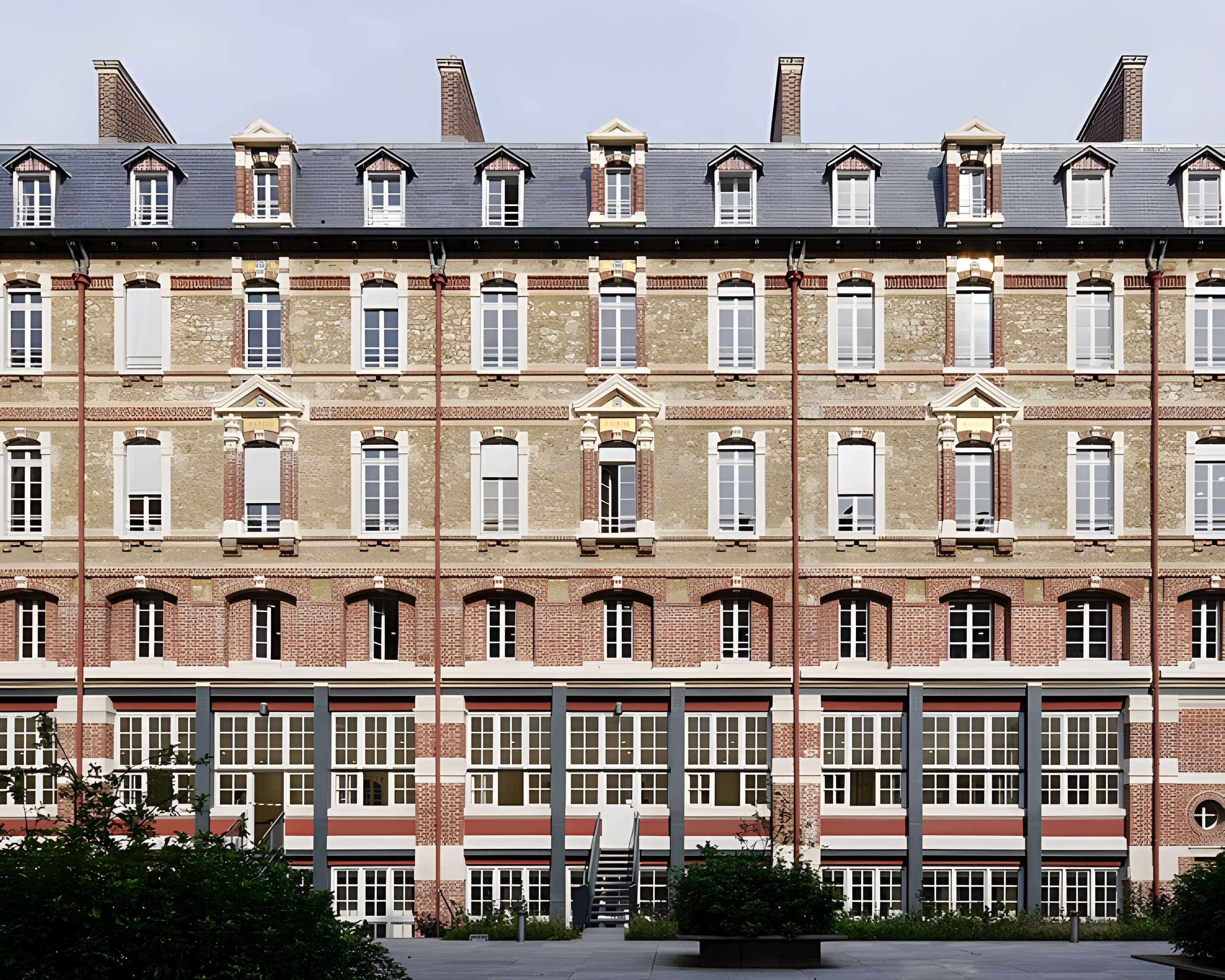
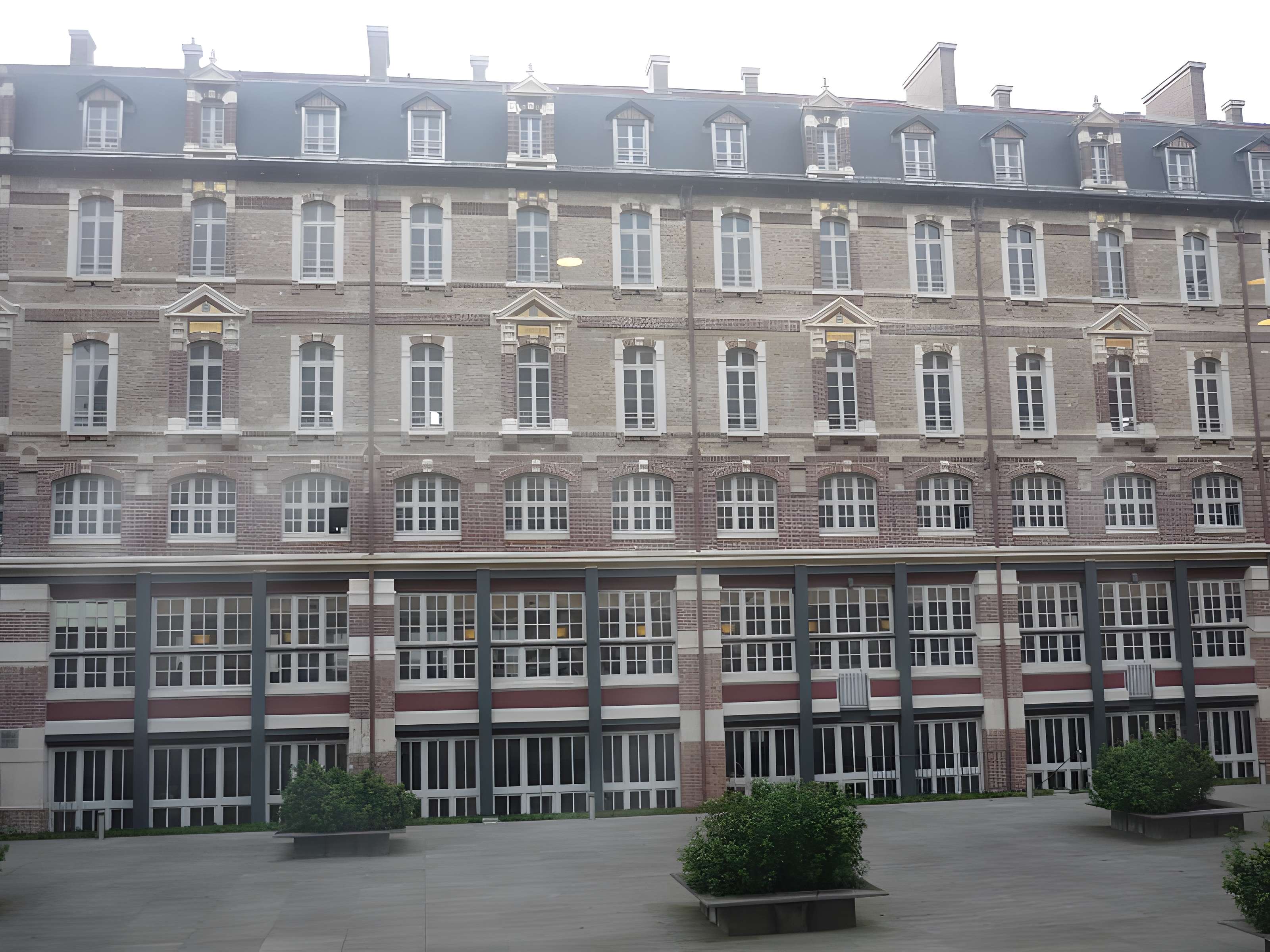
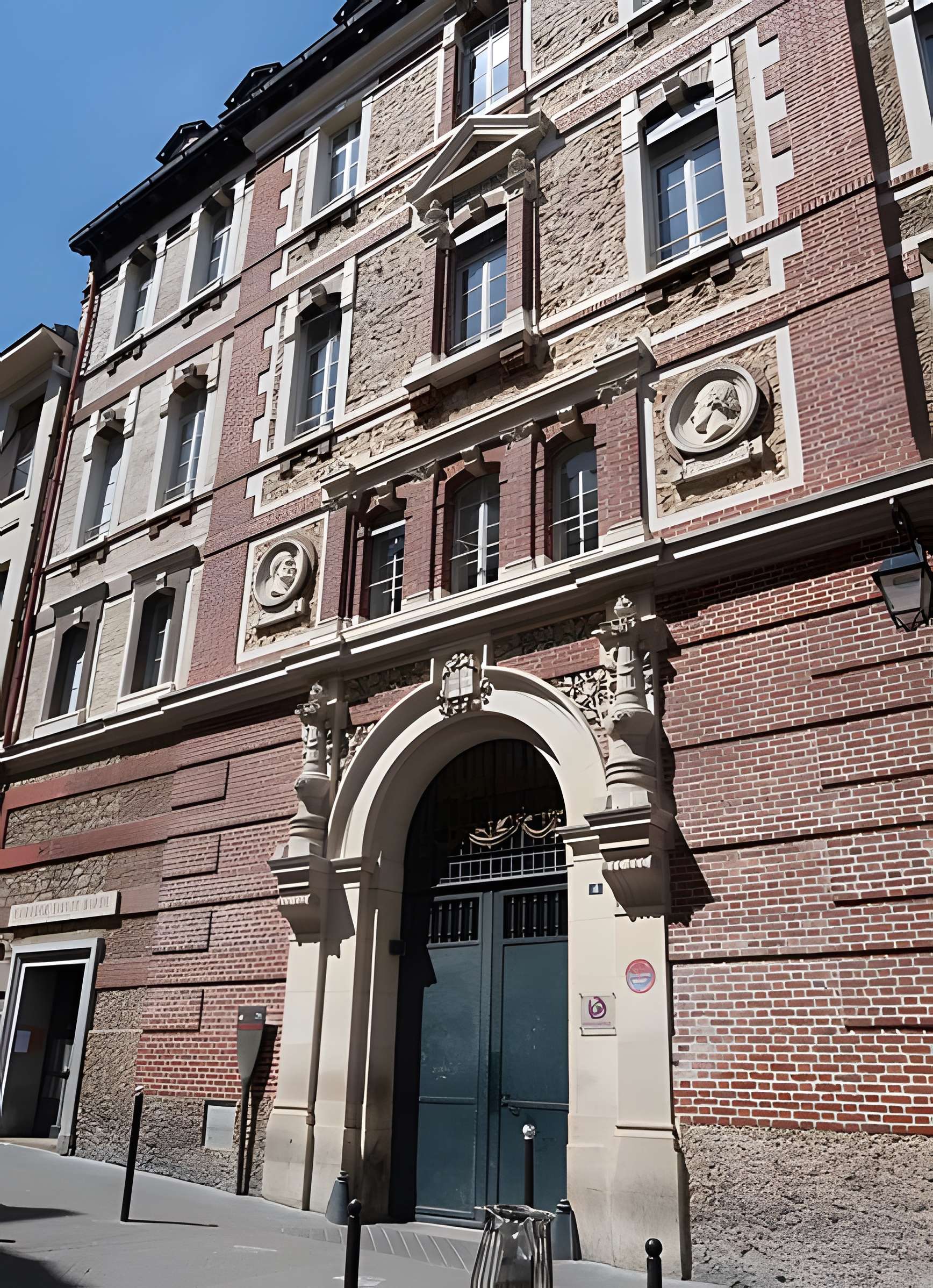
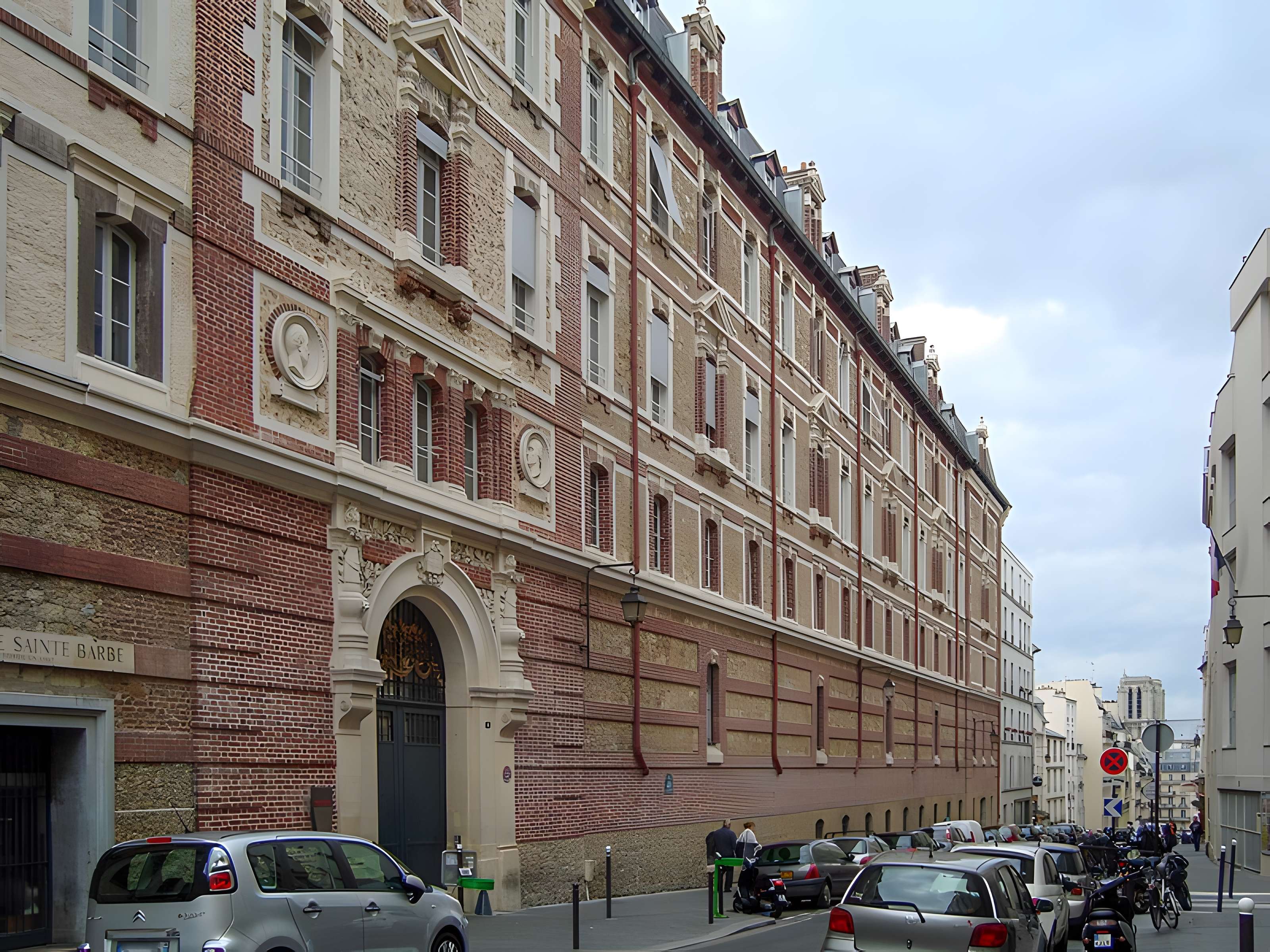
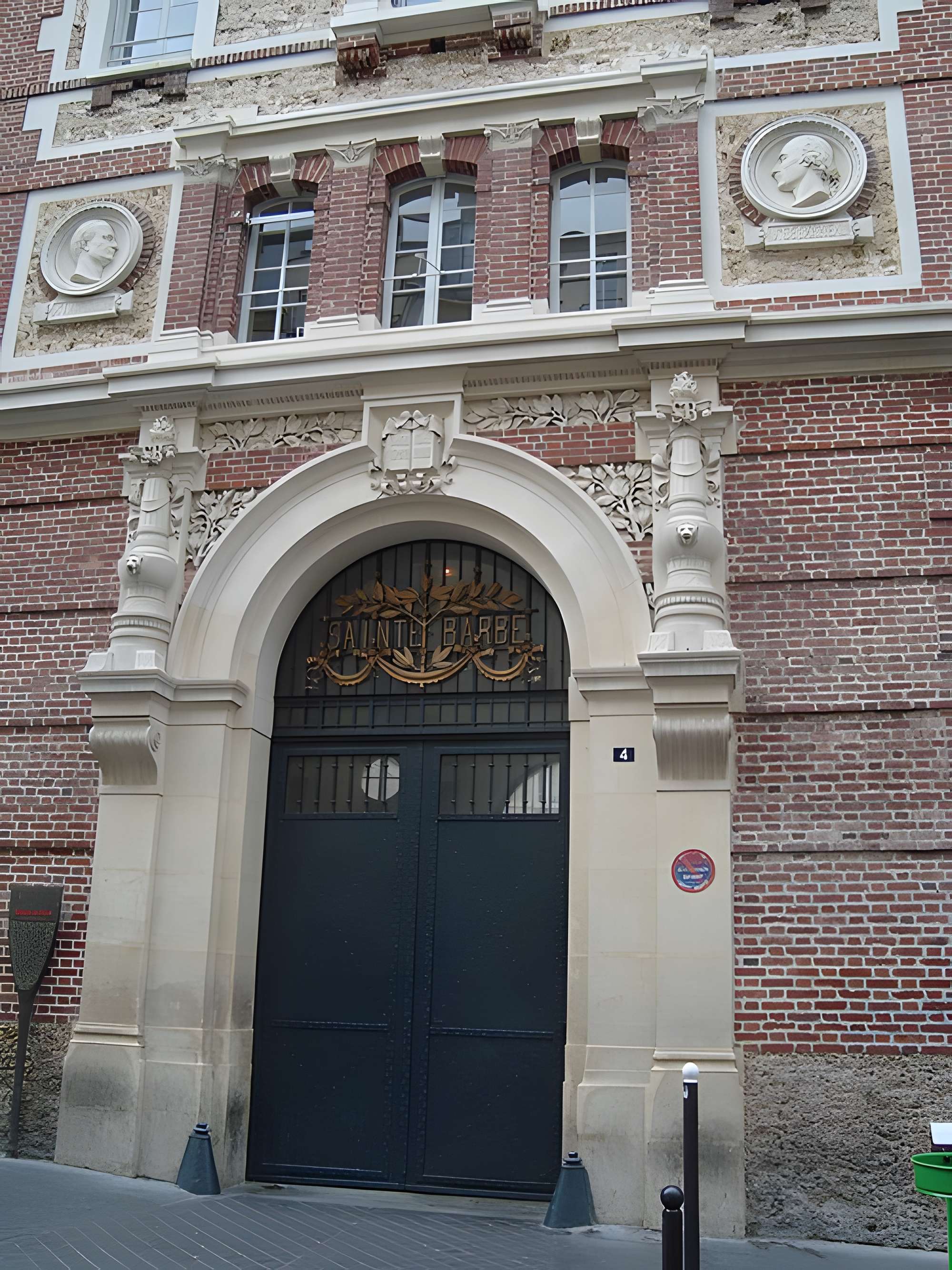
Collège Sainte-Barbe à Paris
Crédit photo : Celette - Sous licence Creative Commons

Timeline

Bas Moyen Âge
Renaissance
Temps modernes
Révolution/Empire
XIXe siècle
Époque contemporaine
1500
1600
1700
1800
1900
2000
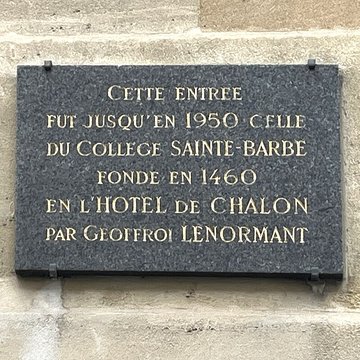
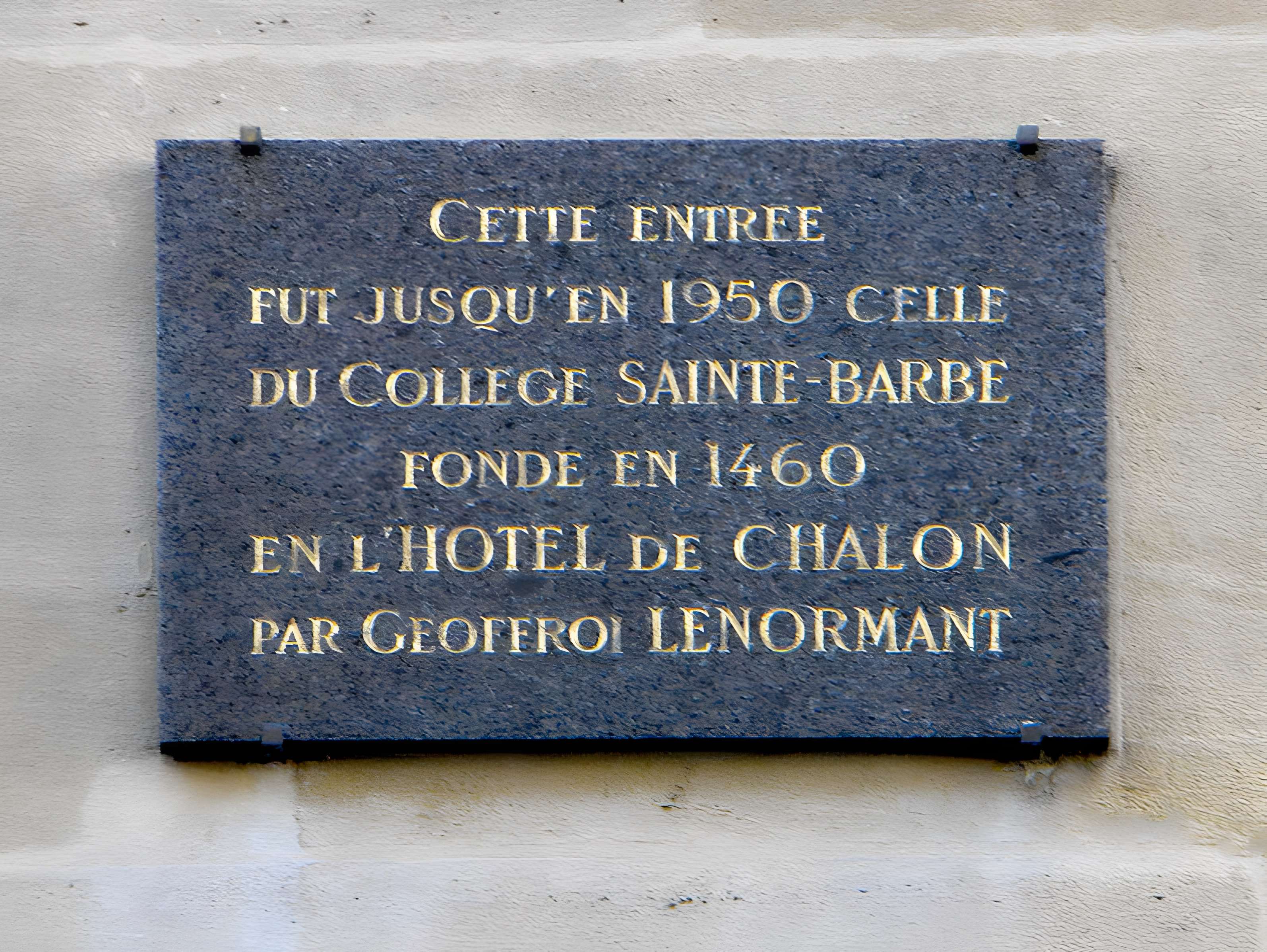
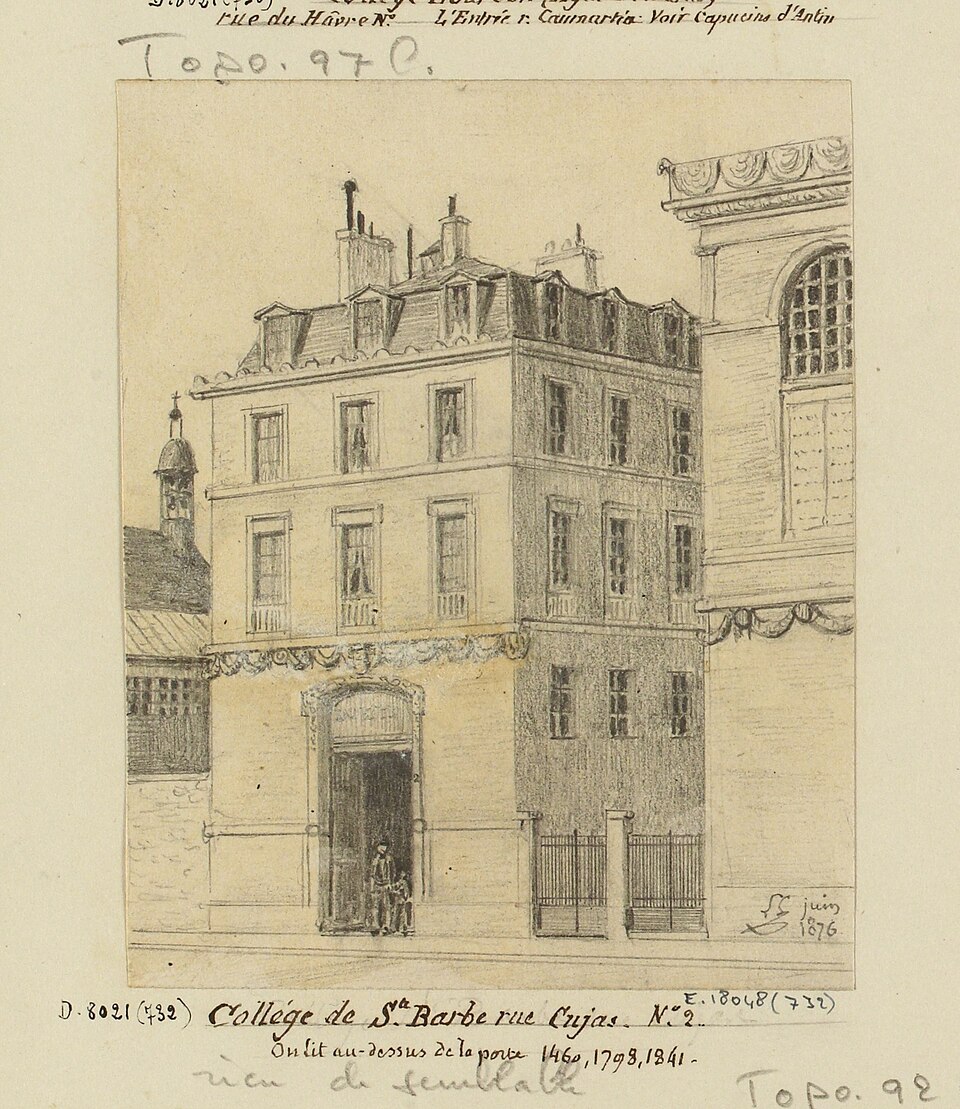
1460
College Foundation
1793
Revolutionary closure
1798
Renaissance of college
1840-1841
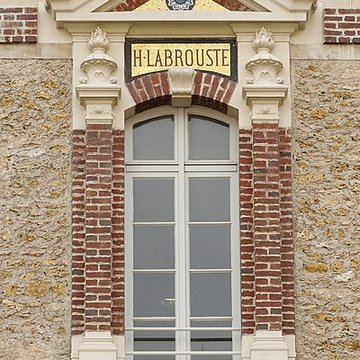
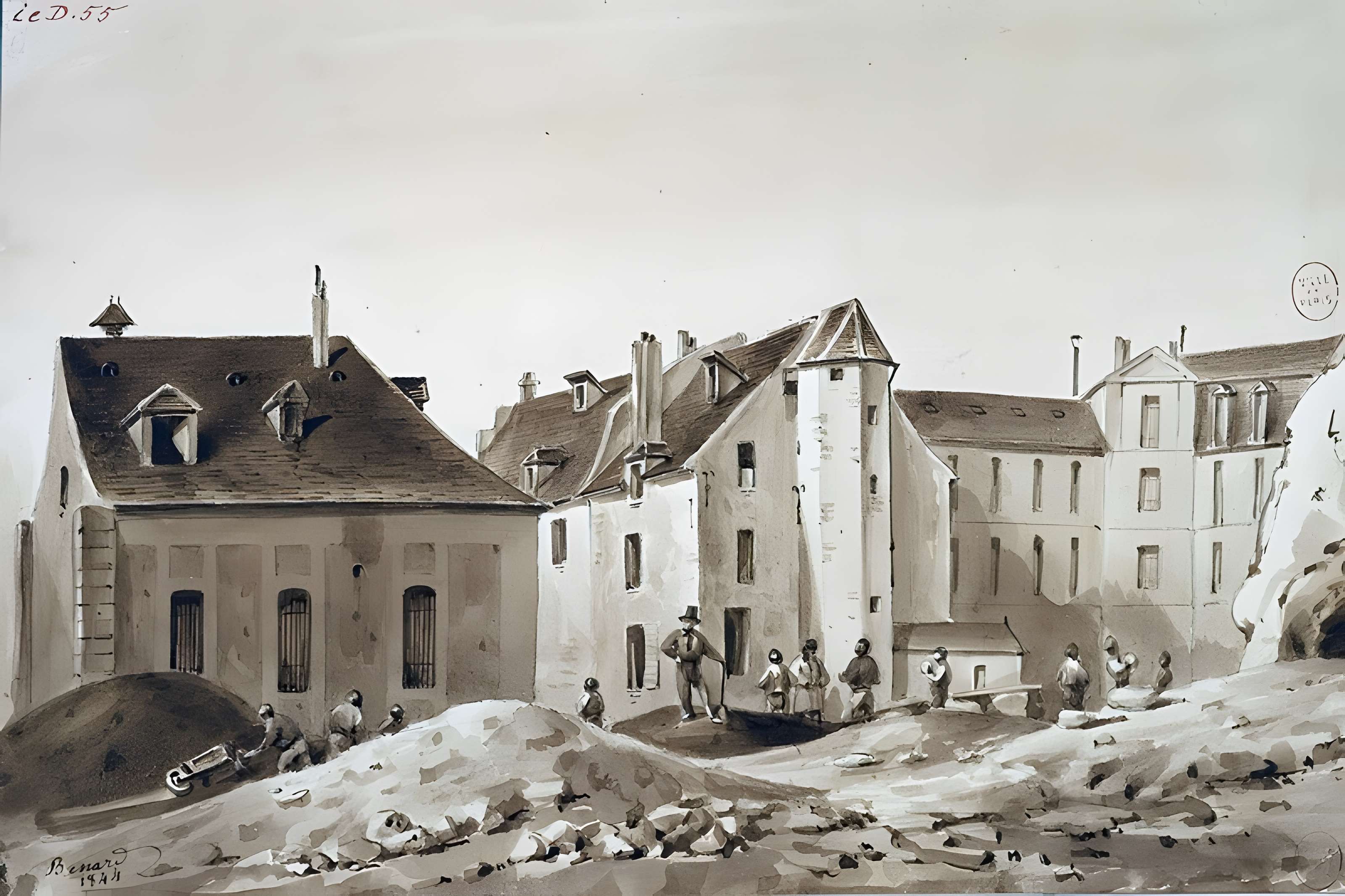
Reconstruction by Labrouste
1882
Inauguration of preparatory school
1999
Final closure
Aujourd'hui
Aujourd'hui

Heritage classified

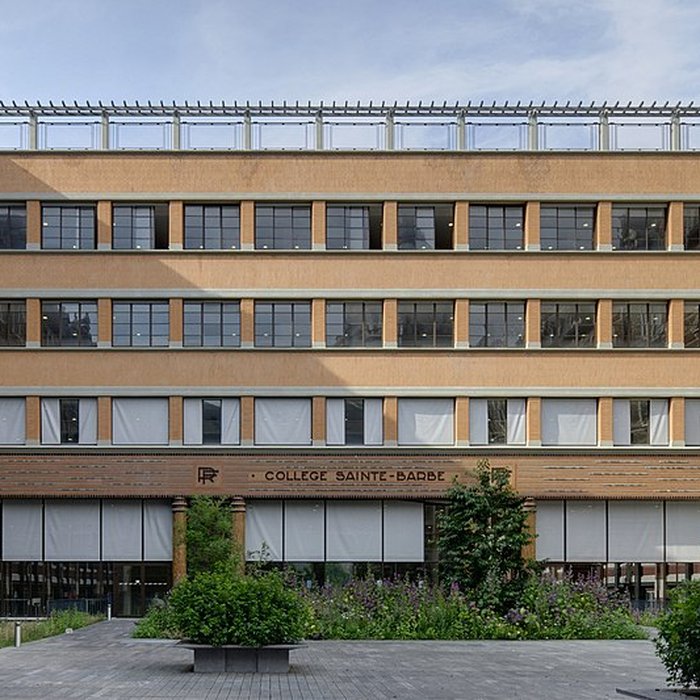
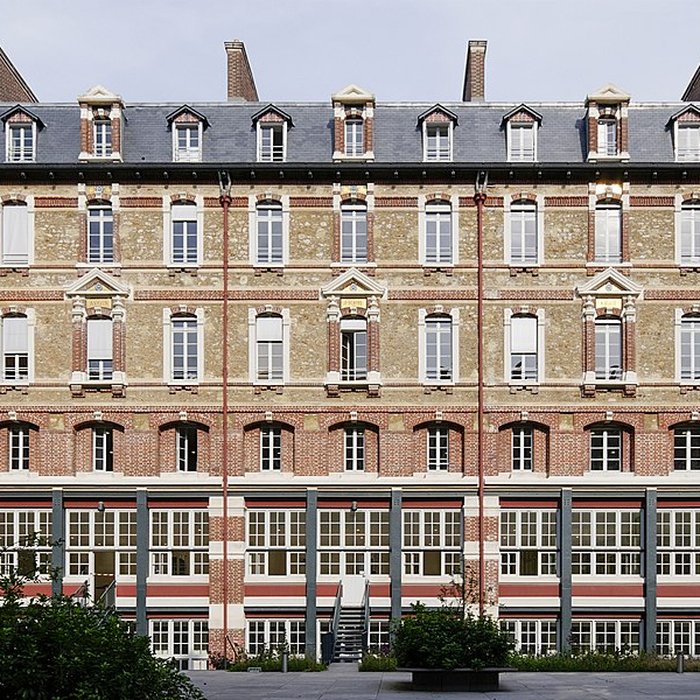
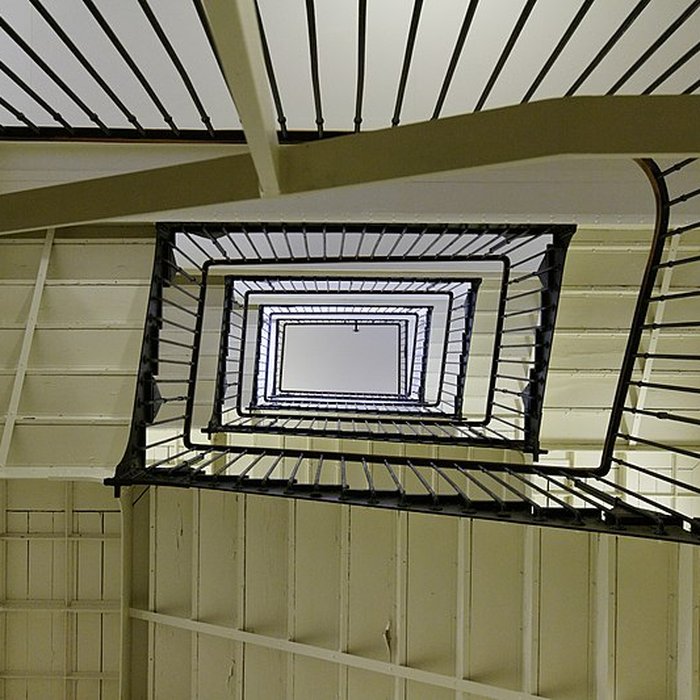
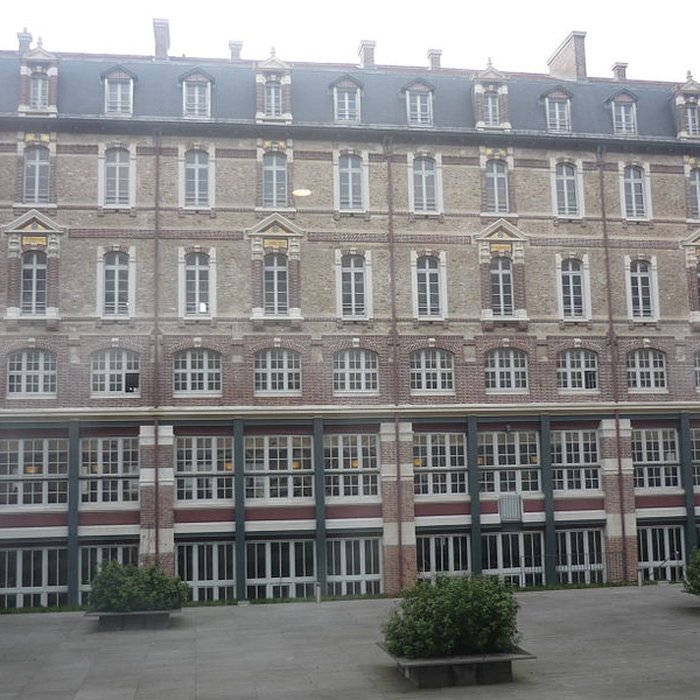
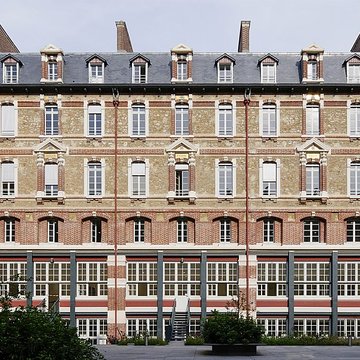
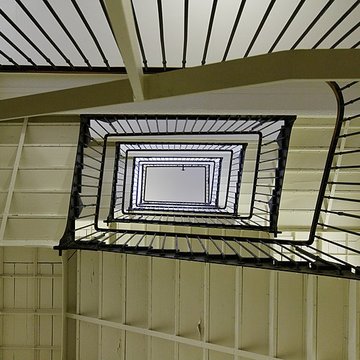
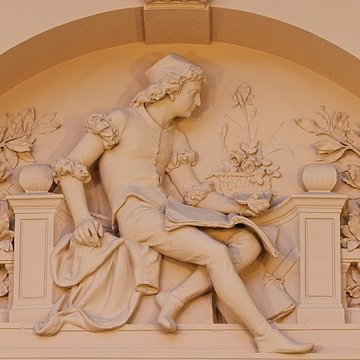
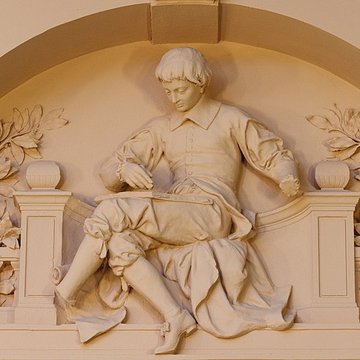
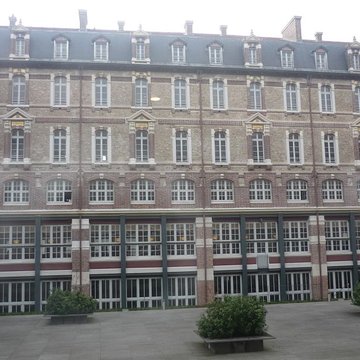
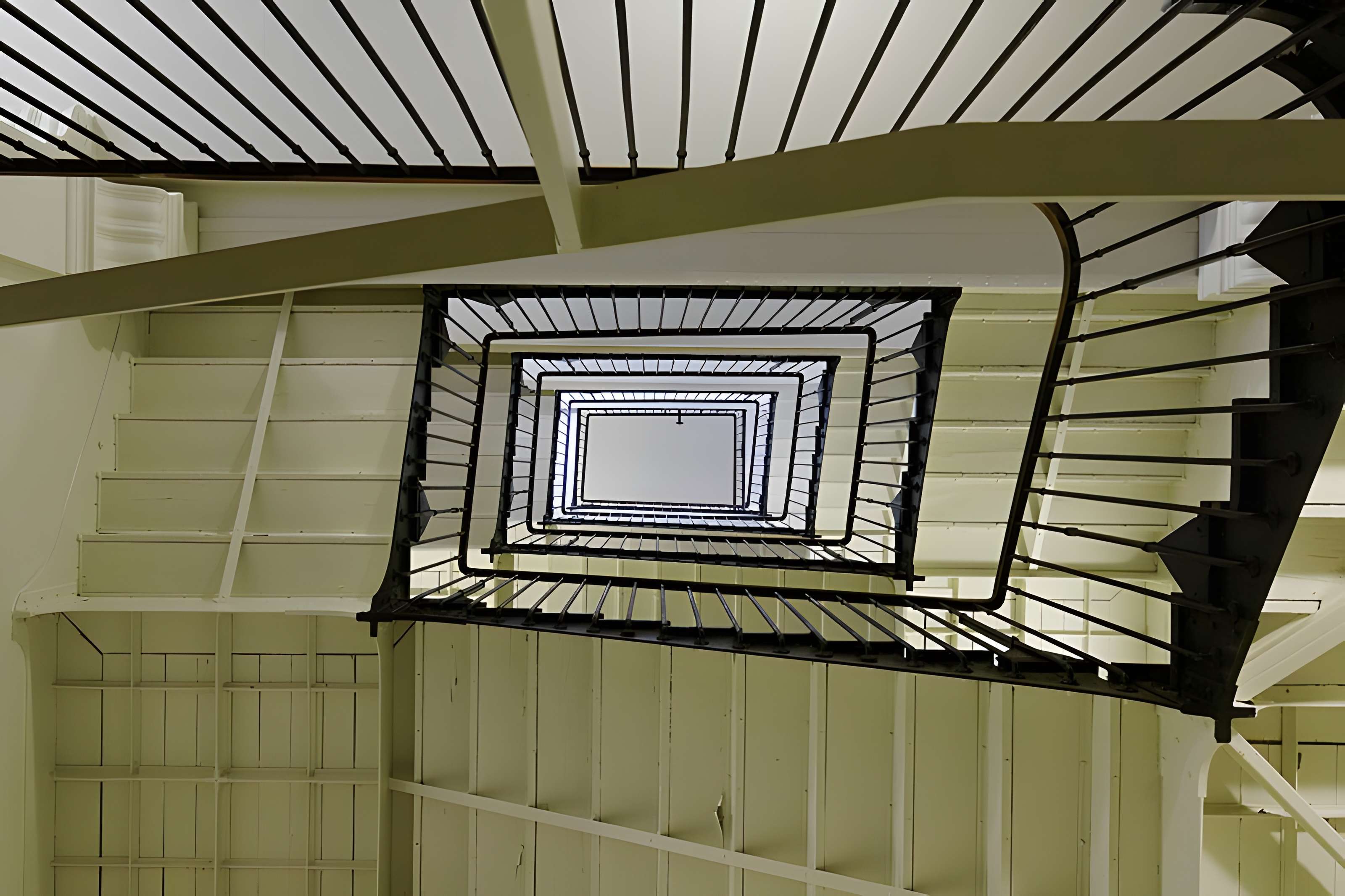
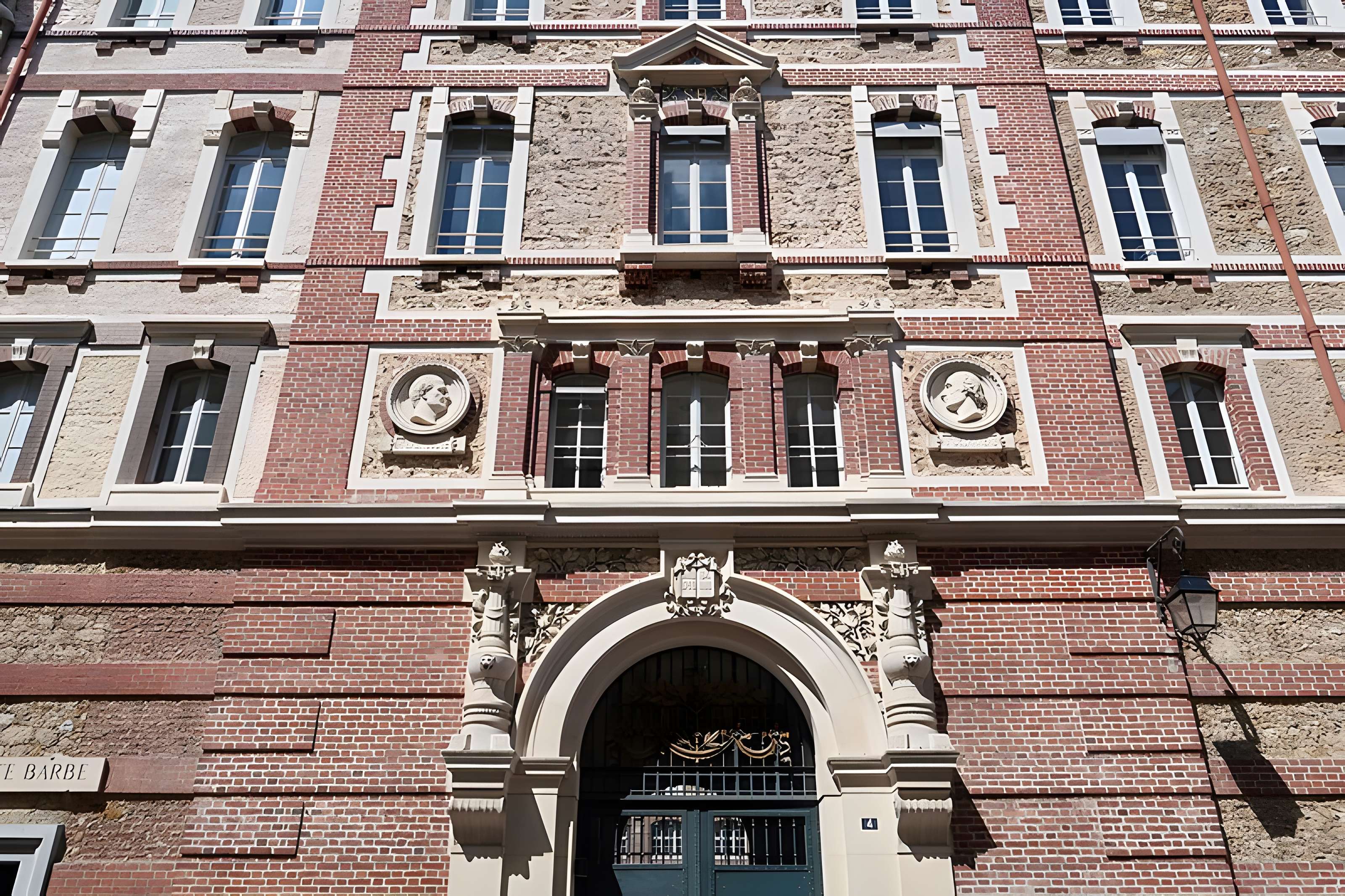
All facades and roofs (including those of the 1930s building); stairs located at the ends of the Lheureux buildings, on the building side of the 1930s, as well as the one located under the roof of the building of the 1930s; floor of the main courtyard; refectory and amphitheater with their functional system and decor; drawing room with its decoration (Box BM 6): inscription by order of 9 December 1999

Key figures

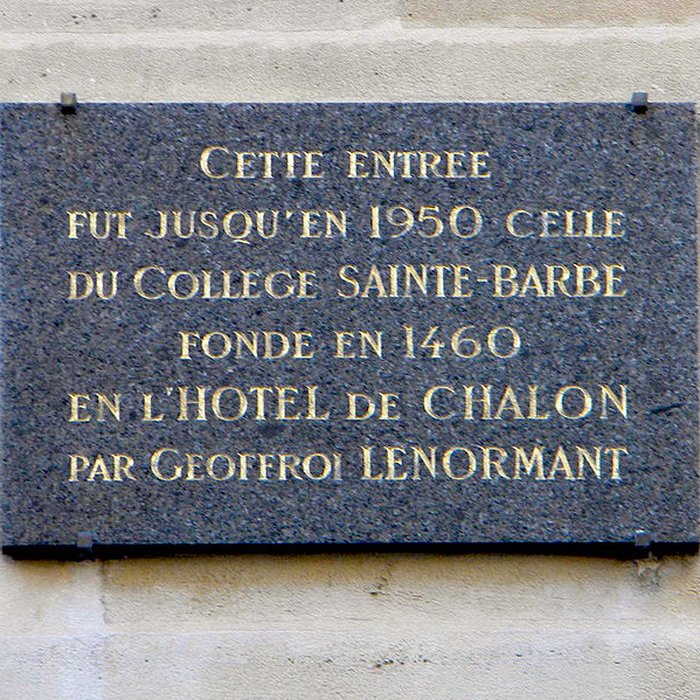
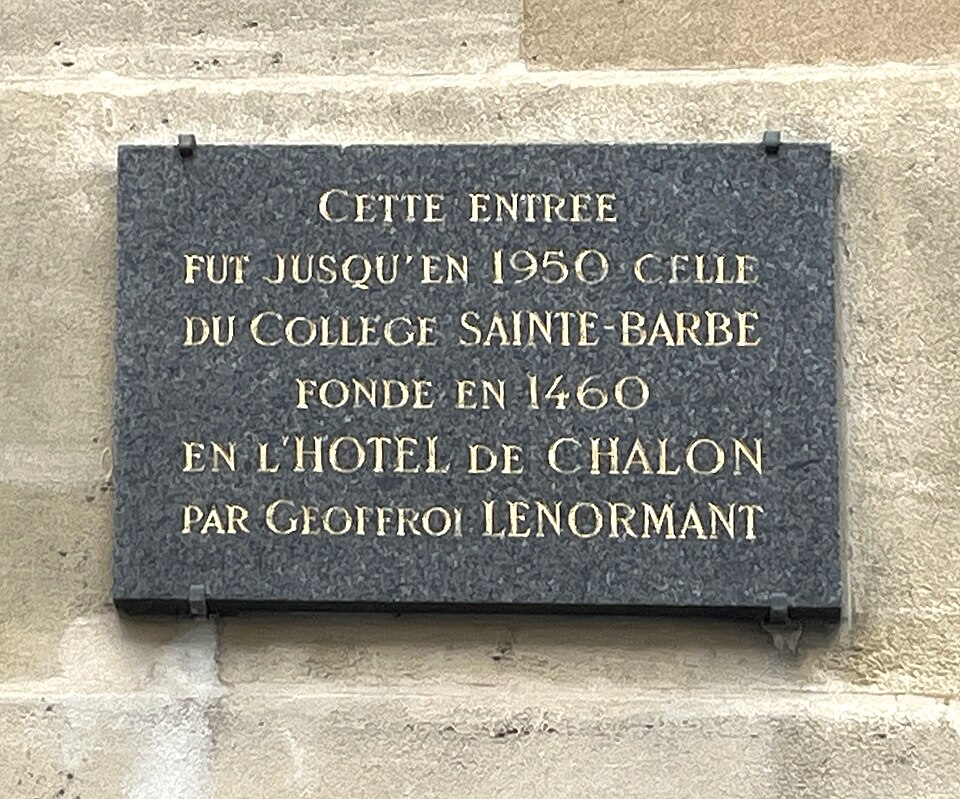
Geoffroy Lenormand - Suspected Founder Professor of the College of Navarre, bought the buildings in 1460.
Victor de Lanneau - Post-revolutionary renovation Repurchase and revive the college in 1798.
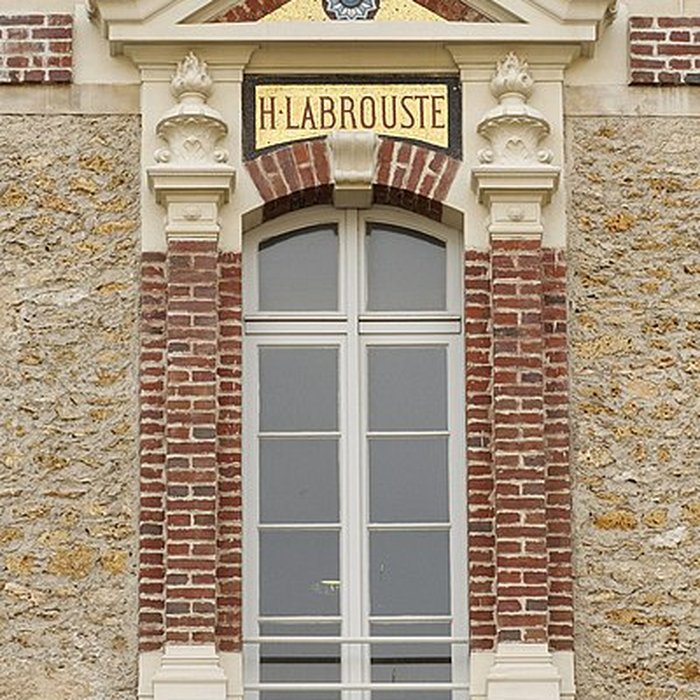
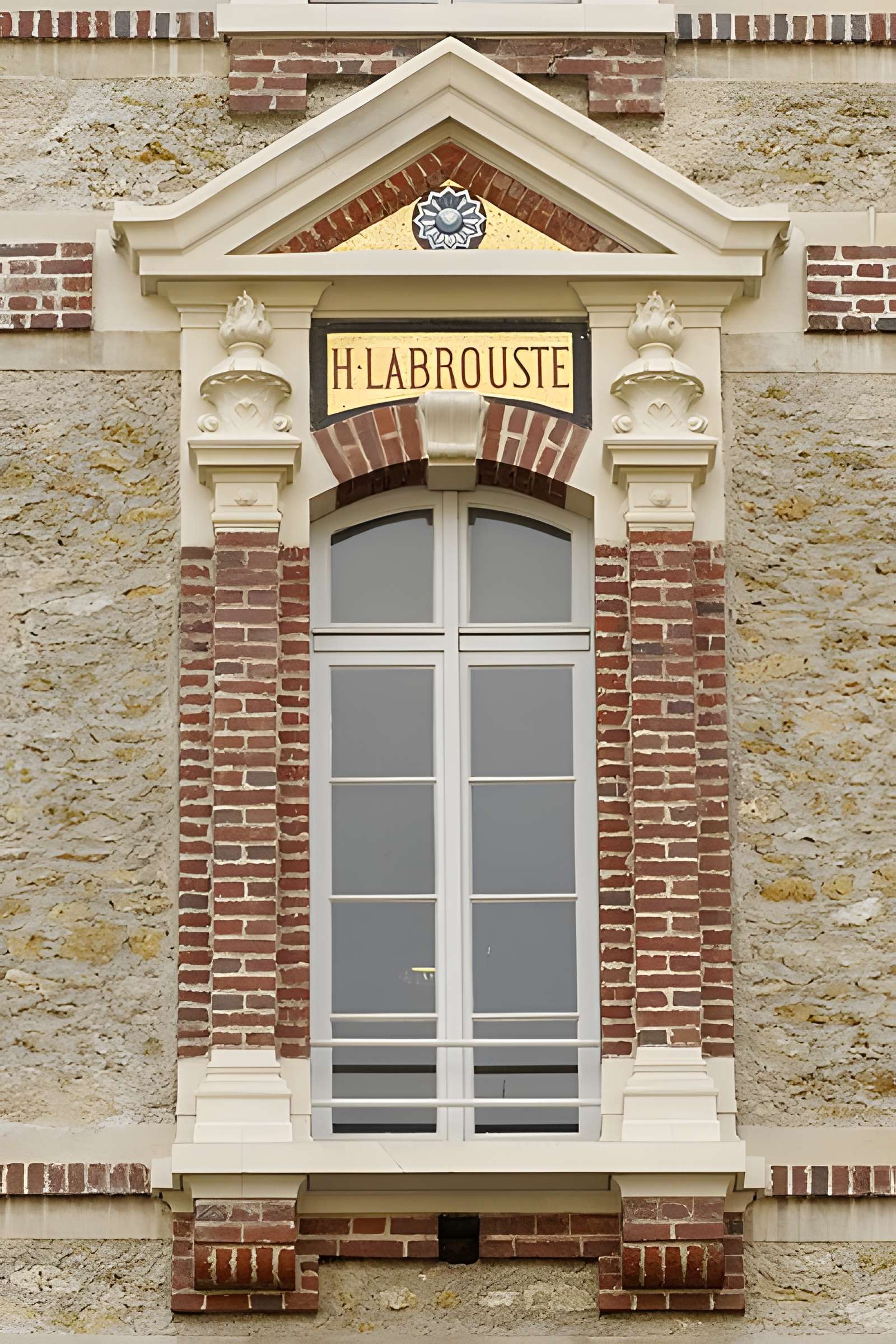
Alexandre Labrouste - Reconstruction architect Directs the work from 1840 to 1853.
Louis-Ernest Lheureux - Architect of the preparatory school Designs the buildings inaugurated in 1882.
Ignace de Loyola - Famous former student Founder of the Society of Jesus.
Gustave Eiffel - Famous former student Engineer and architect of the Eiffel Tower.

Origin and history

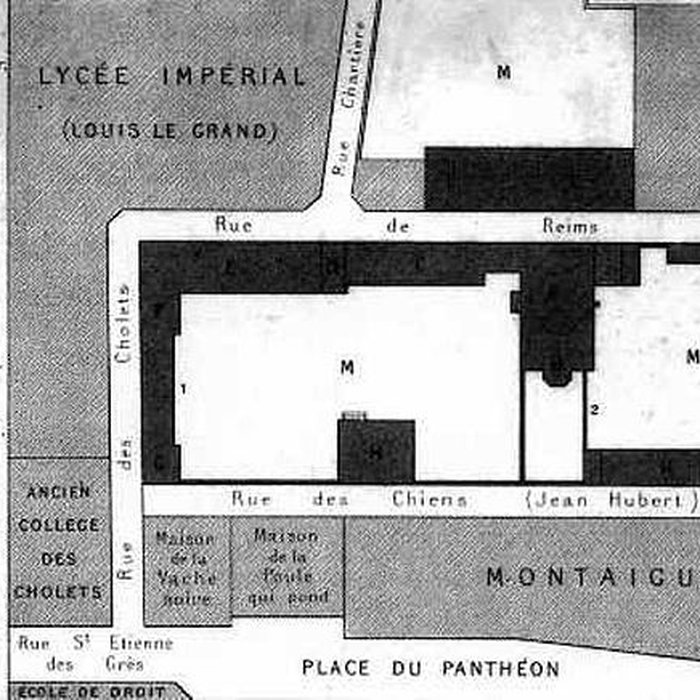
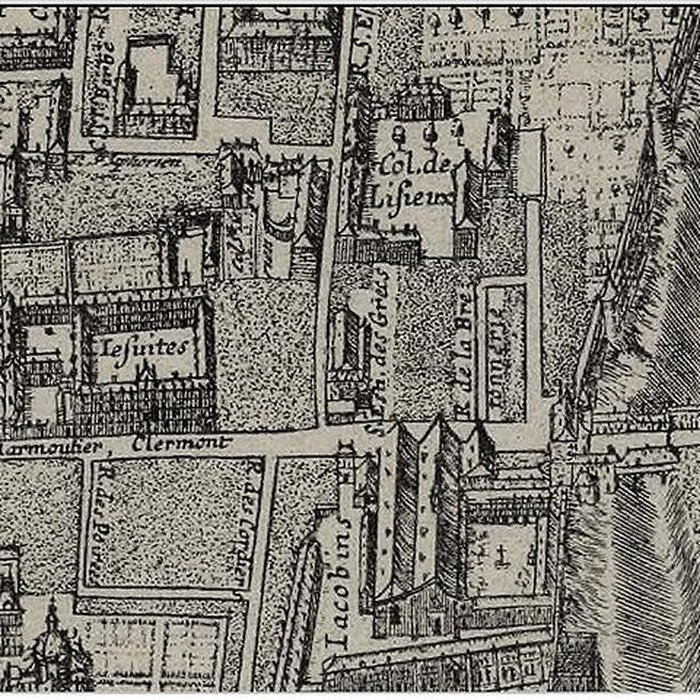
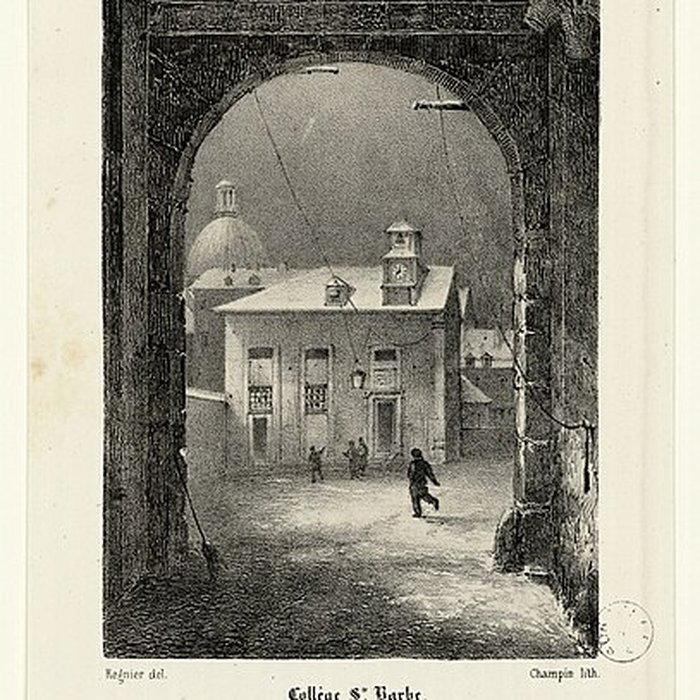
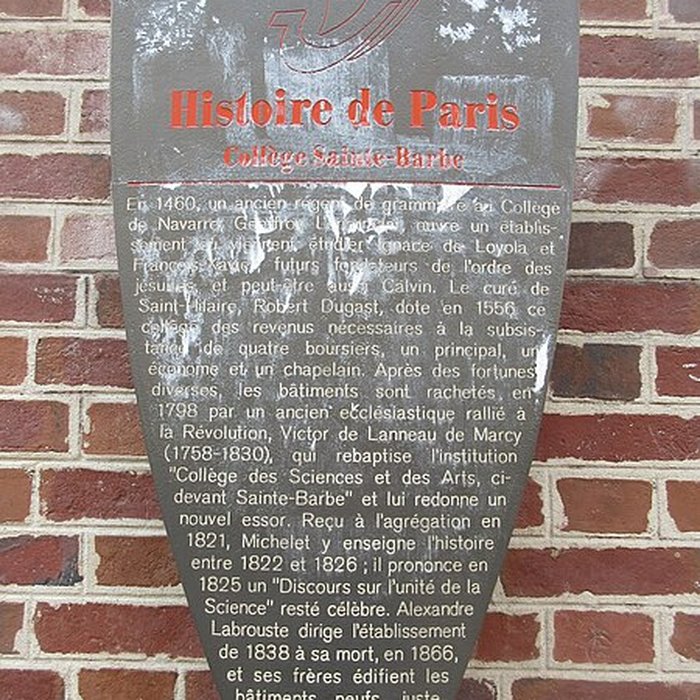
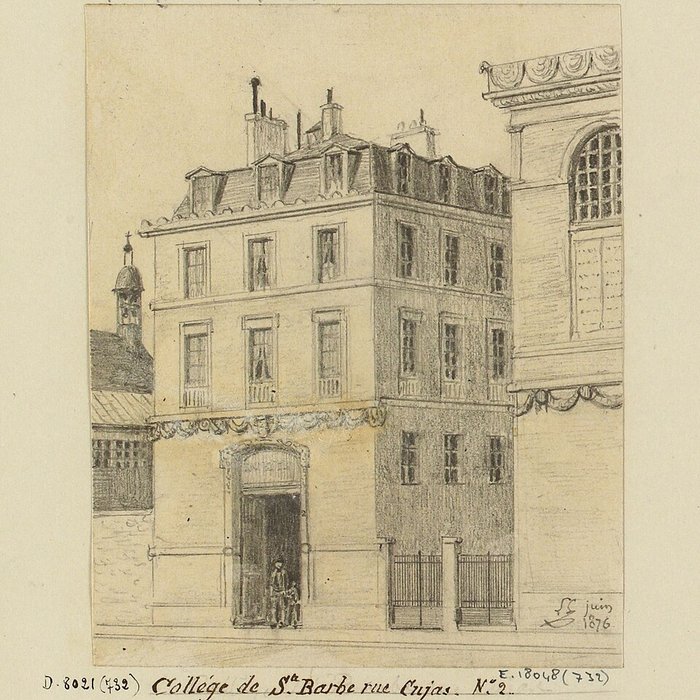
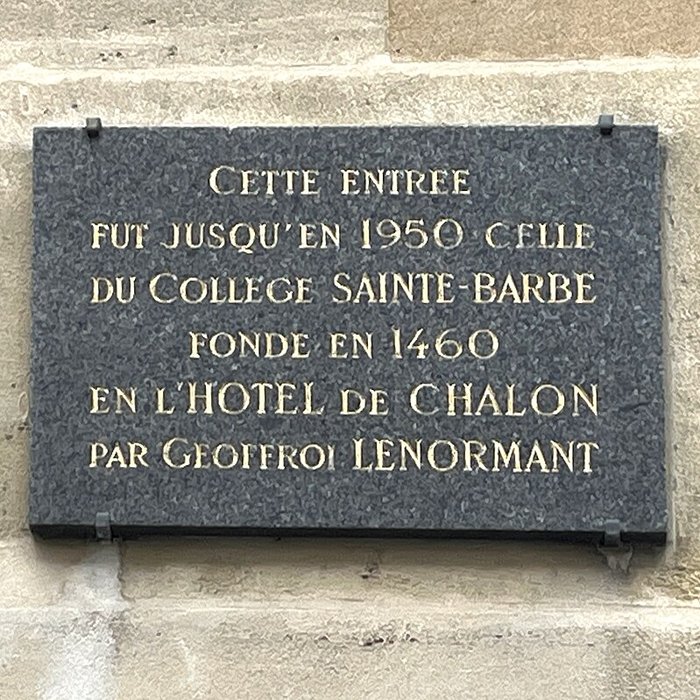
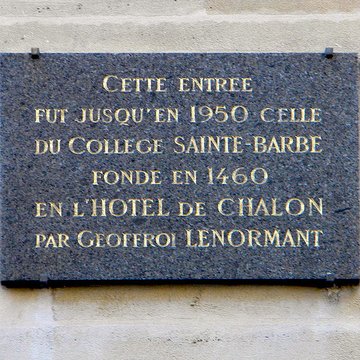
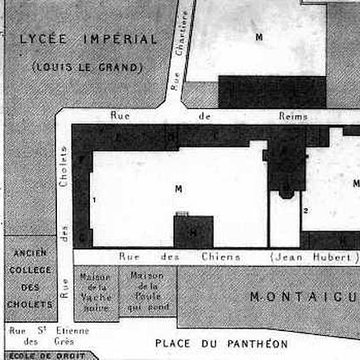
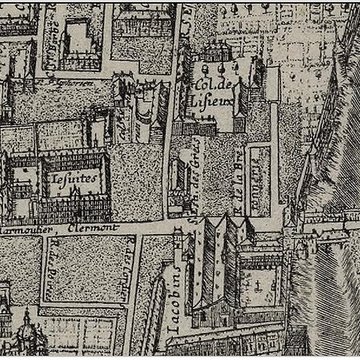
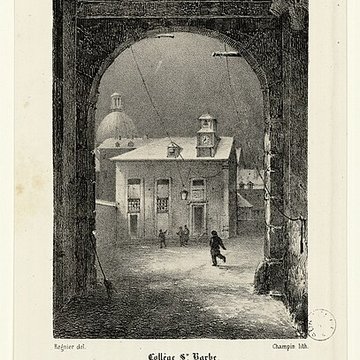
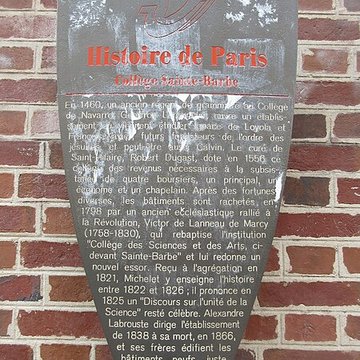
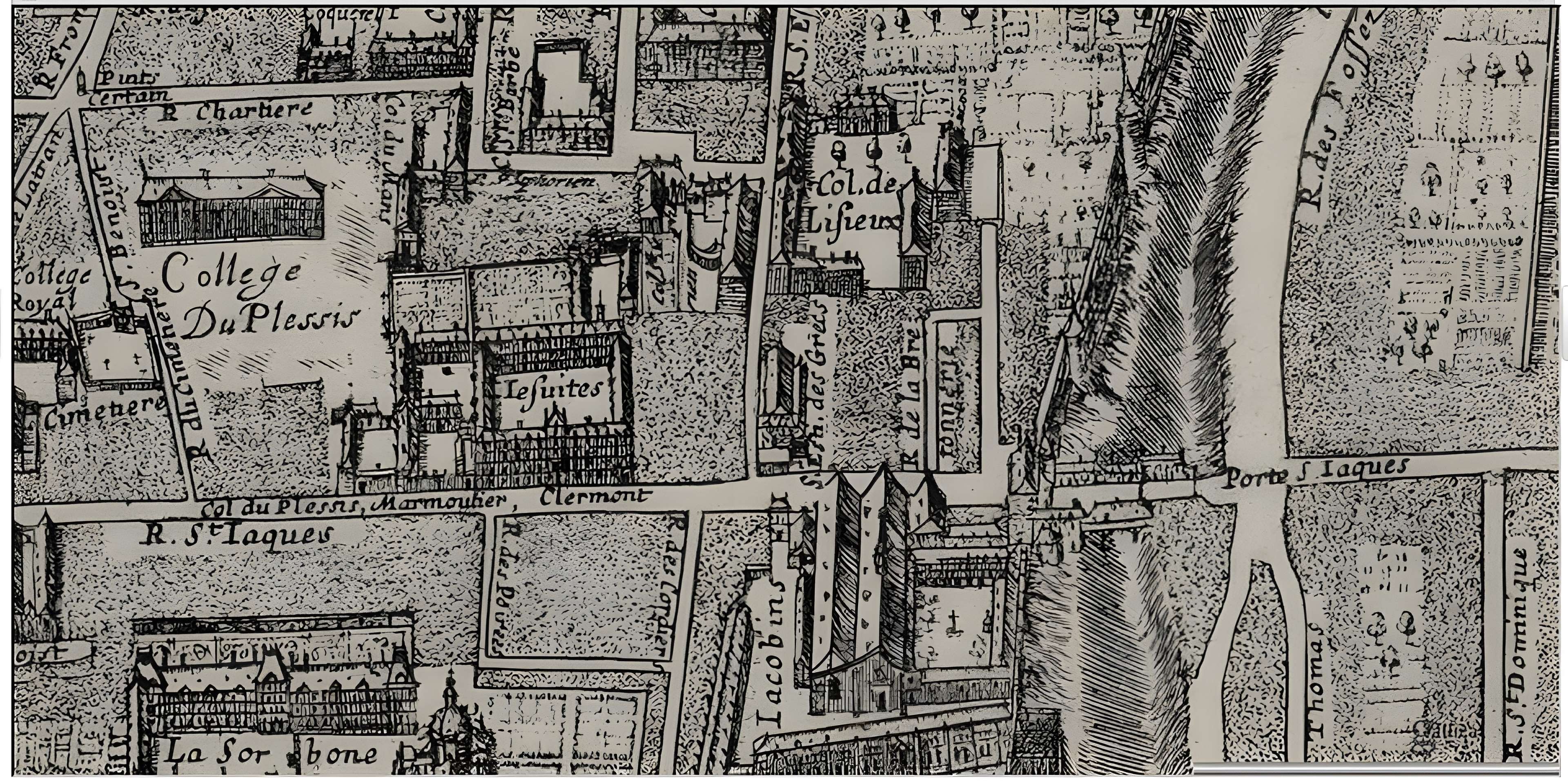
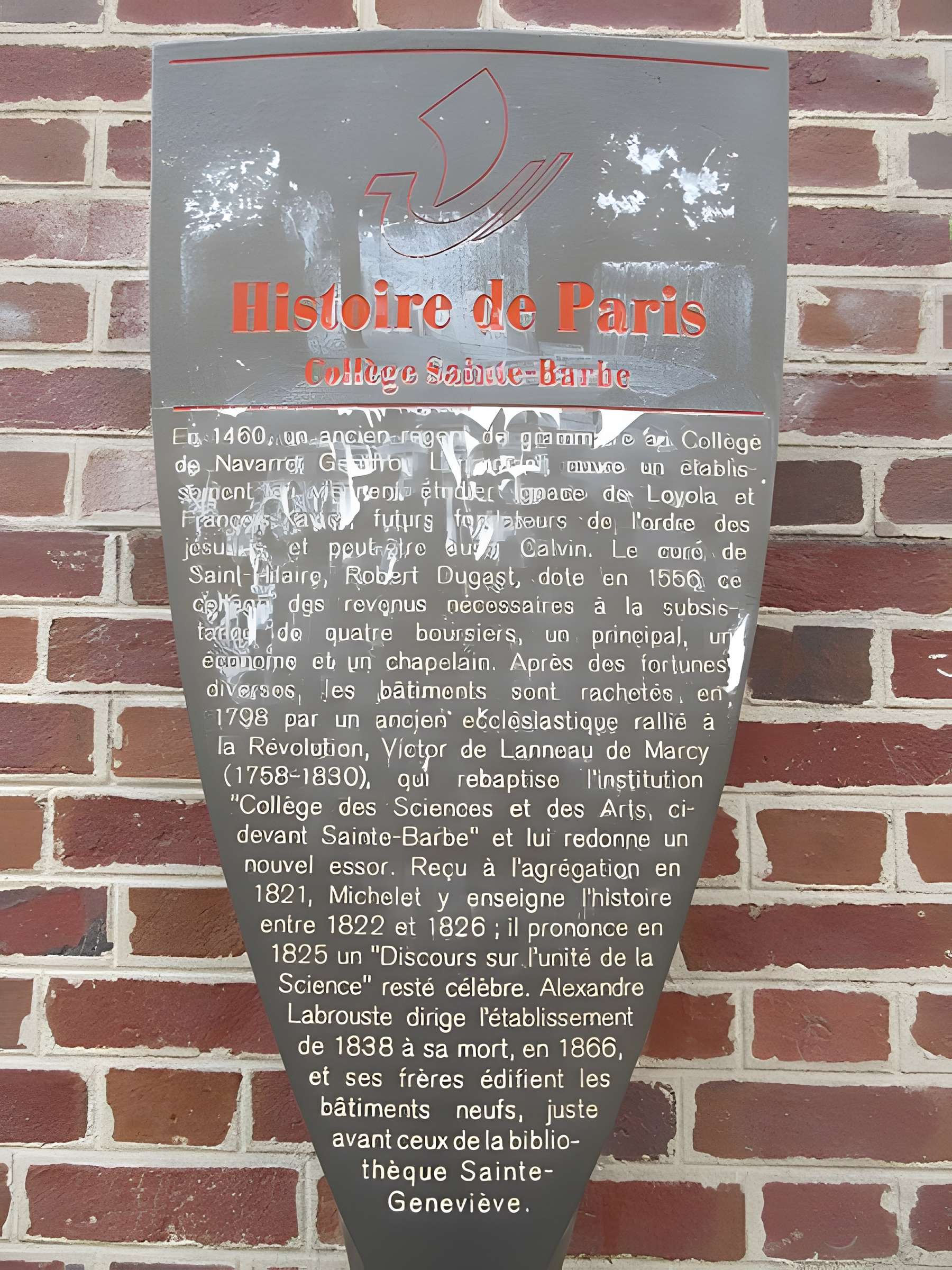
Sainte-Barbe College, established in 1460 on Sainte-Geneviève Mountain in Paris, is the only medieval college to have retained its original name and location. Founded by Geoffroy Lenormand, a renowned teacher, it is distinguished by its openness to students from all provinces, without initial funding. Its rapid success attracted the families of parliamentarians and even a colony of fifty Portuguese pupils, conferred by the King of Portugal. The college then enjoys an exceptional reputation, despite quarrels over the identity of its founder, opposing Lenormand with Jean Hubert, the first purchaser of the premises.

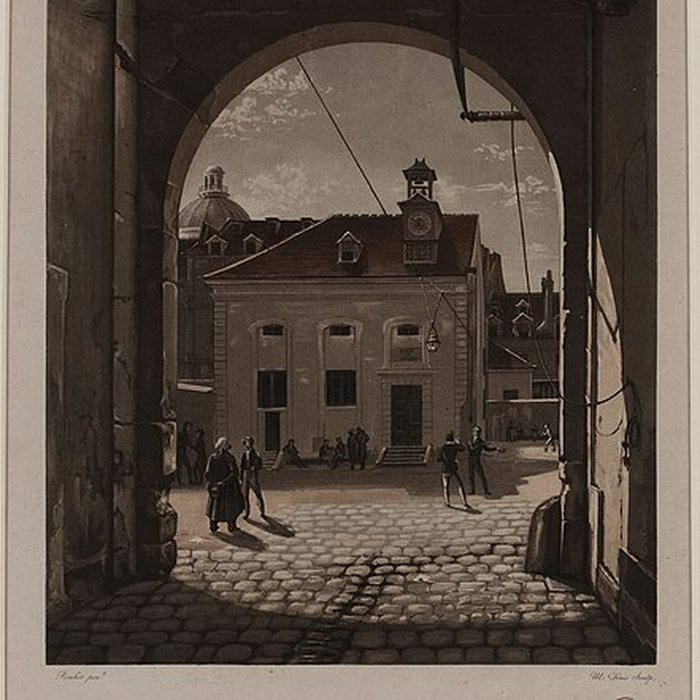
In the 16th century, the college went through periods of unrest, especially during the Wars of Religion, where it welcomed both Catholics and Protestants, which was worth to its leaders accusations of complacency towards heretics. Despite the massive closures of the Parisian colleges in 1589, Sainte-Barbe resisted until the end of this year. At the beginning of the 17th century, it resumed its activities as a "small college", where students attended the courses of nearby university institutions. The buildings, falling into ruins, were the subject of a desperate appeal for financial aid in an article by Marmontel in 1790, without success.

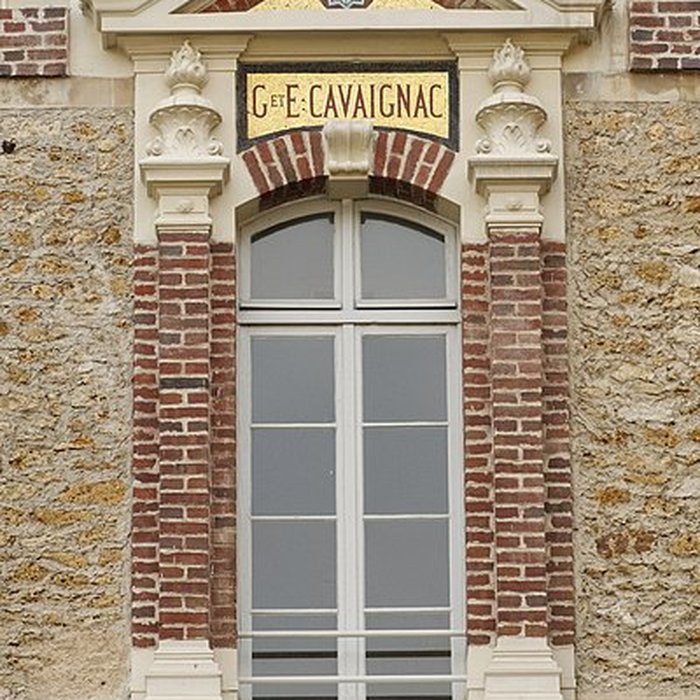
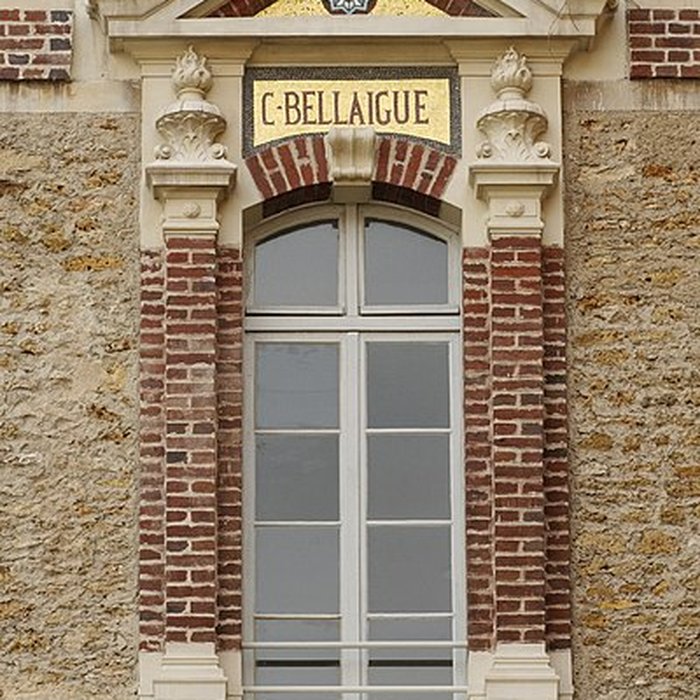
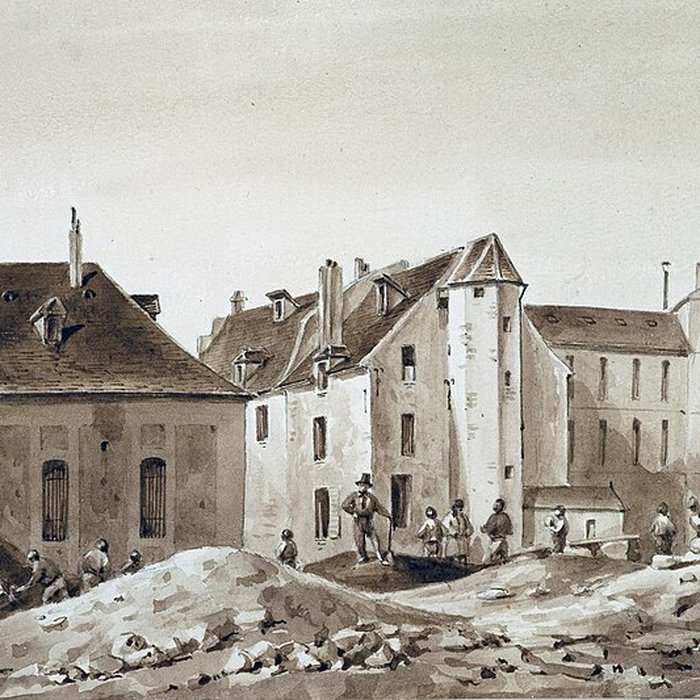
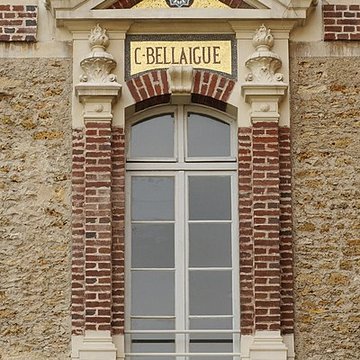
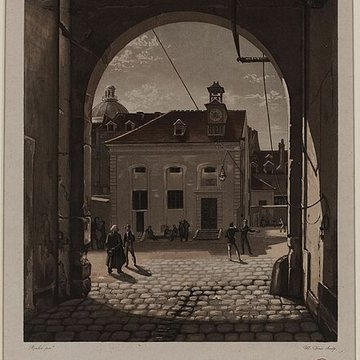
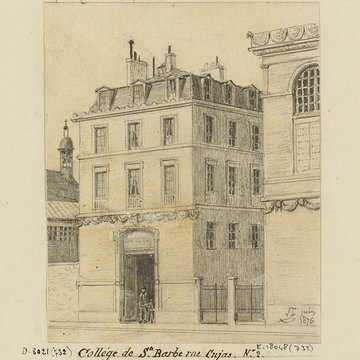
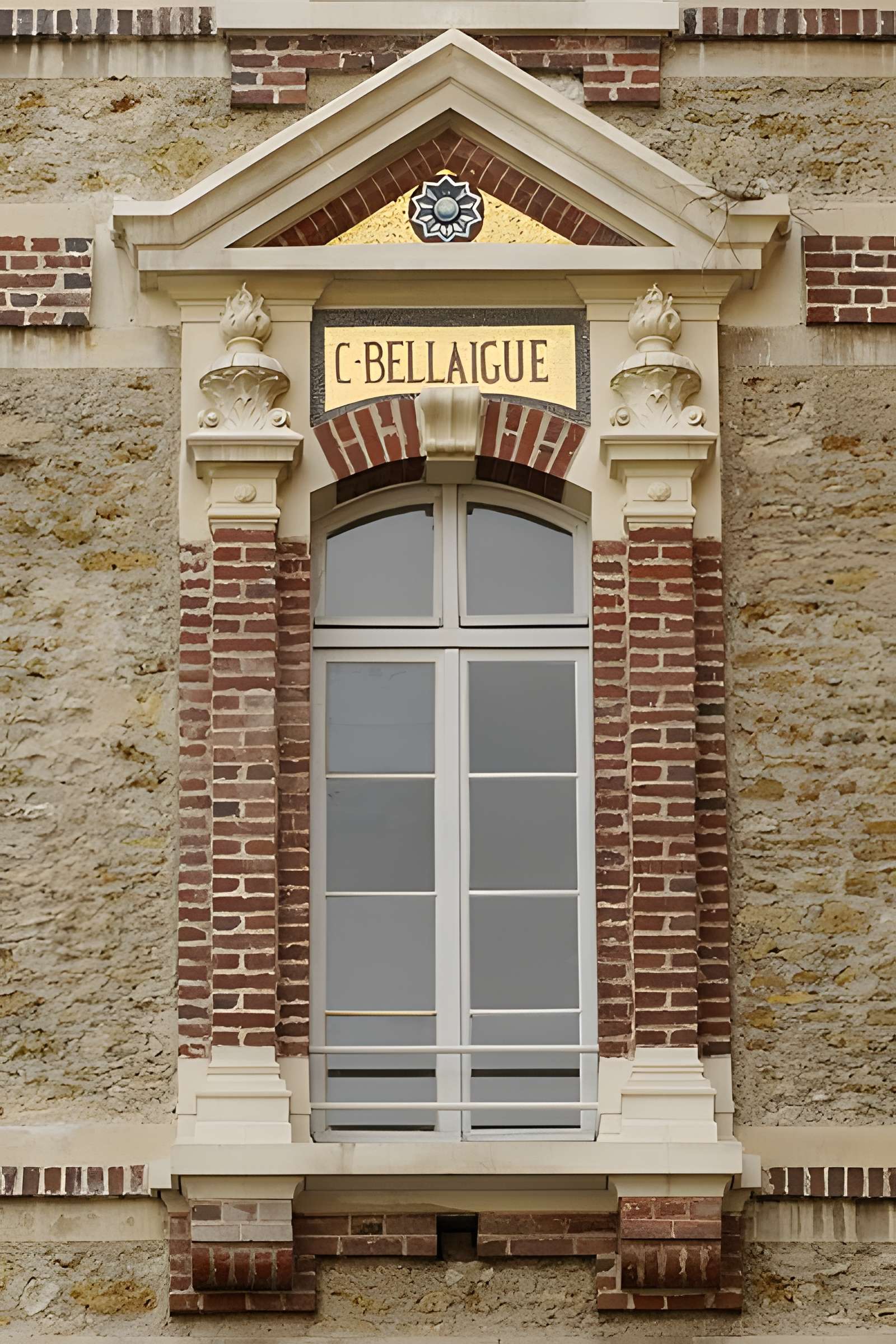
The French Revolution forced the closure of the college in 1793, its premises being requisitioned for the French Prytanee. He was reborn in 1798 thanks to Victor de Laneau, a former priest and freemason, who bought the buildings and restored the institution under the name of "College of Sciences and Arts". Laneau perpetuates the family and meritocratic spirit of the college, despite recurrent financial difficulties. In 1831, a limited partnership, led by Claude Bellaigue and Adolphe de Laneau, saved the college from bankruptcy, allowing its reconstruction under the direction of Alexander Labrouste from 1840.

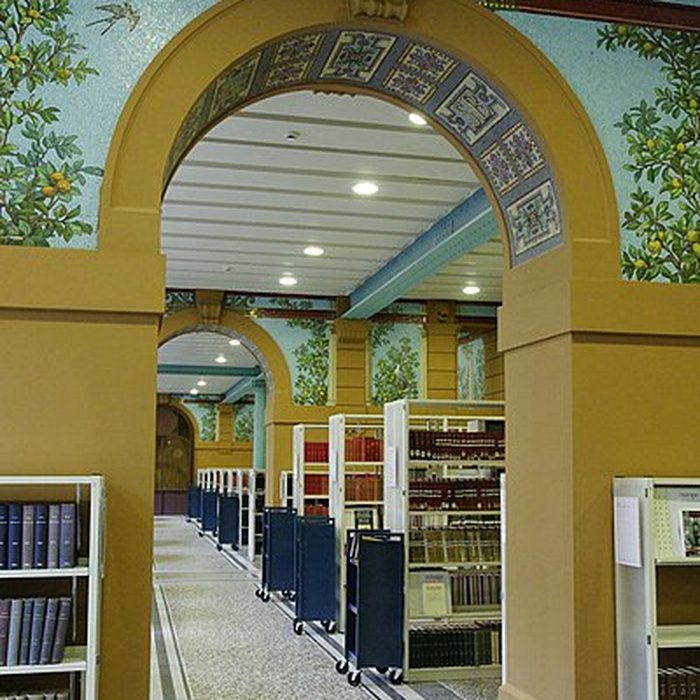
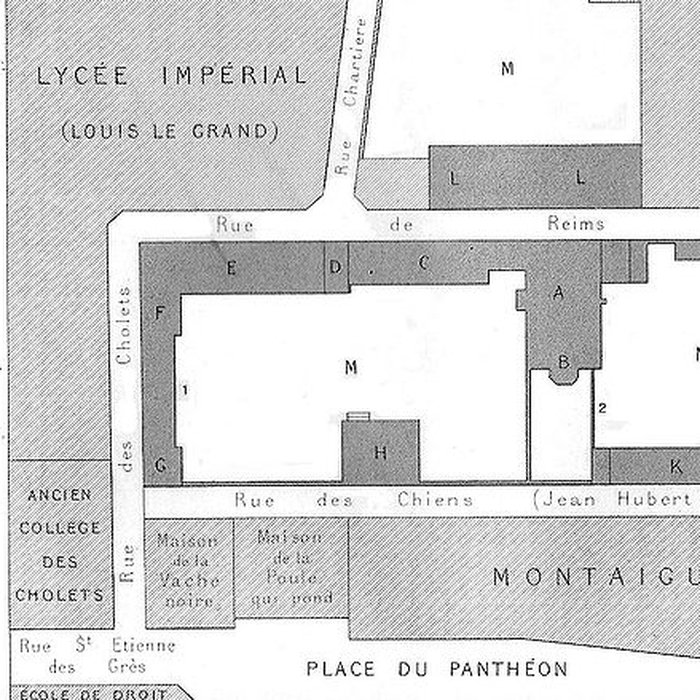
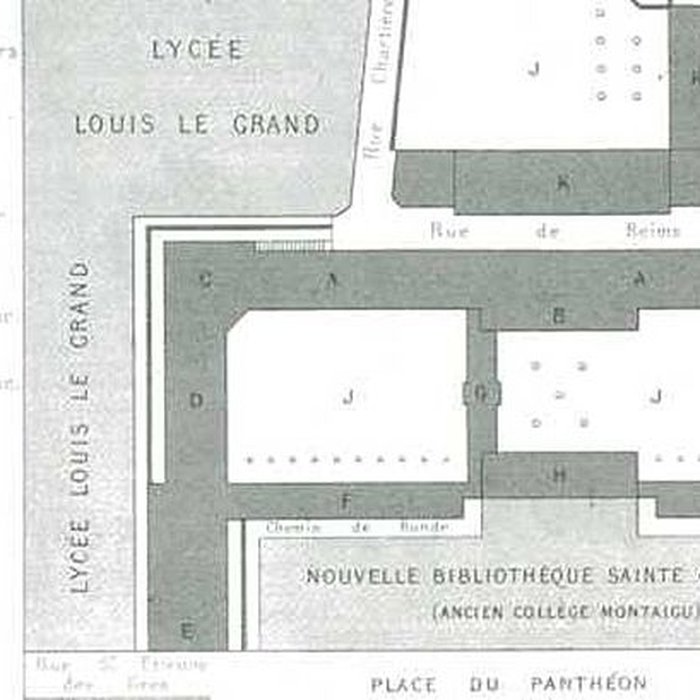
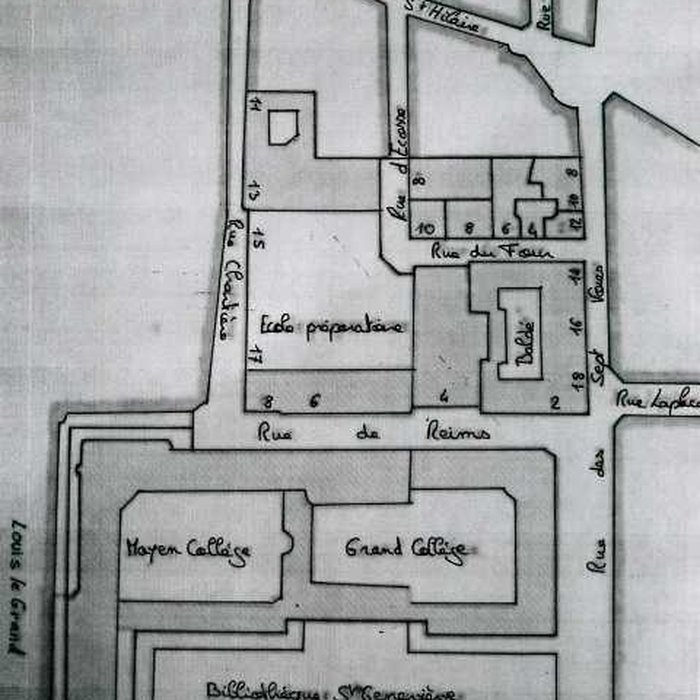
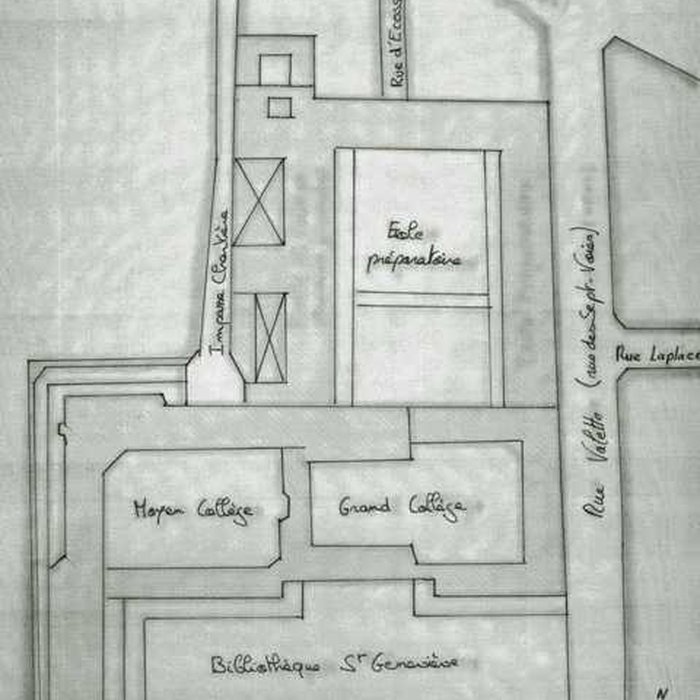
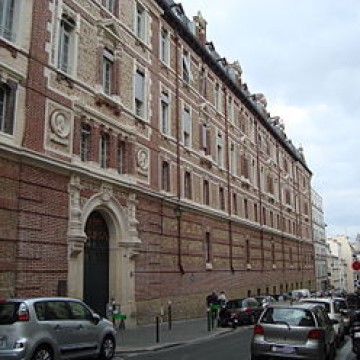
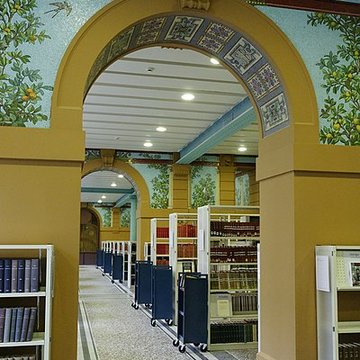
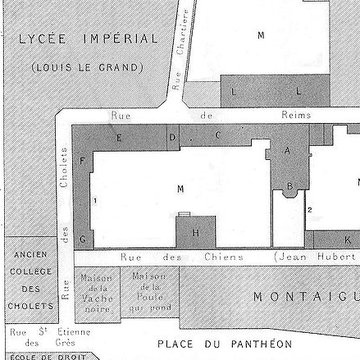
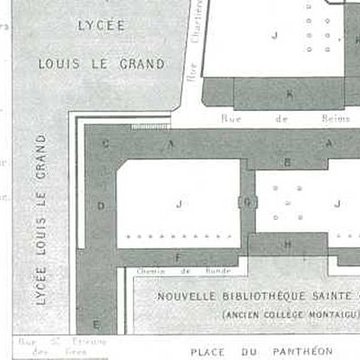
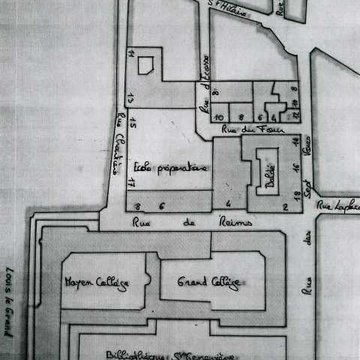
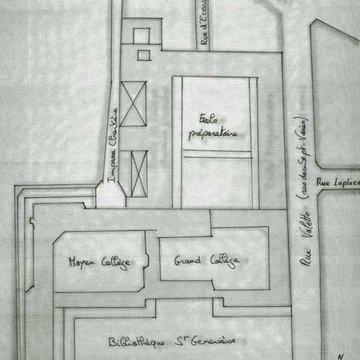
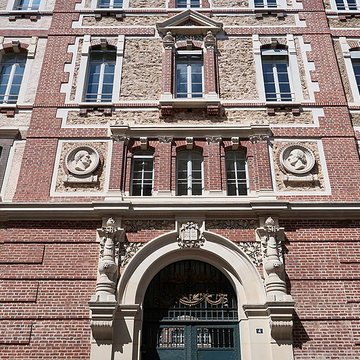
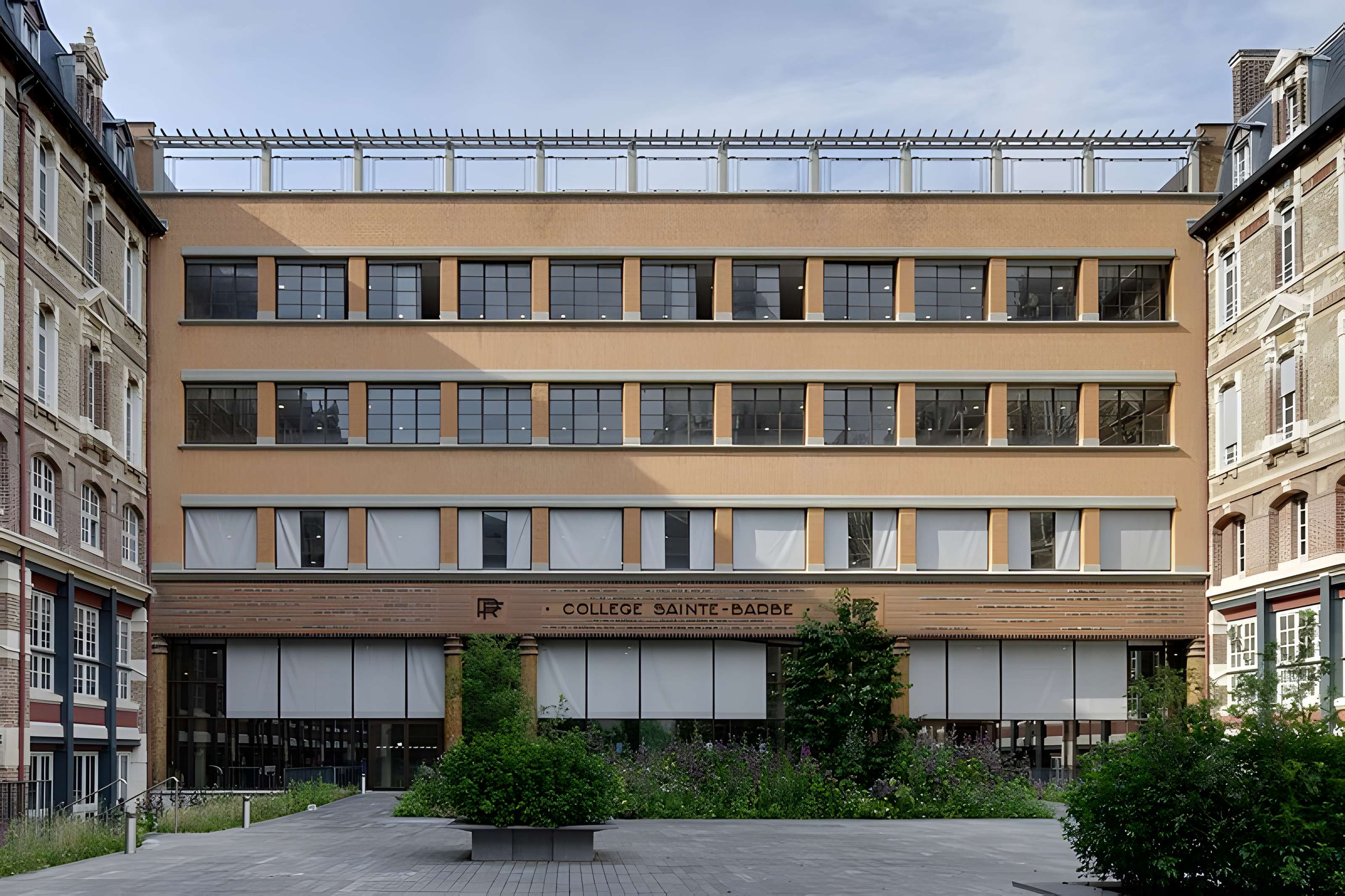
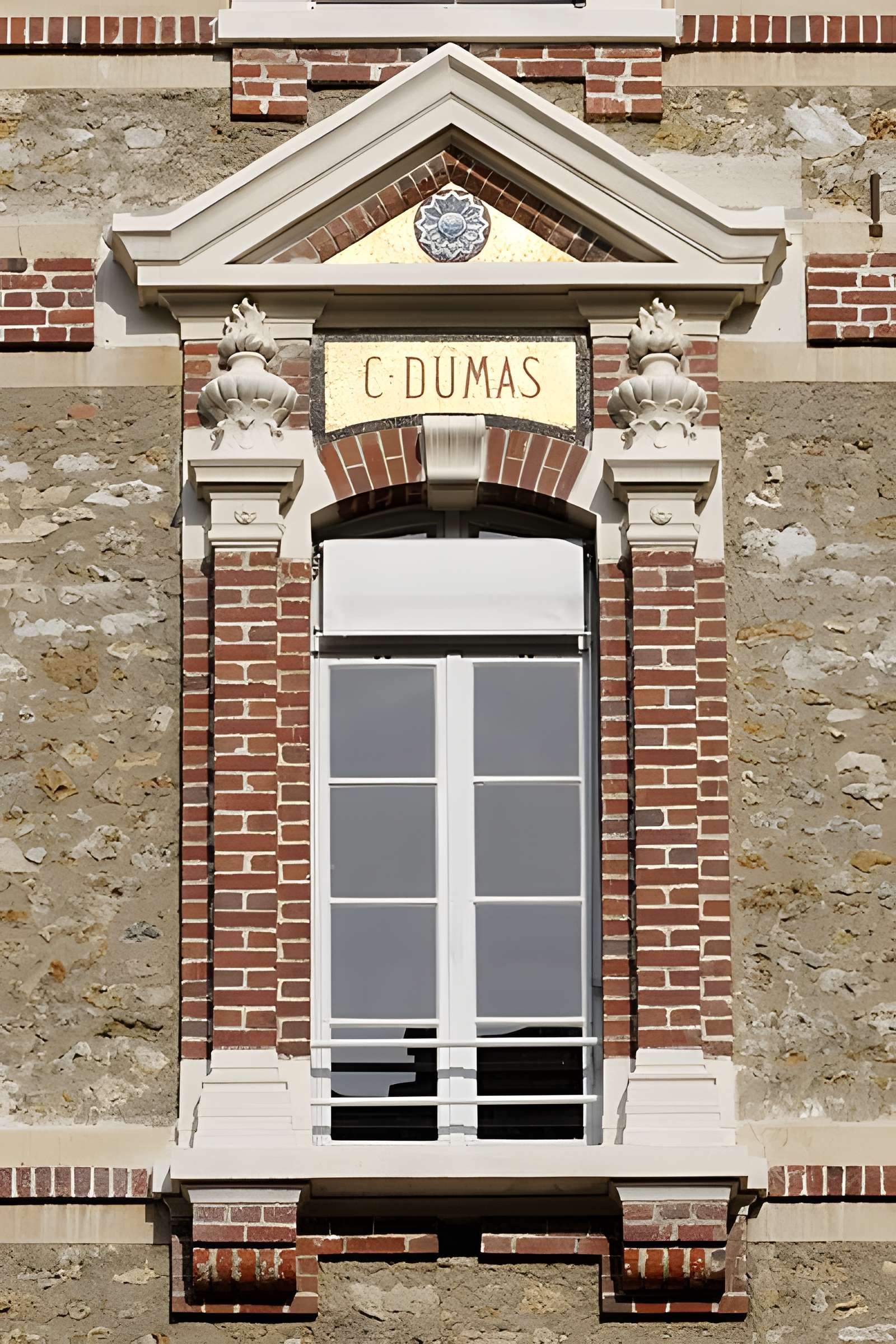
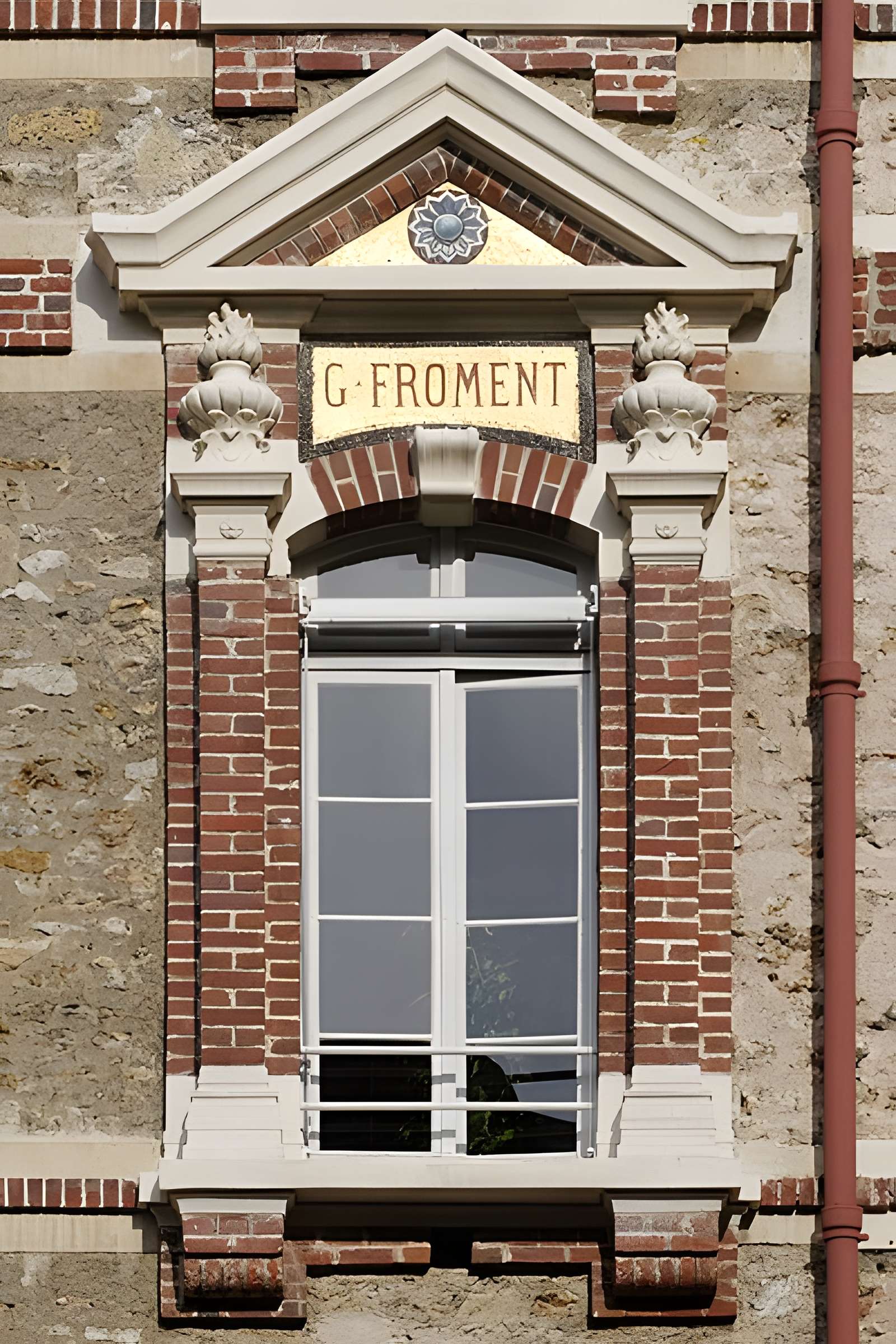
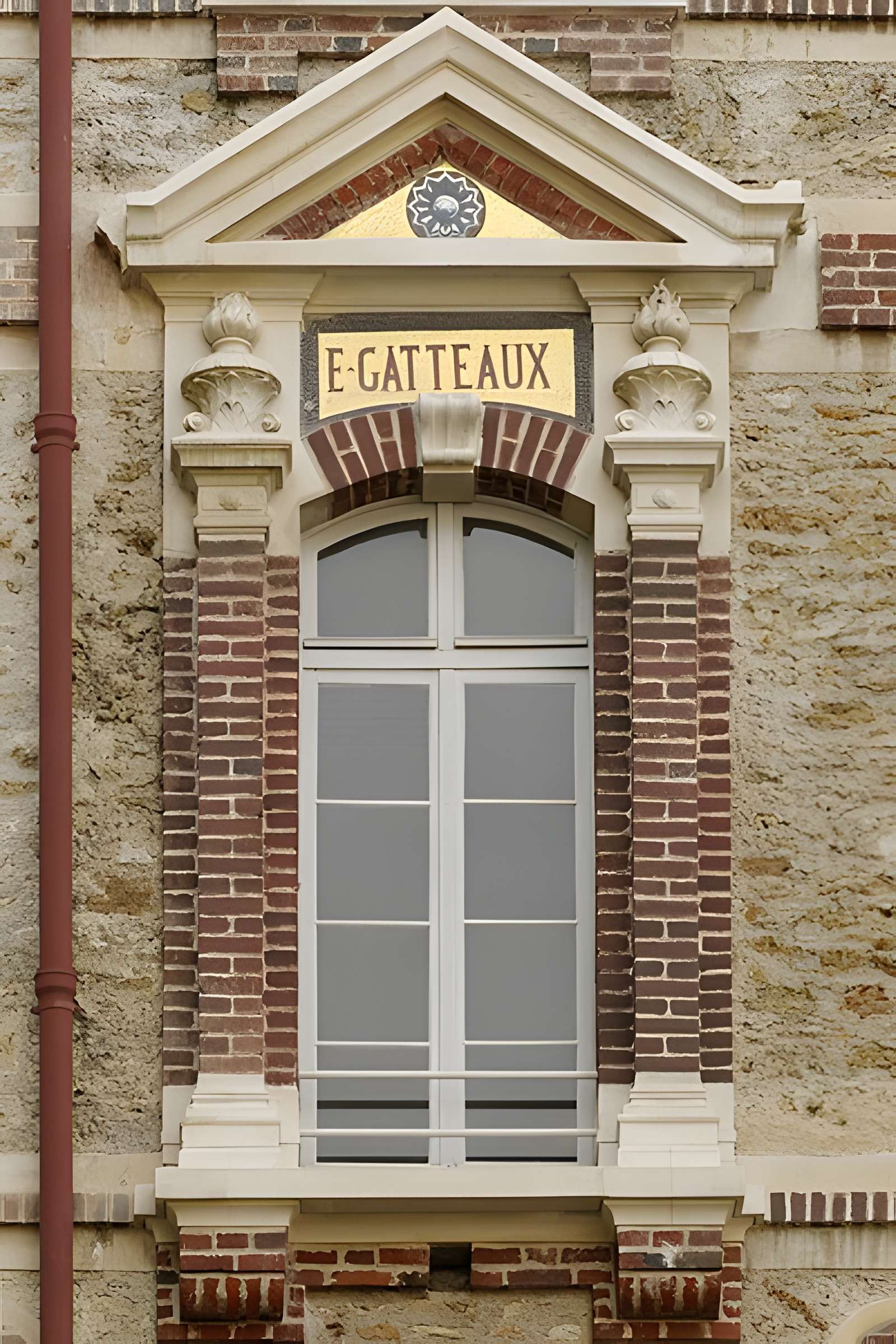
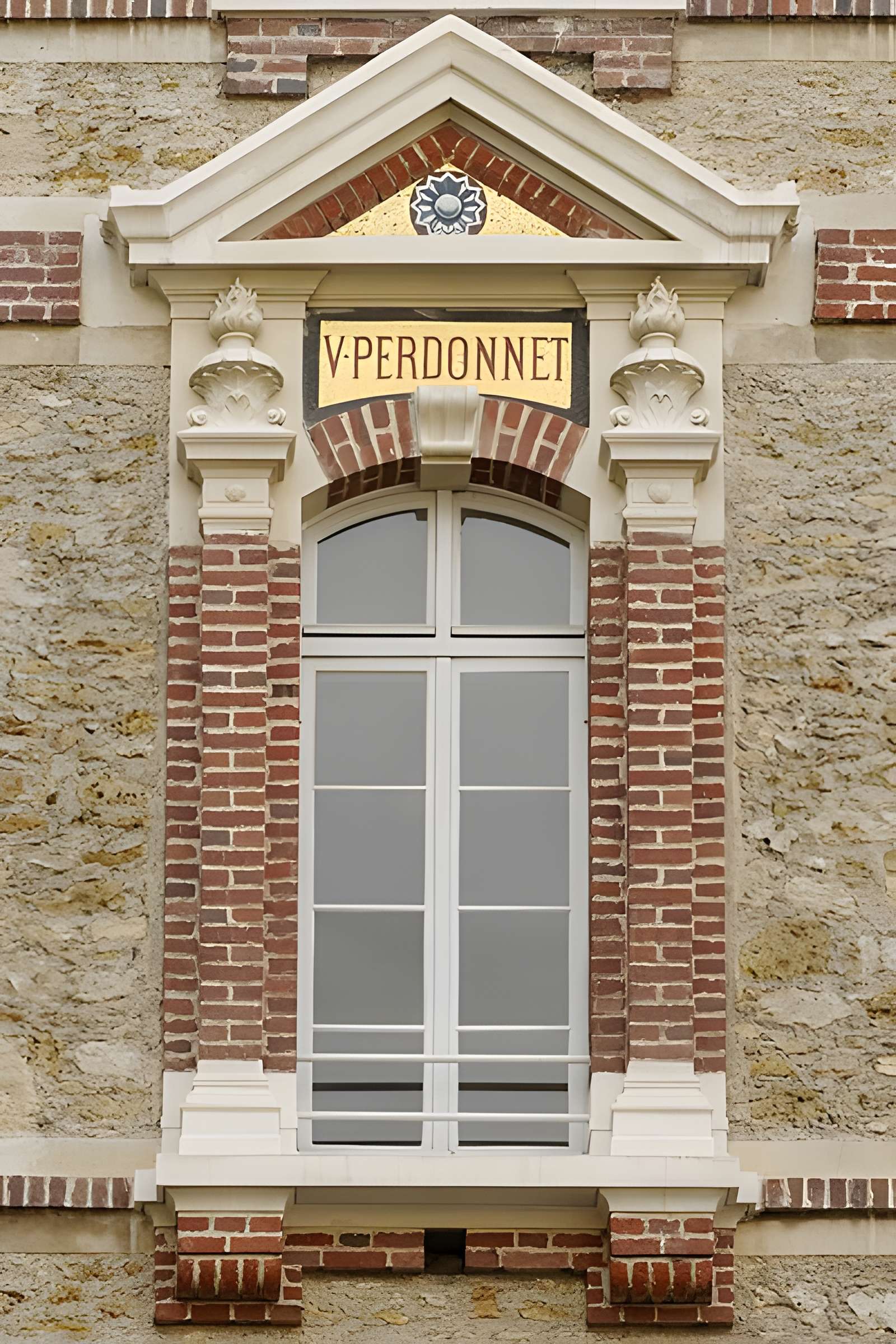
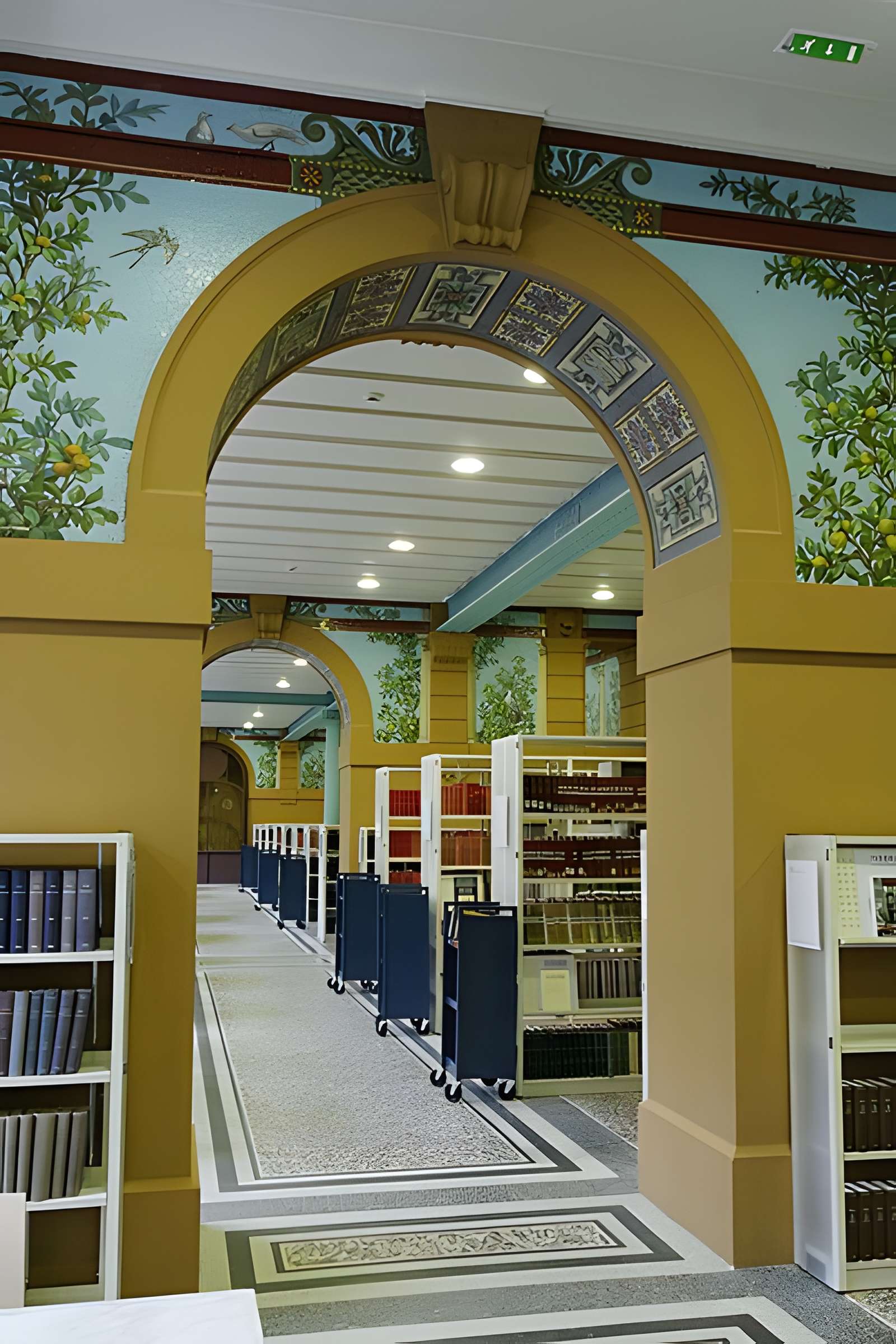
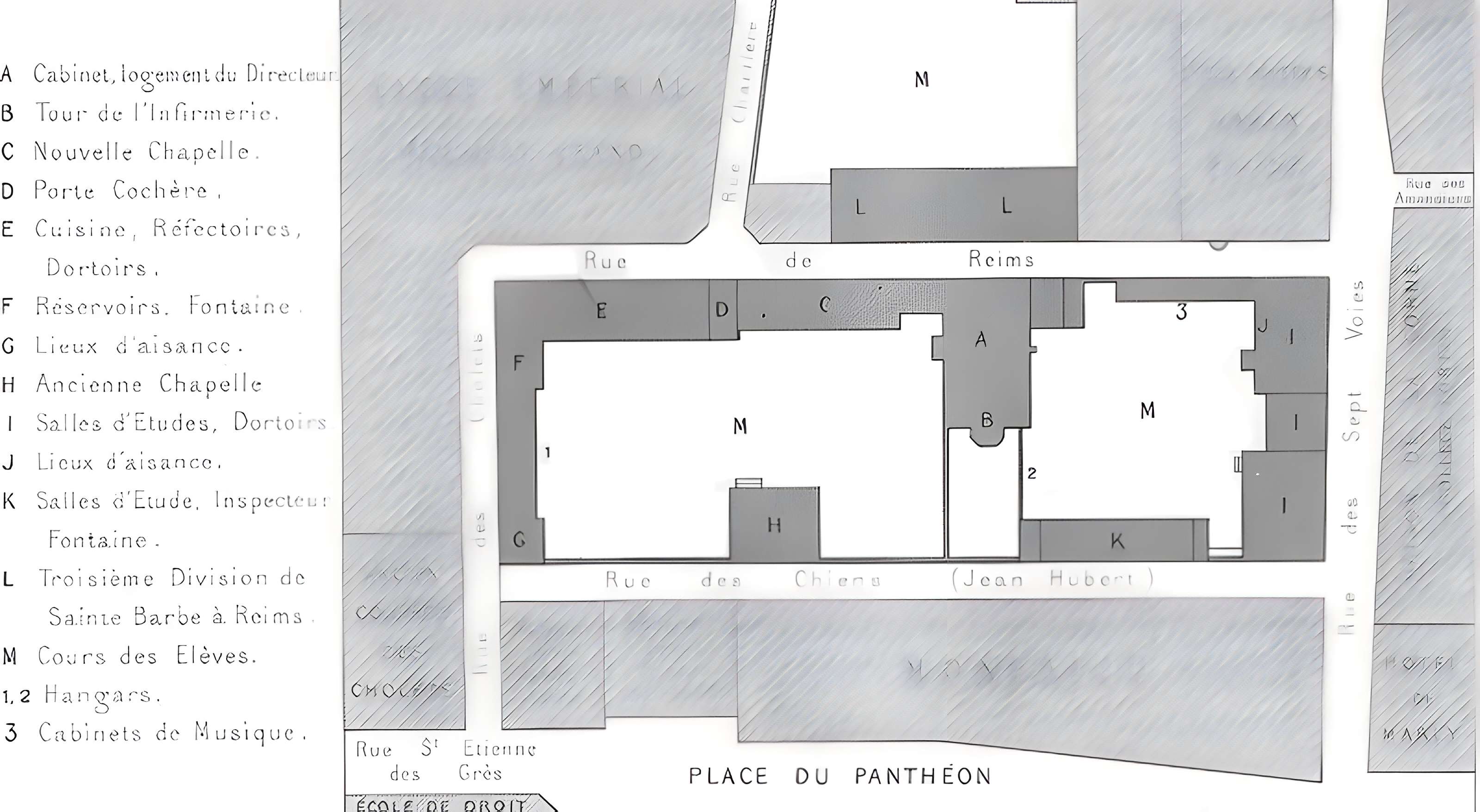
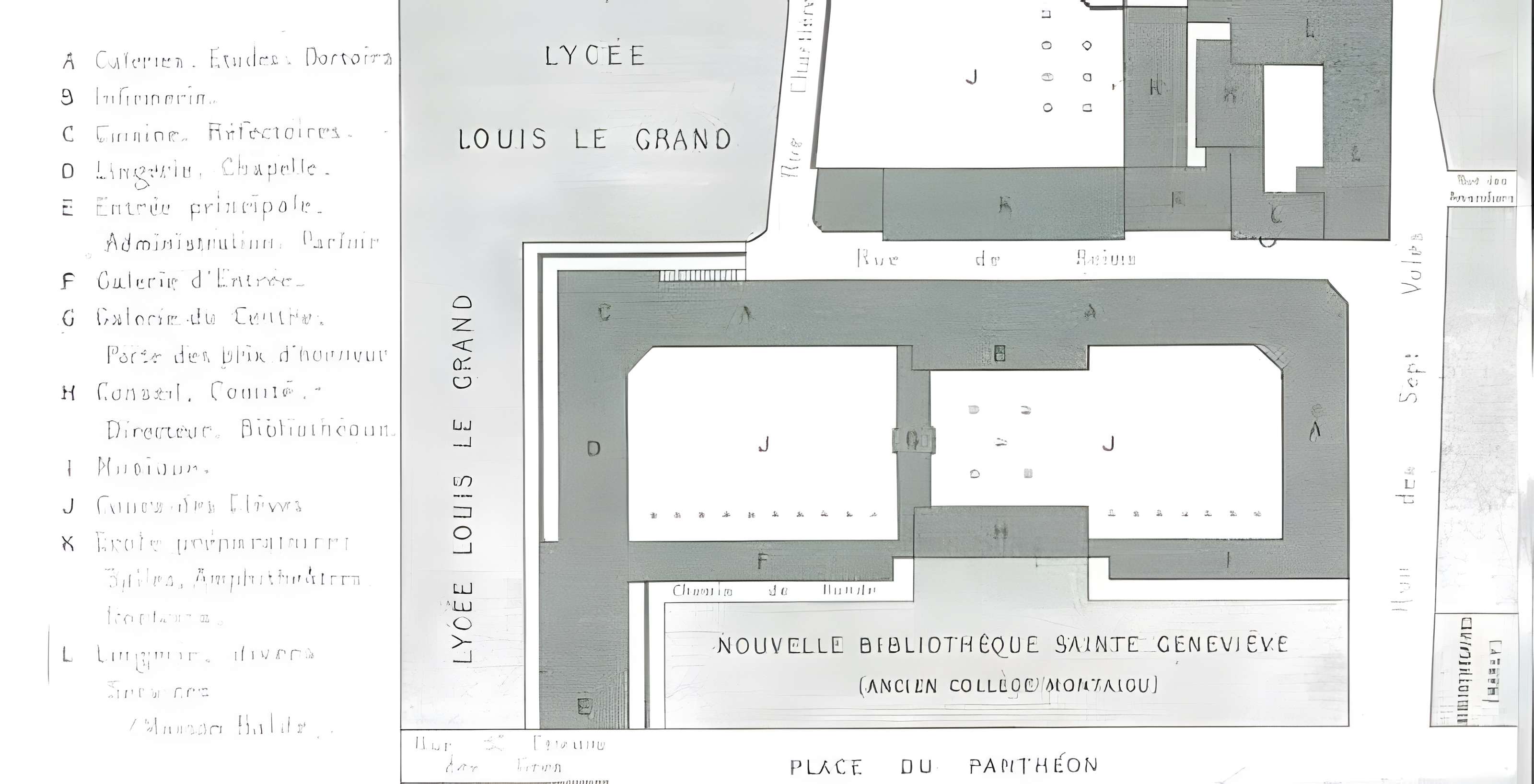
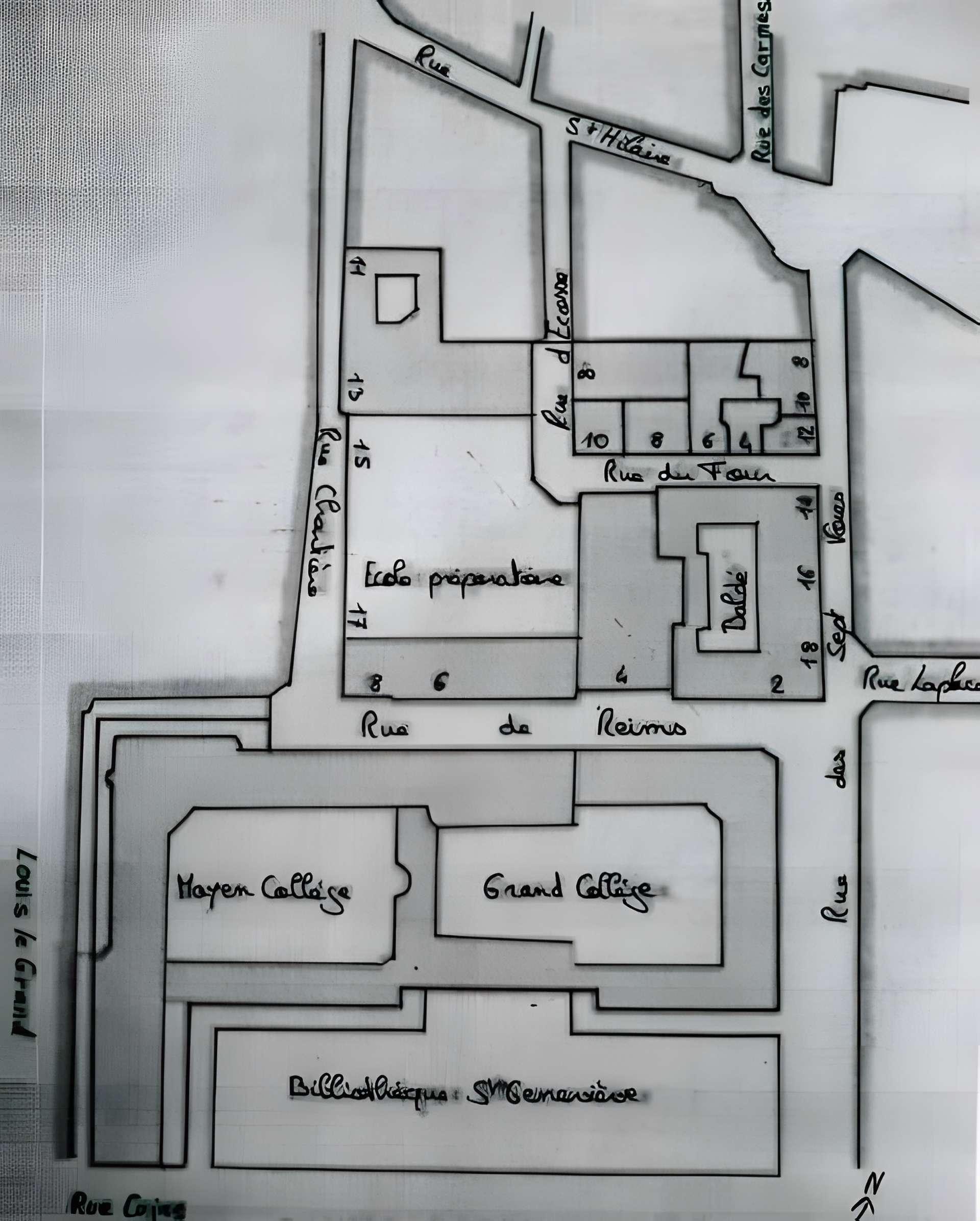
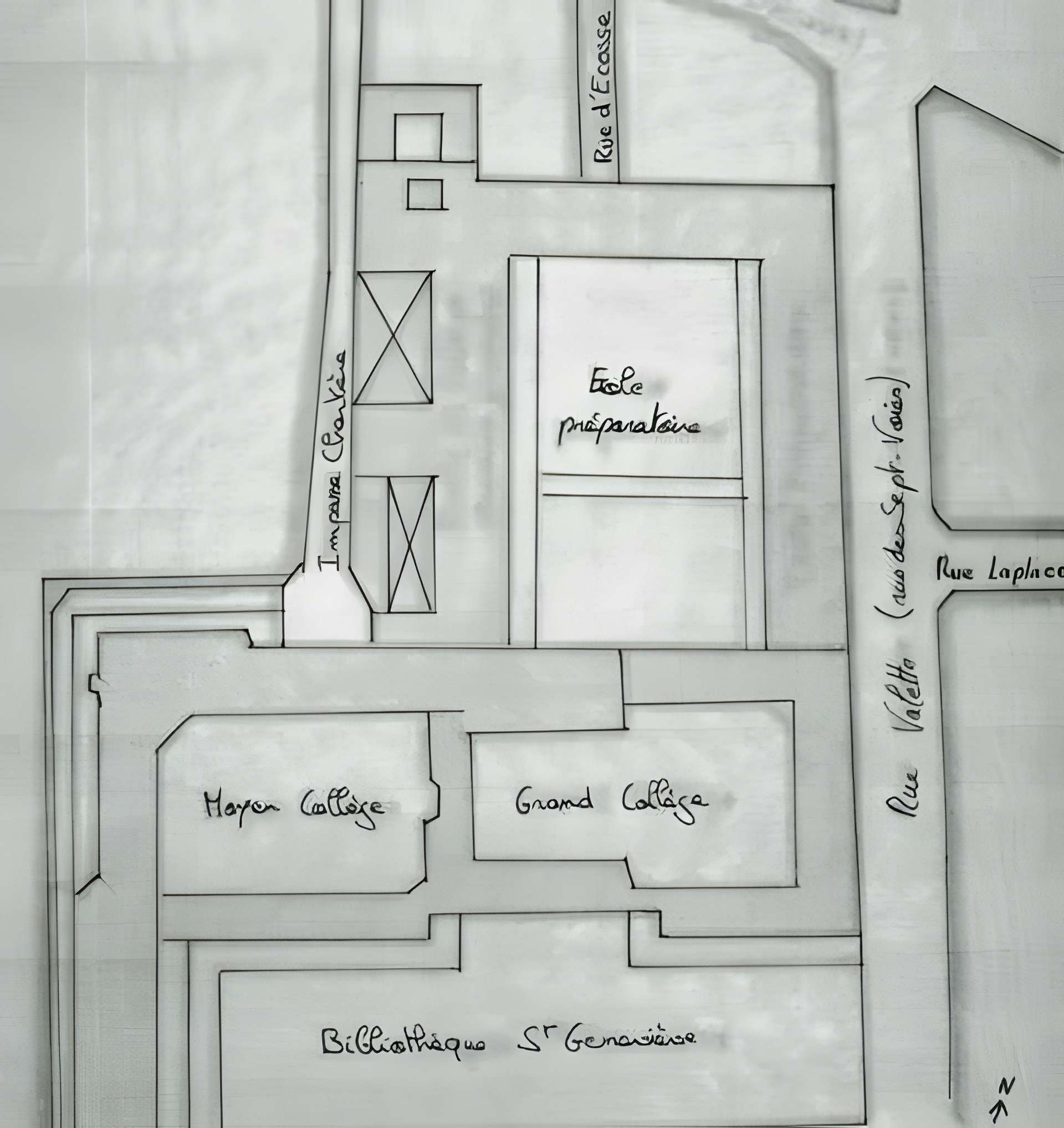
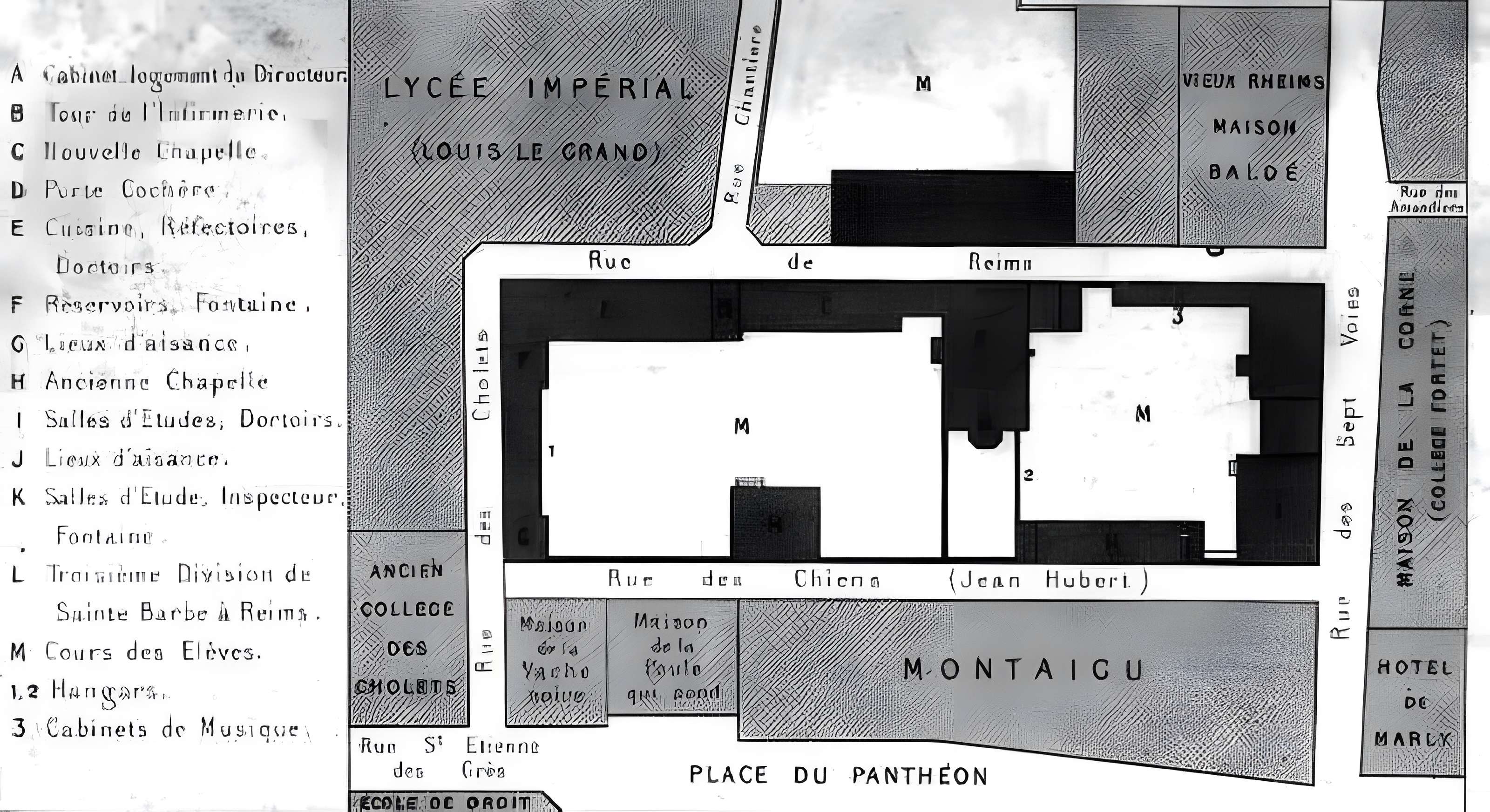
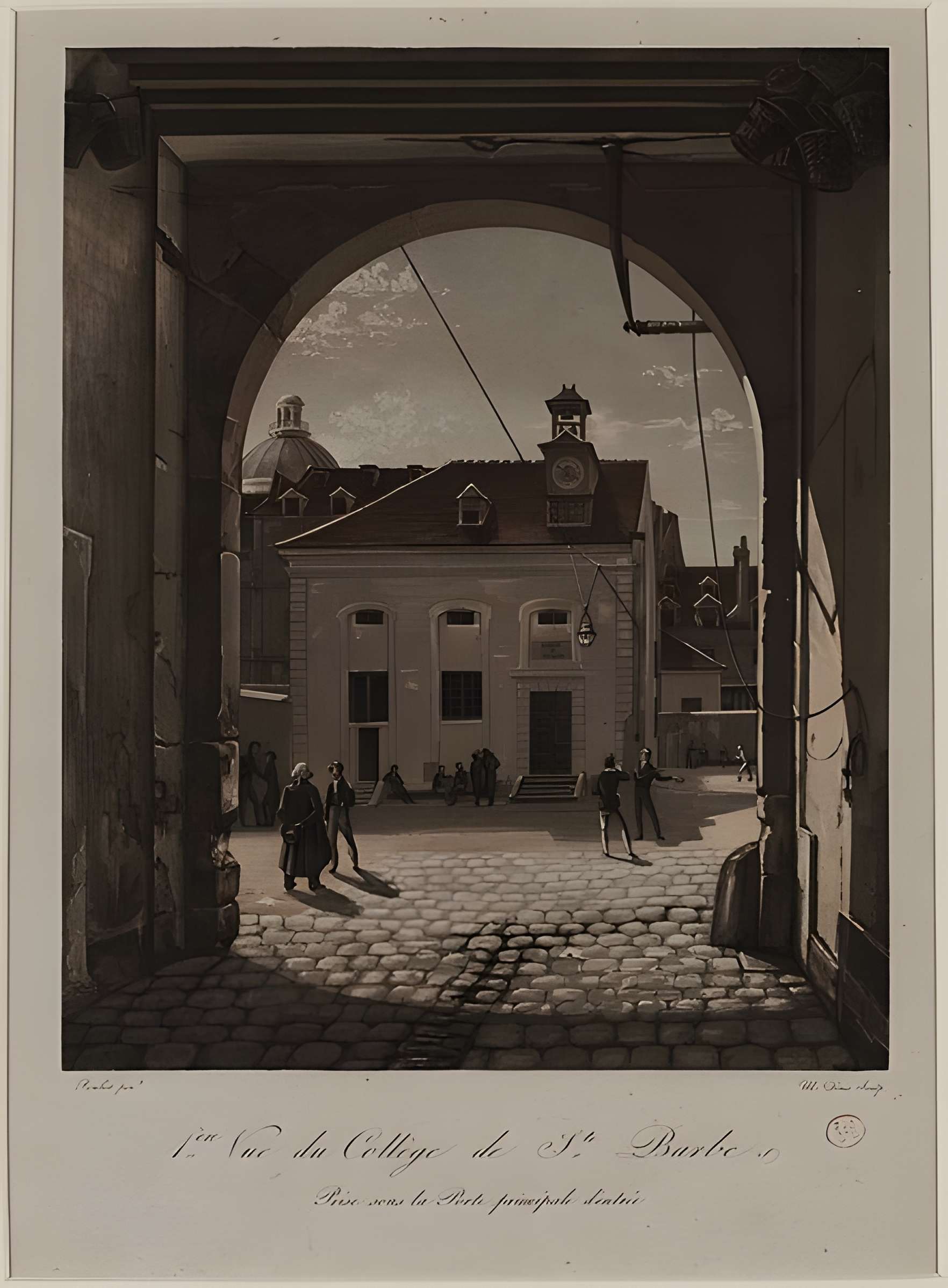
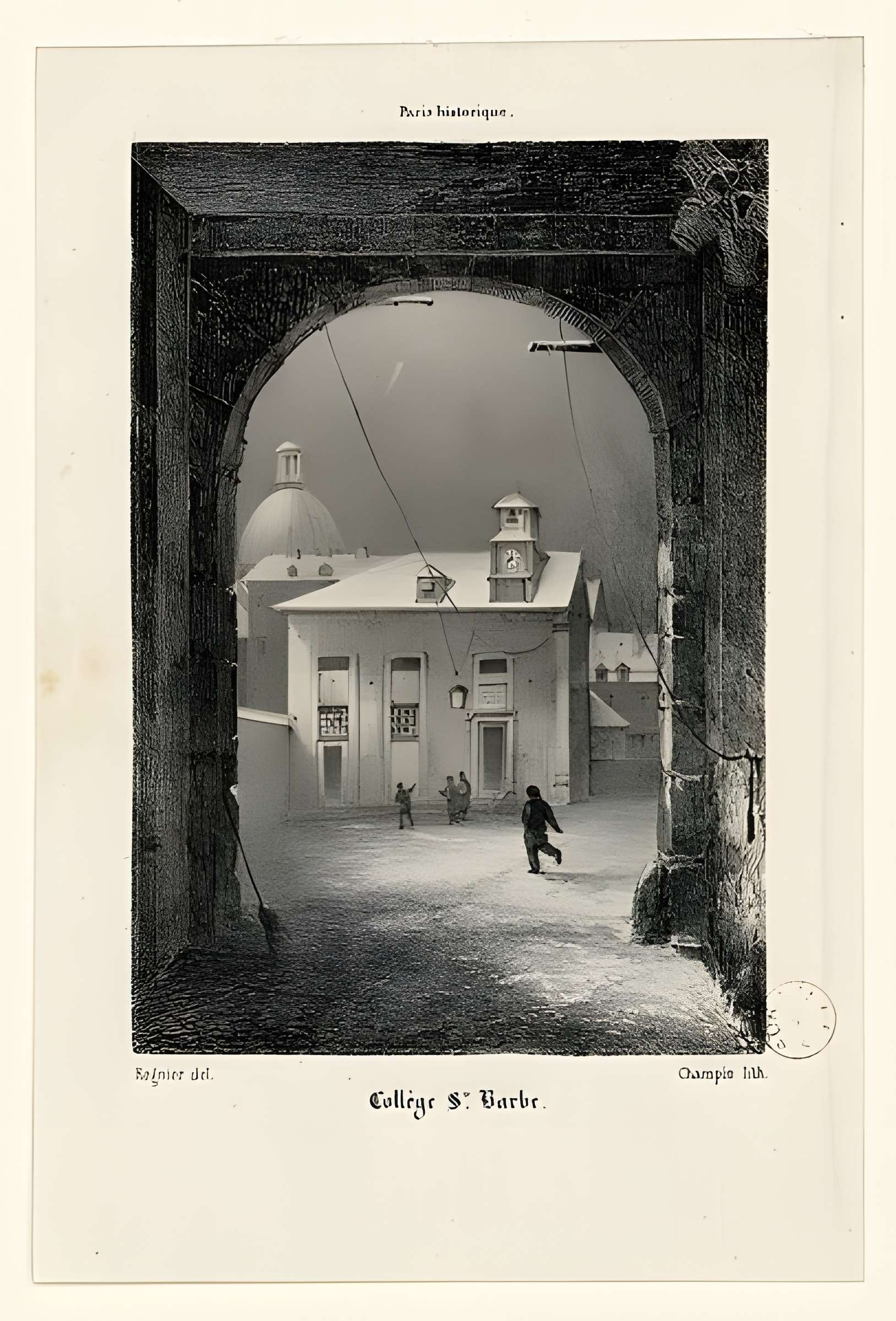
The reconstruction work, led by the Labrouste brothers, radically transformed the college, with the suppression of adjacent streets to enlarge the space. In 1882 Ernest Lheureux designed the buildings of the preparatory school, marking the architectural climax of the institution. Despite continuing financial difficulties, the college survived until 1999, when it was finally closed. Its renovated premises have been home to the Sainte-Barbe University Library since 2009, perpetuating its educational heritage.

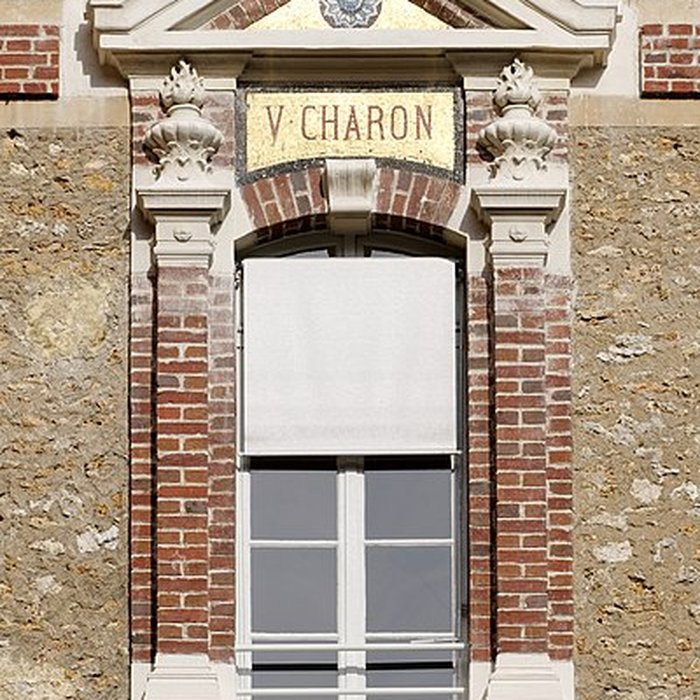
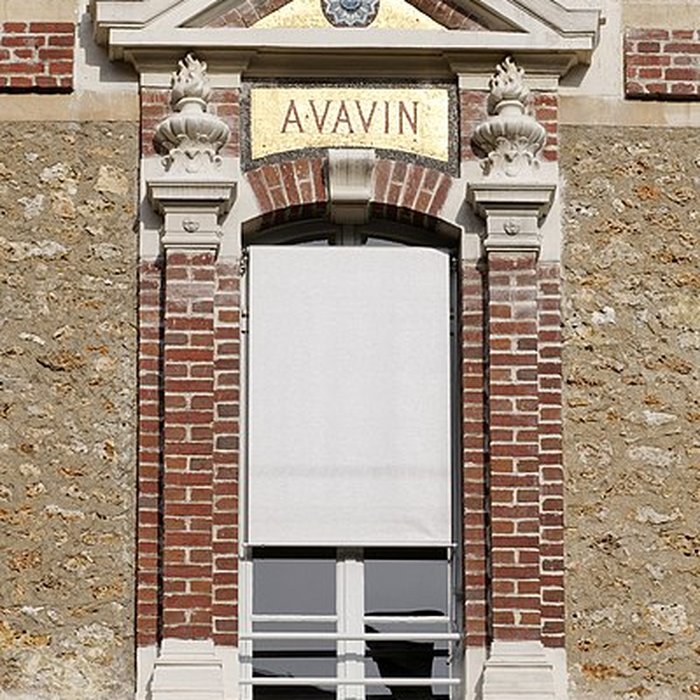
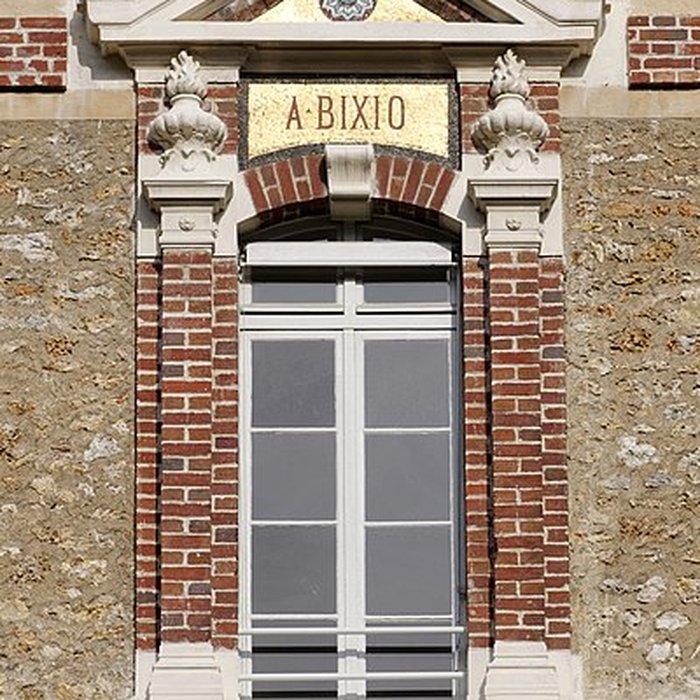
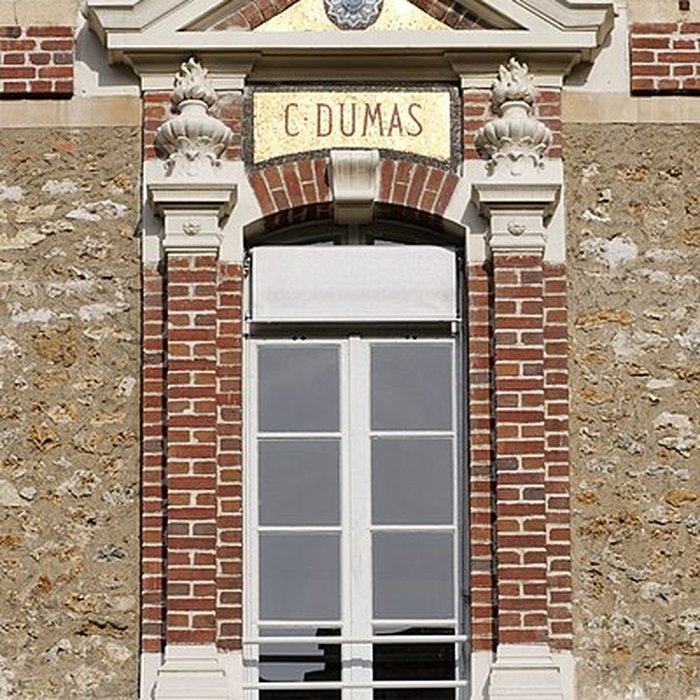
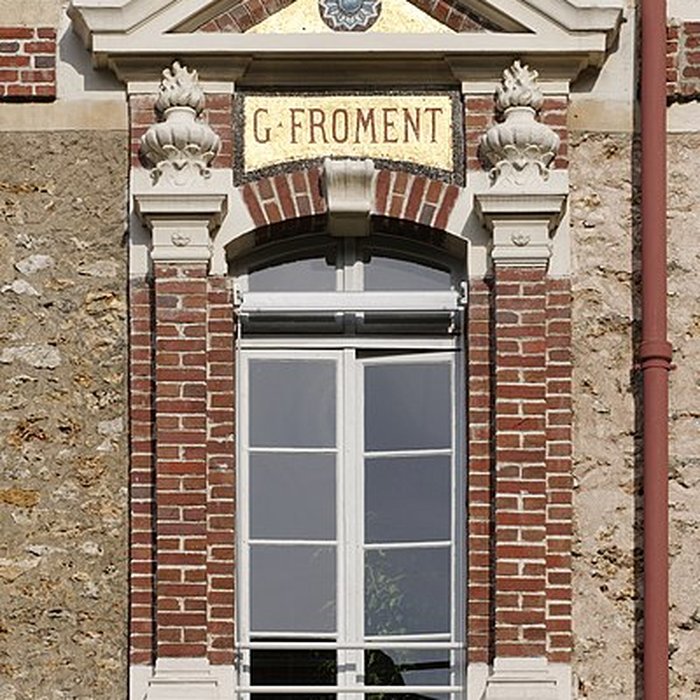
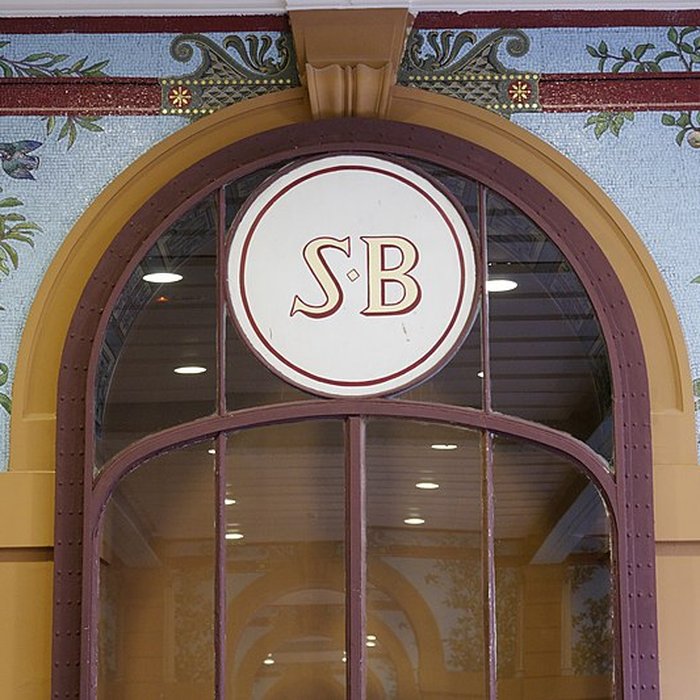
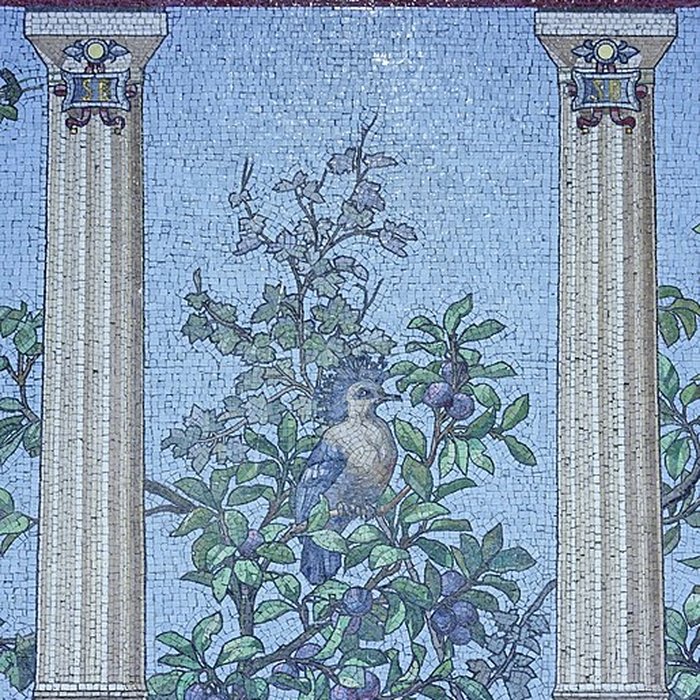
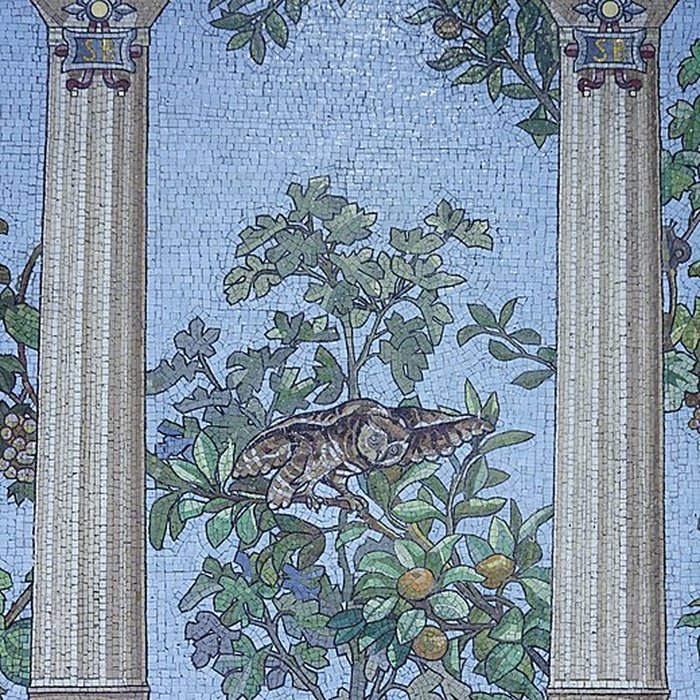
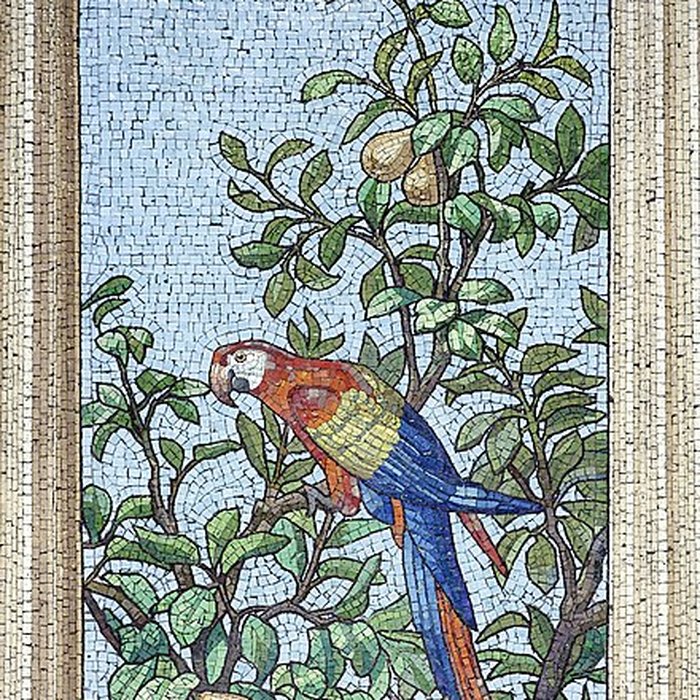
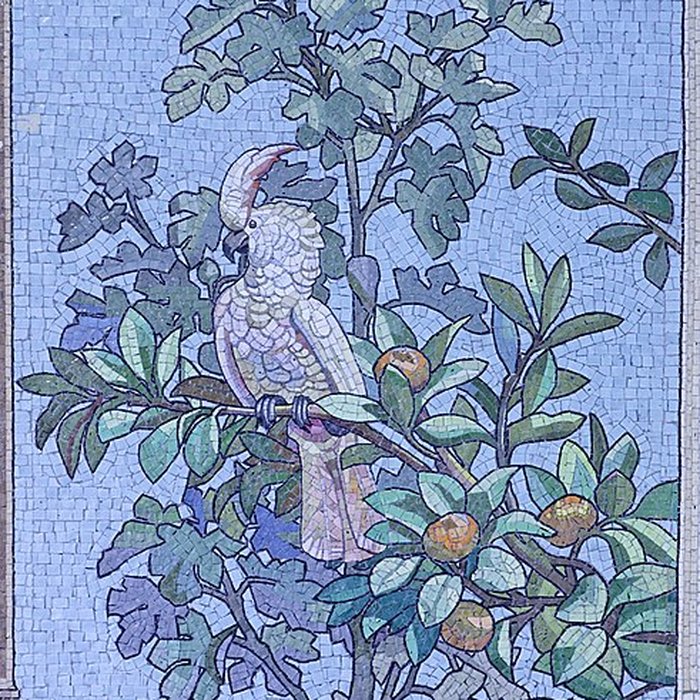
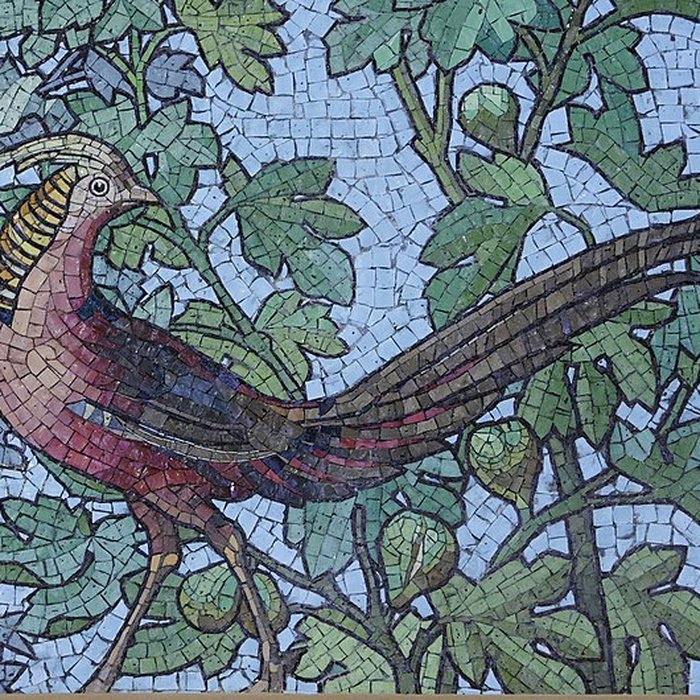
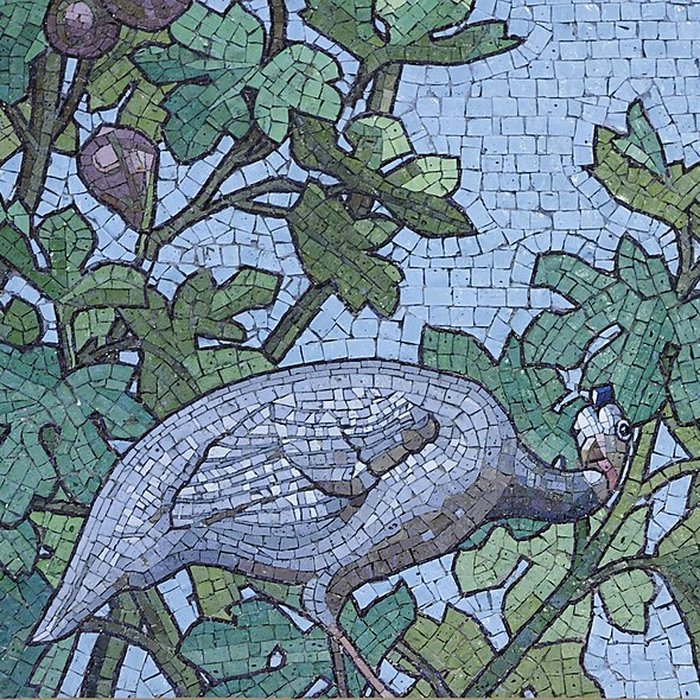
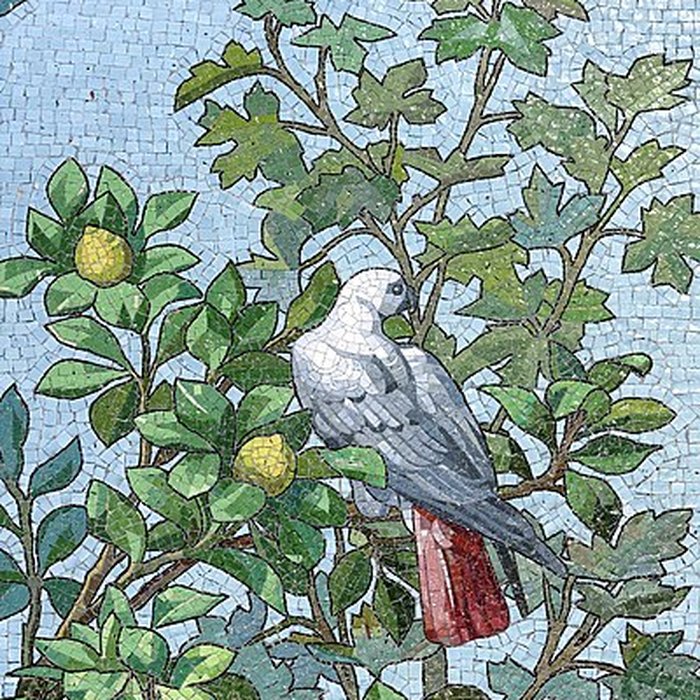
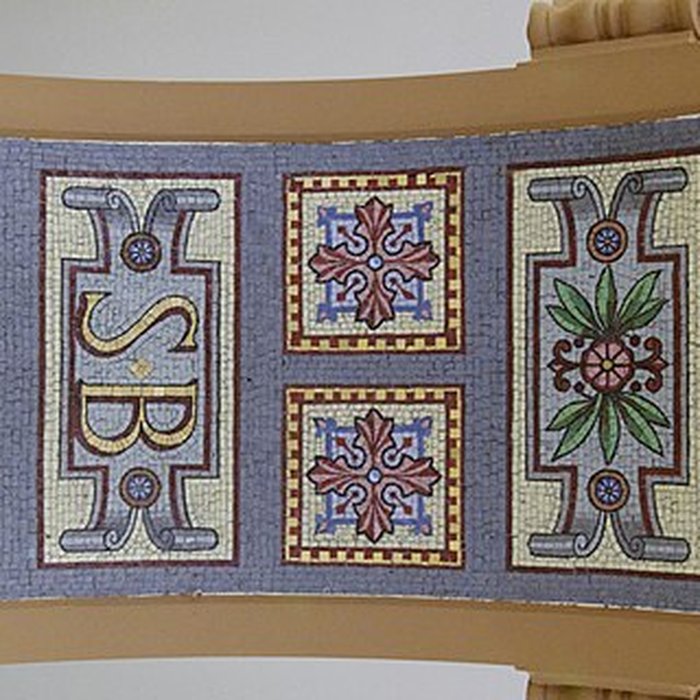
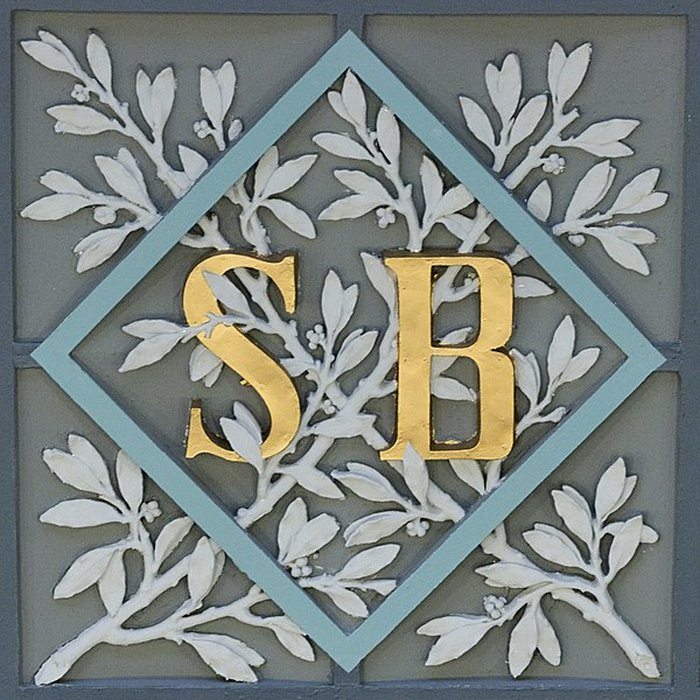
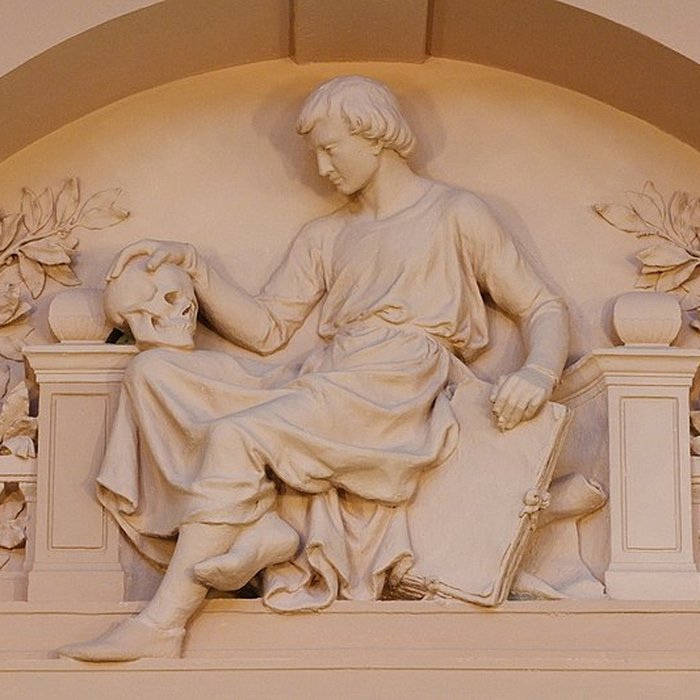
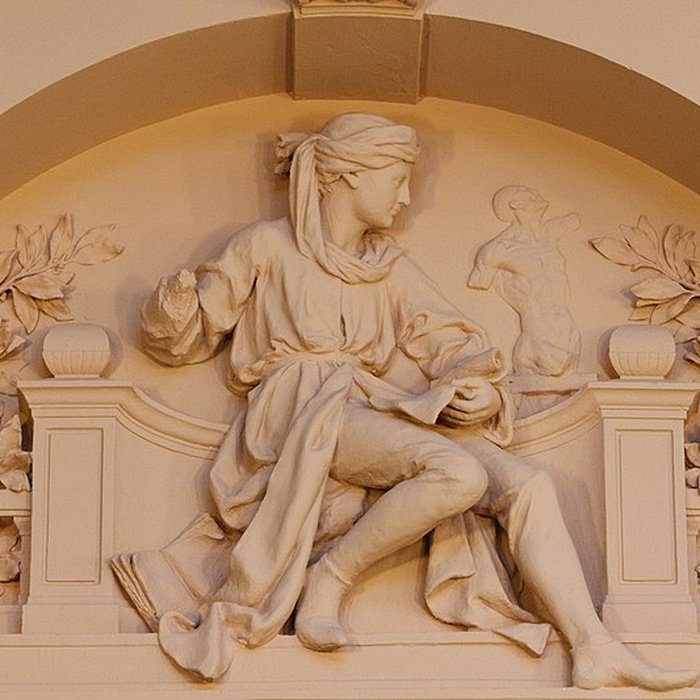
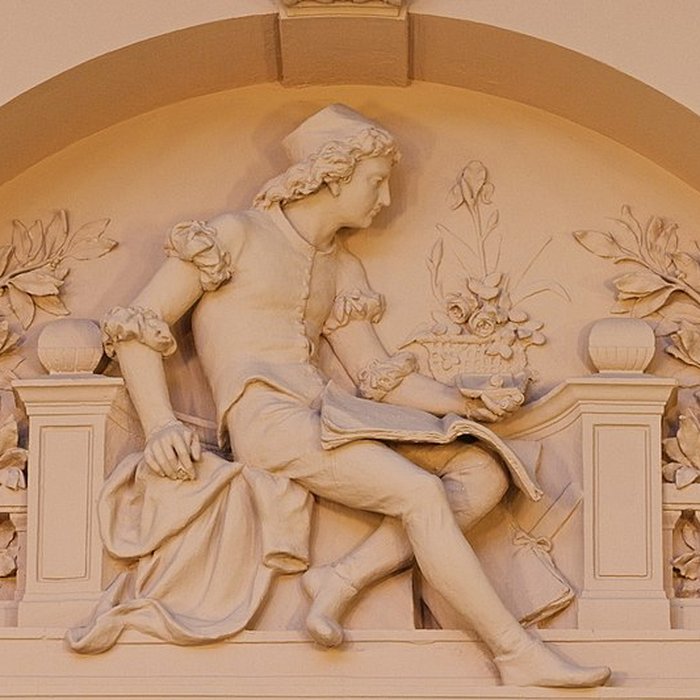
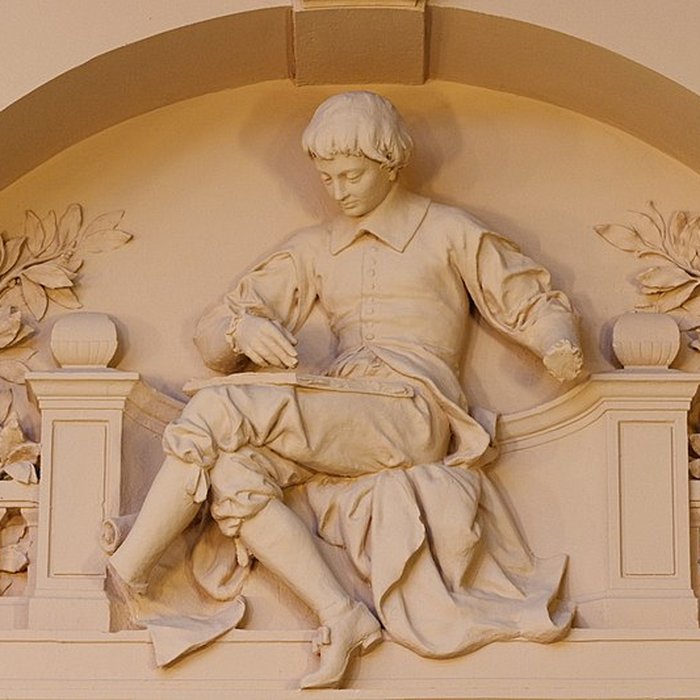
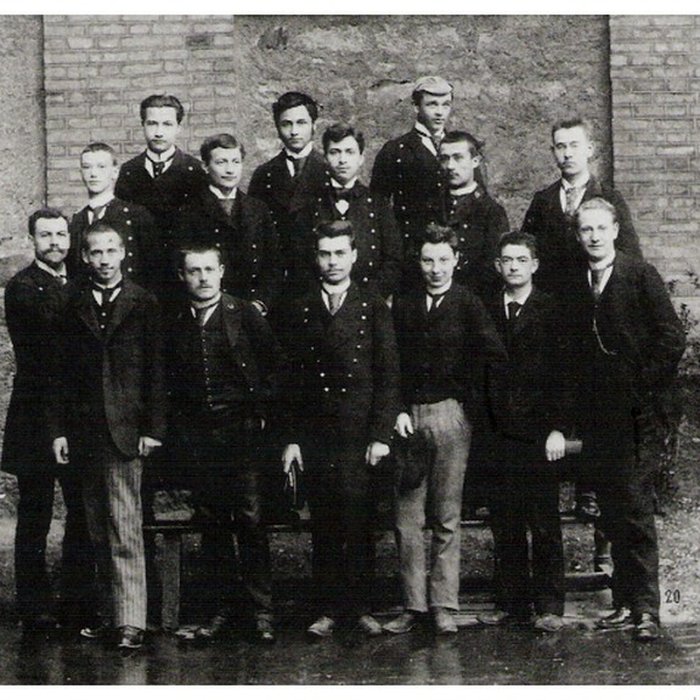
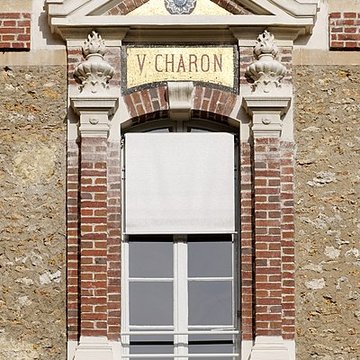
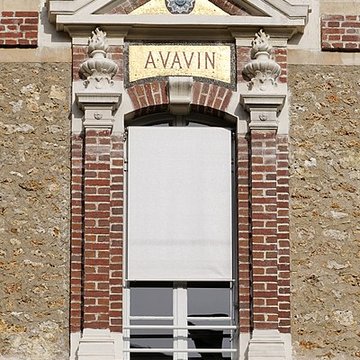
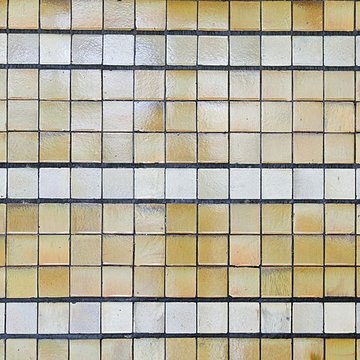
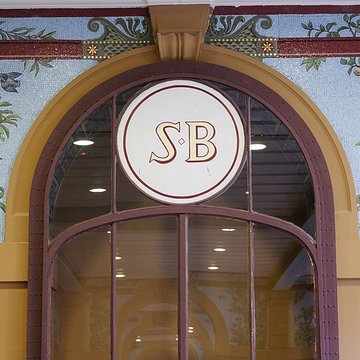
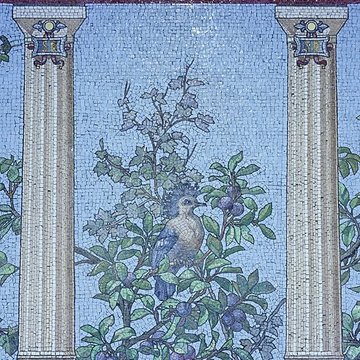
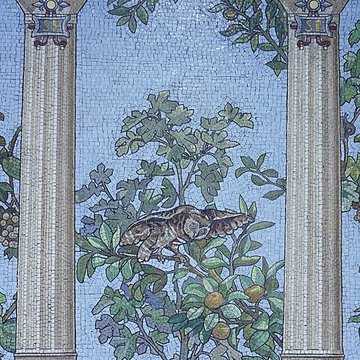
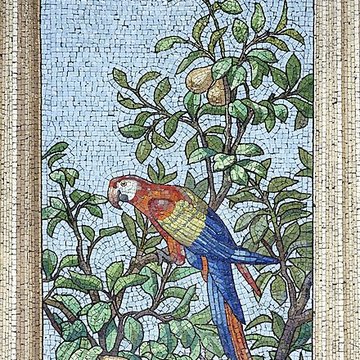
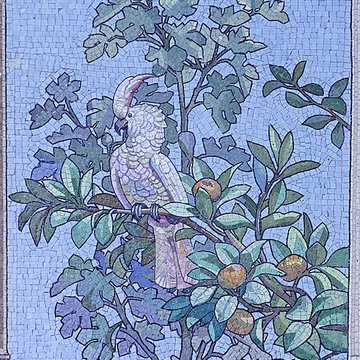
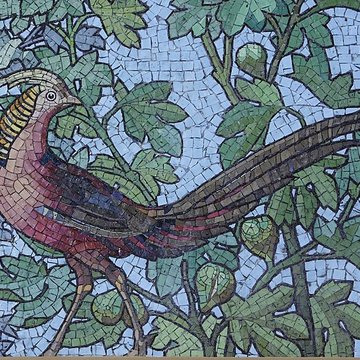
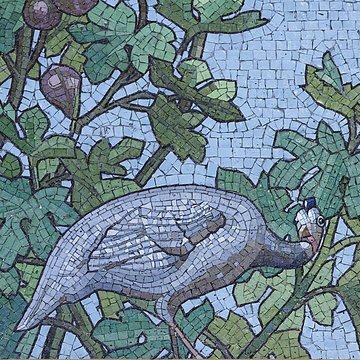
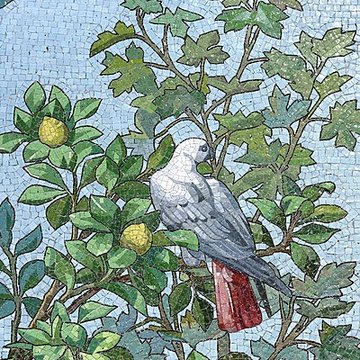
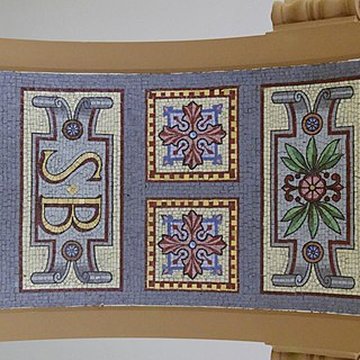
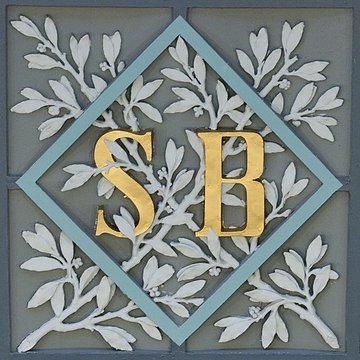
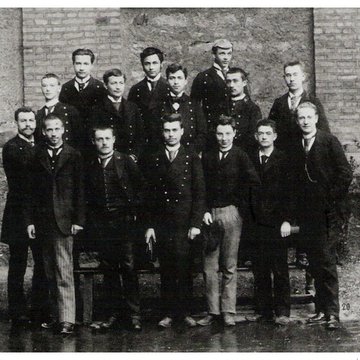
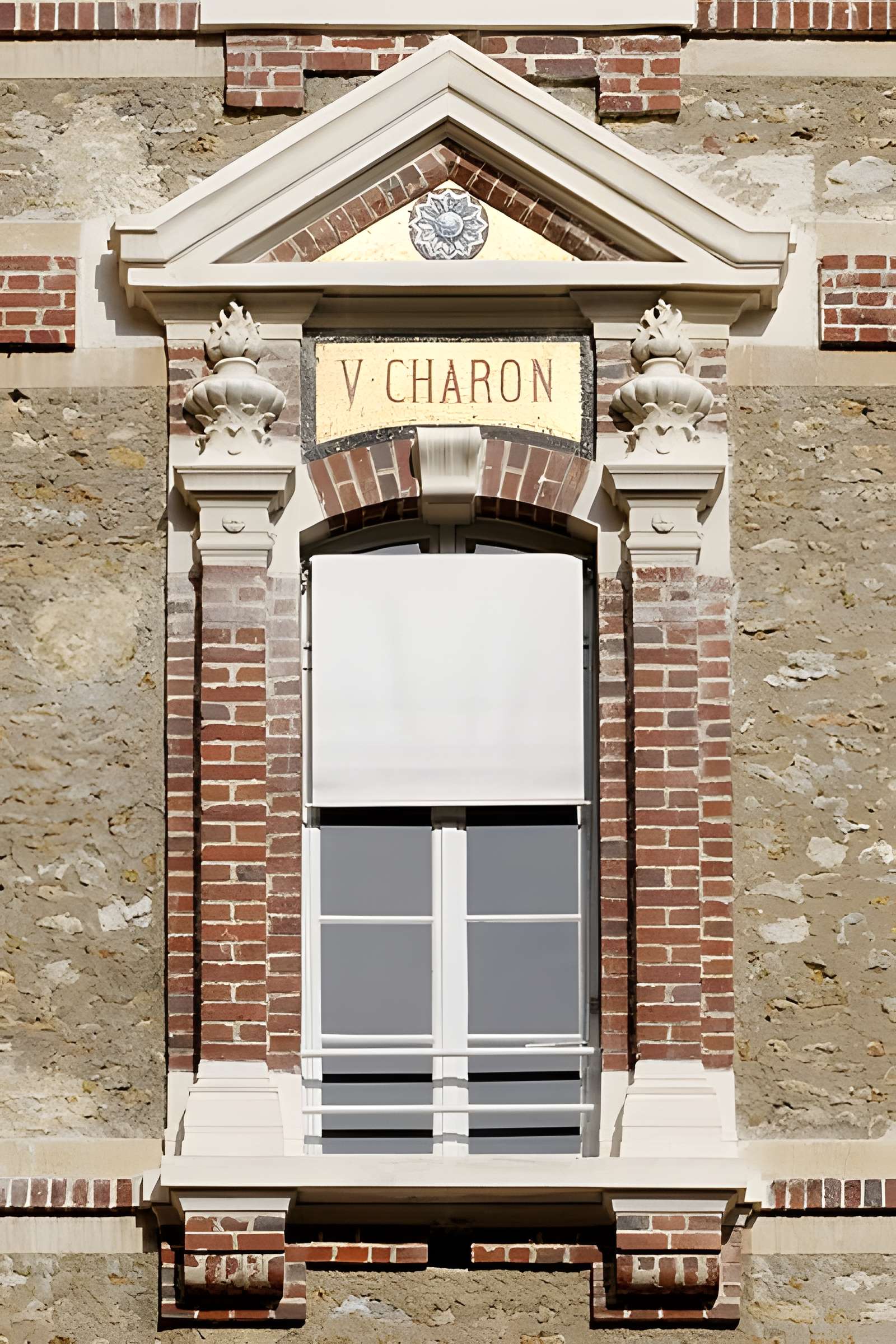
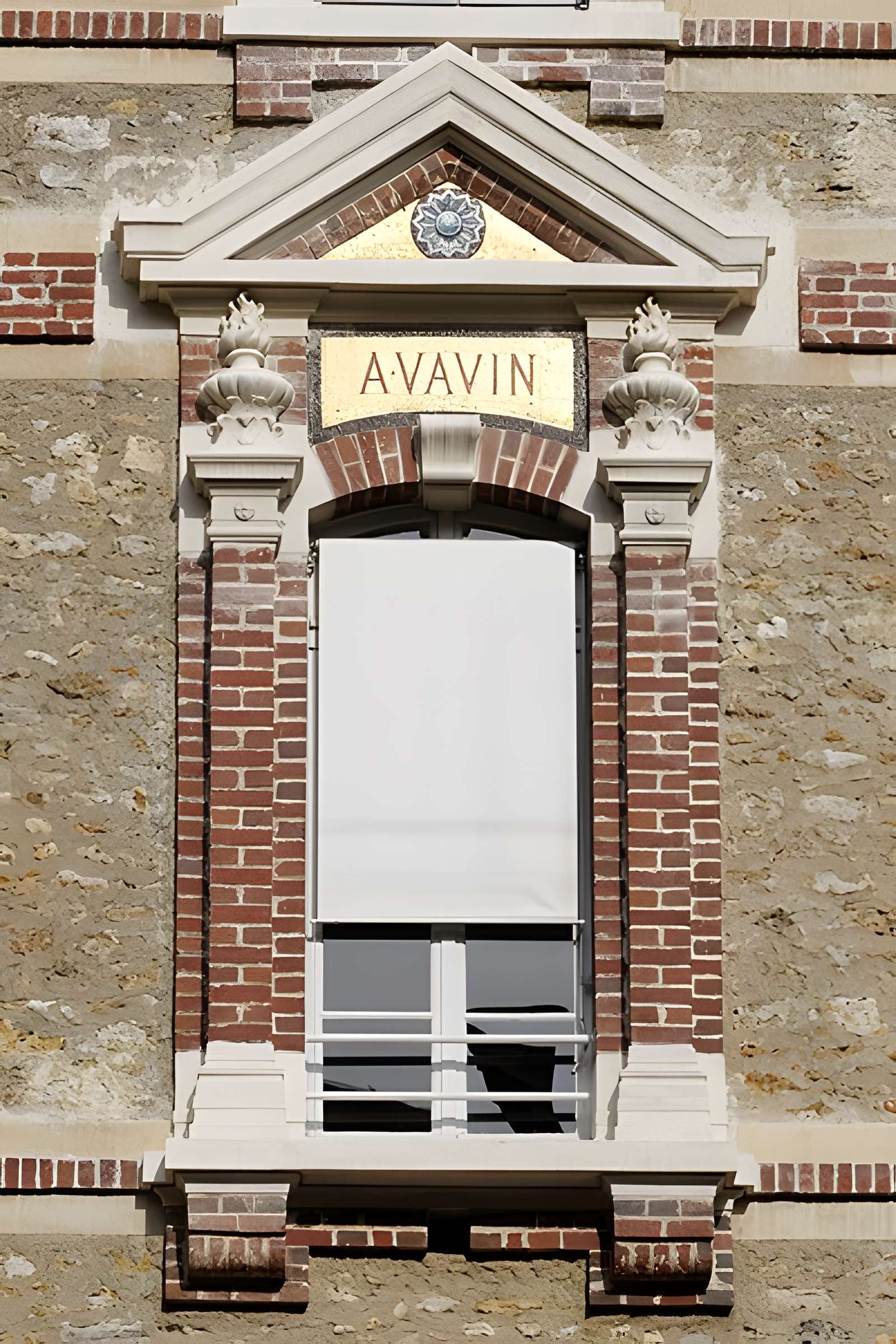
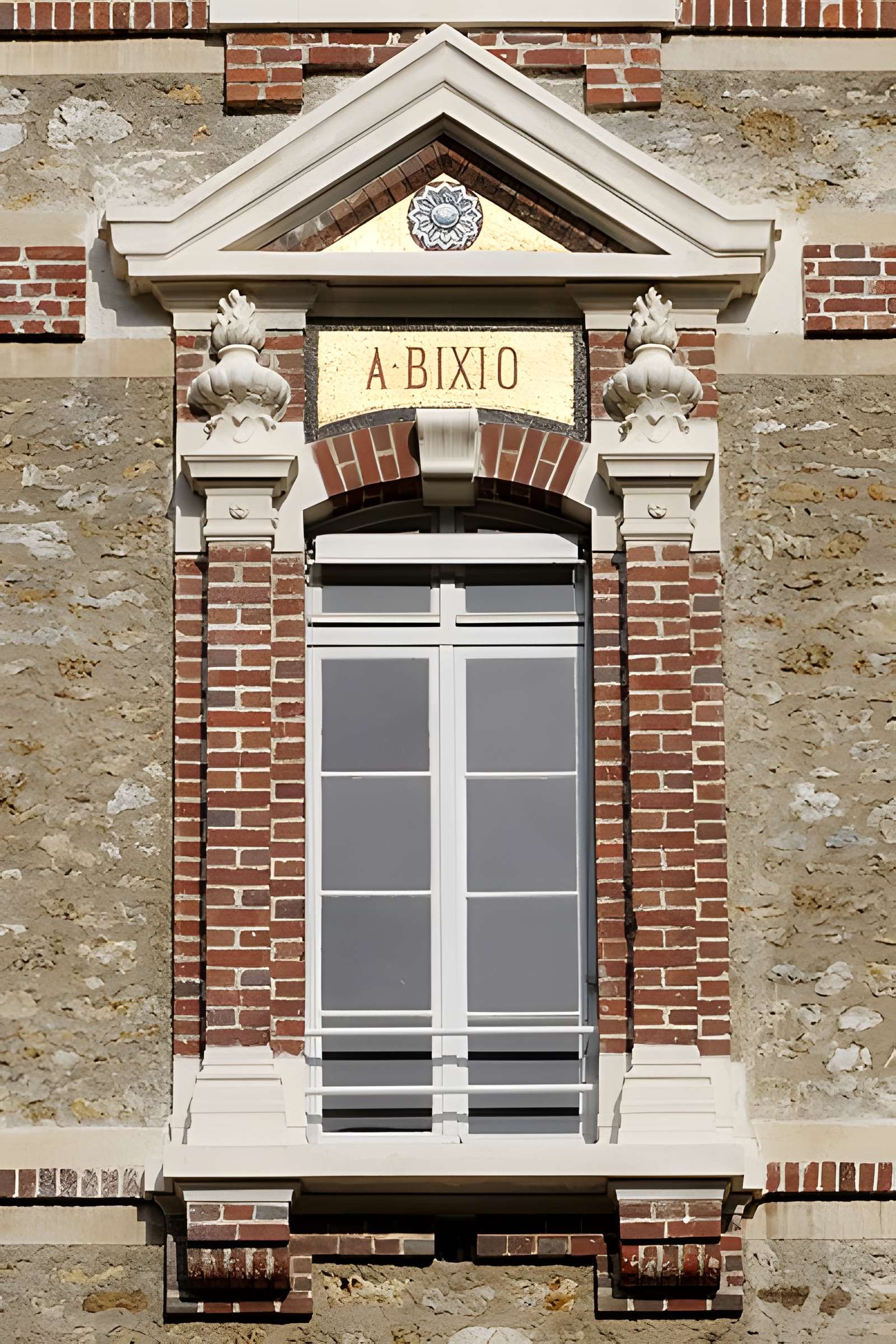
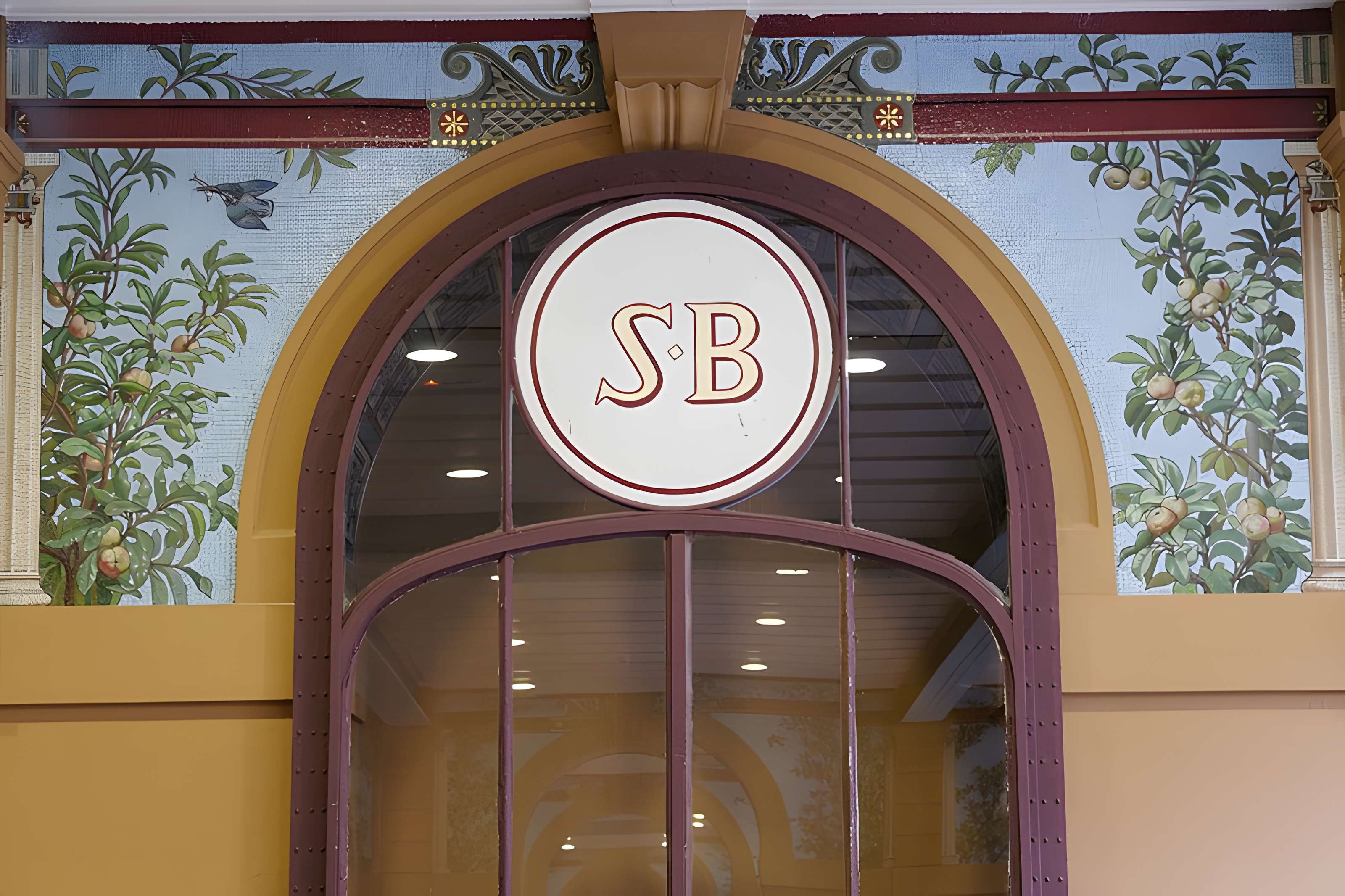
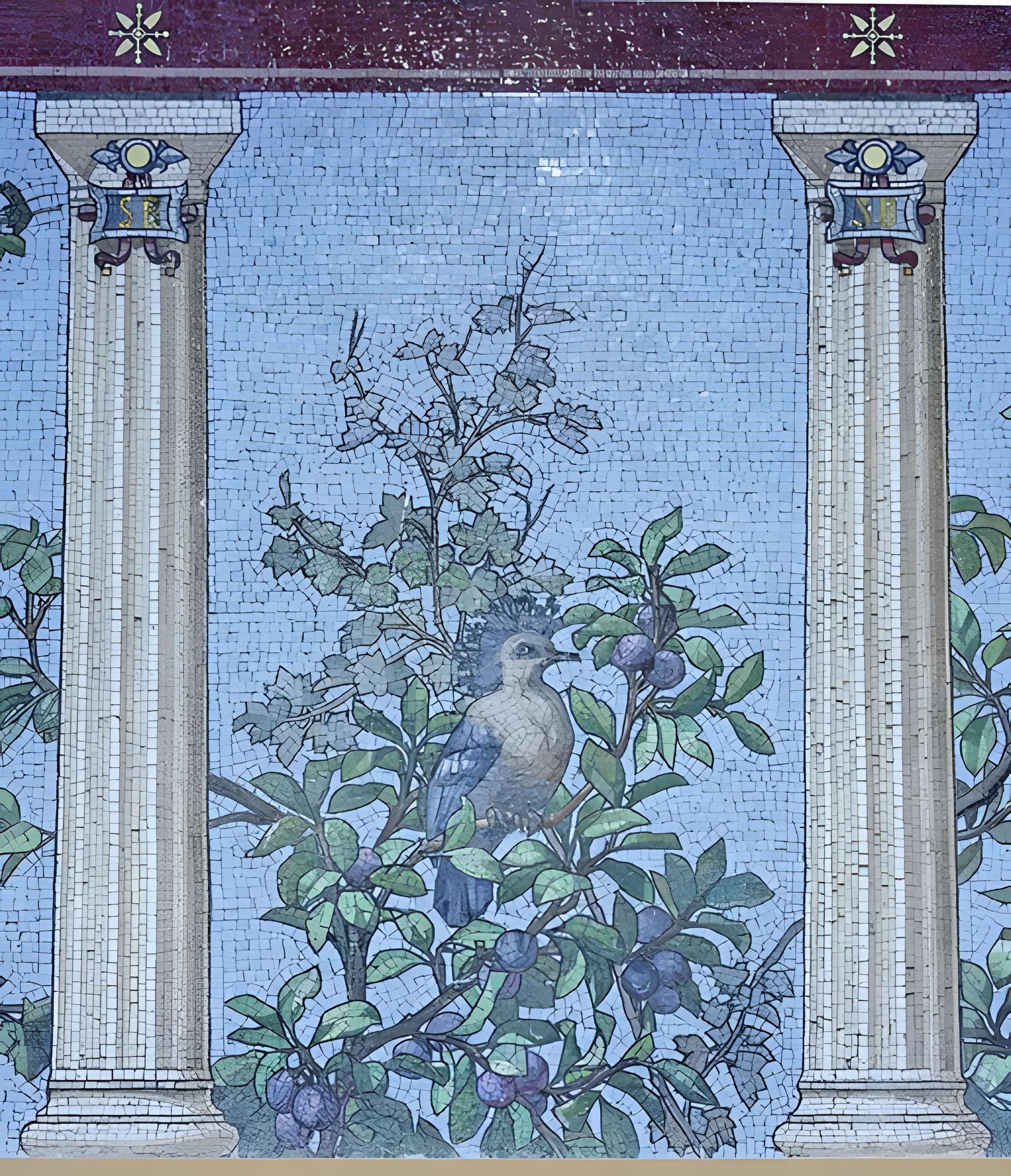
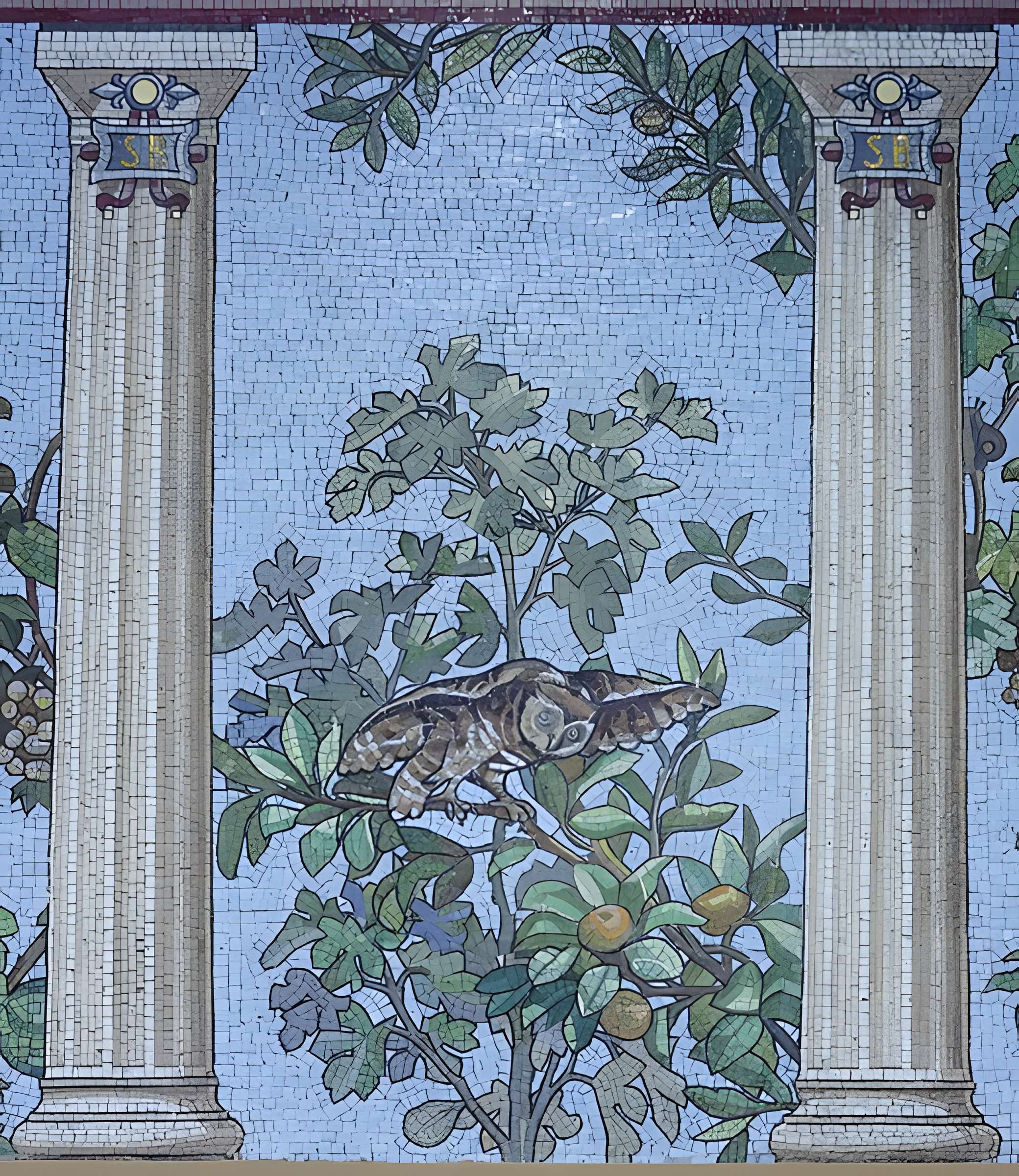
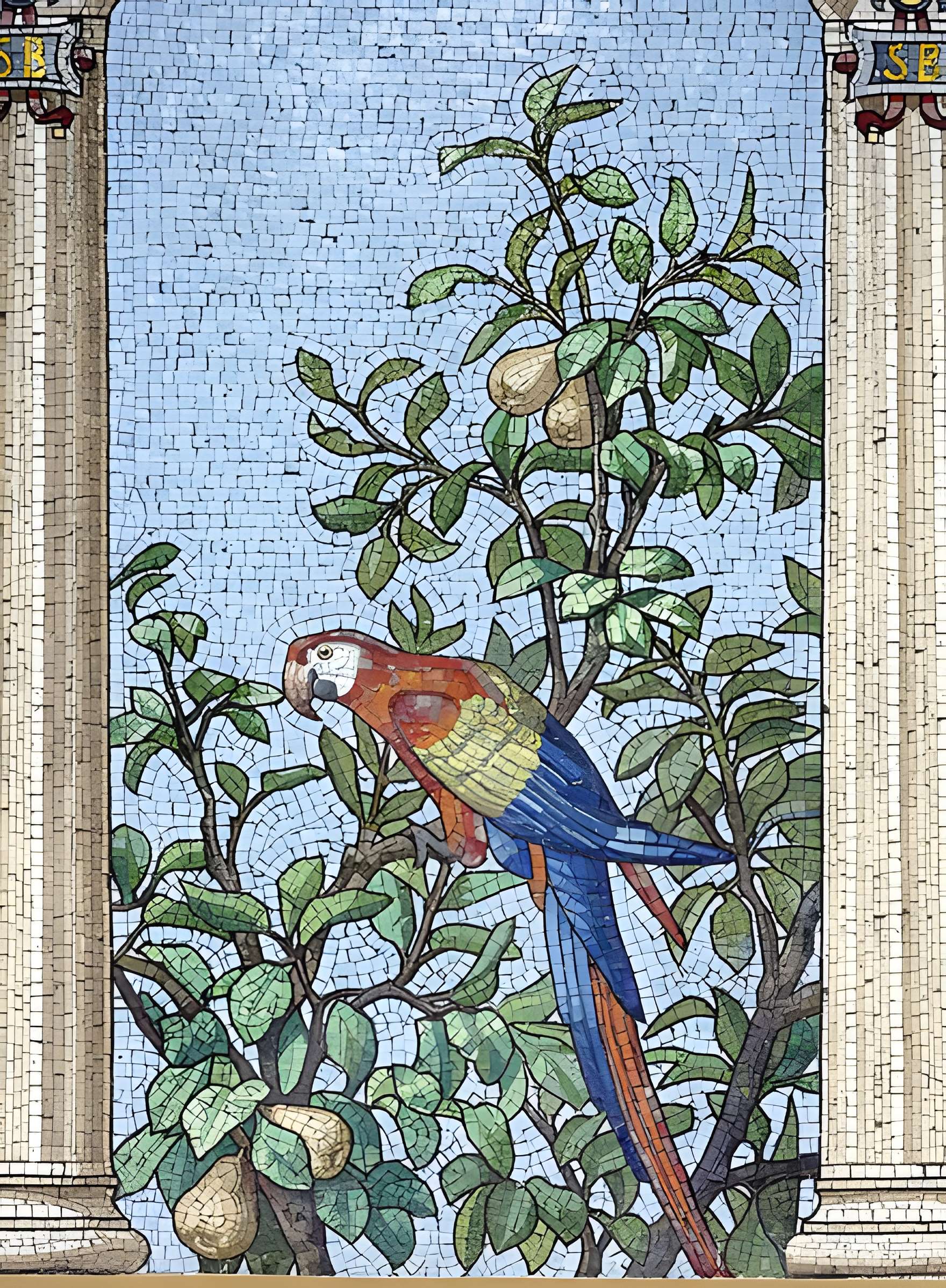
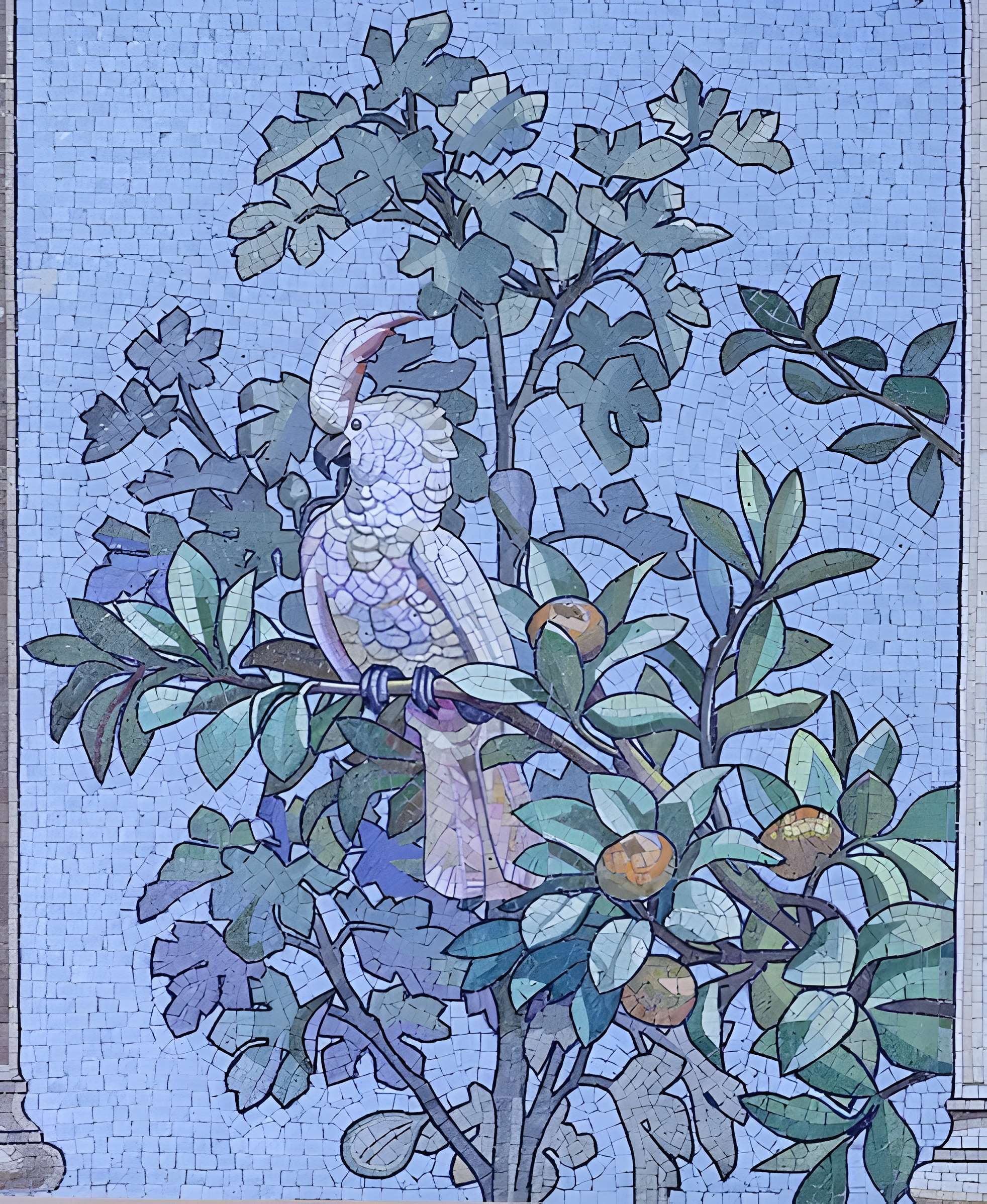
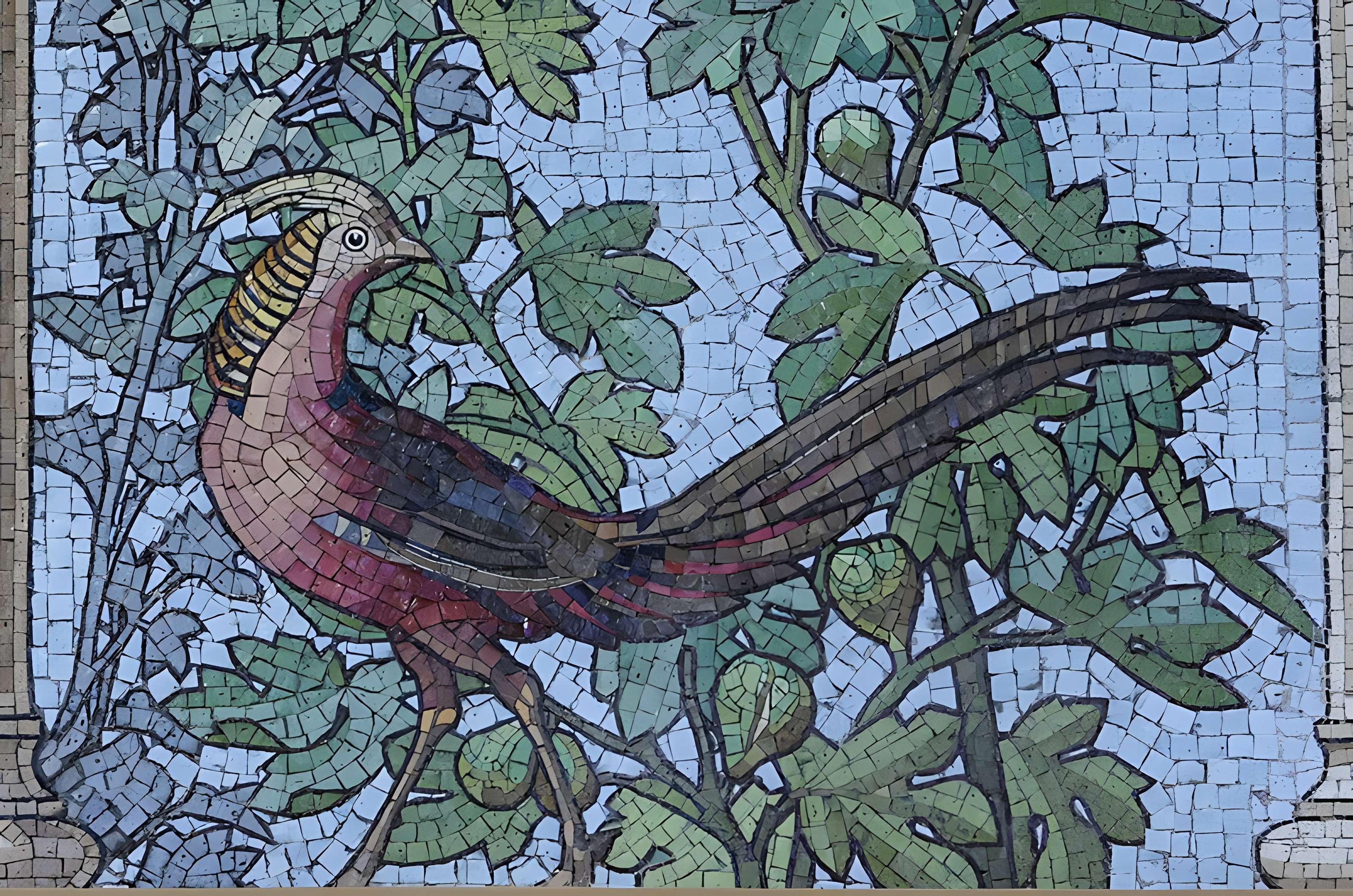
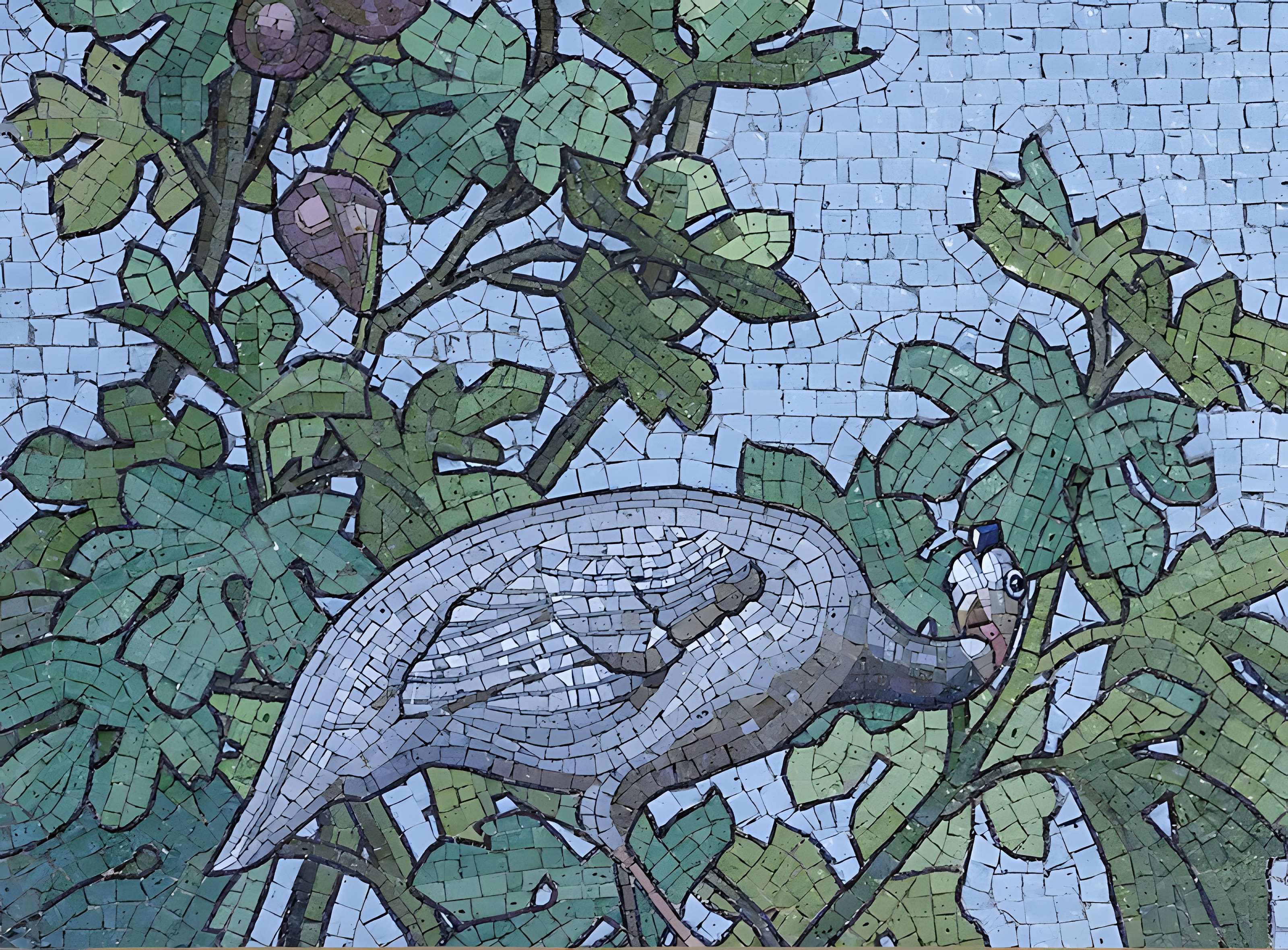
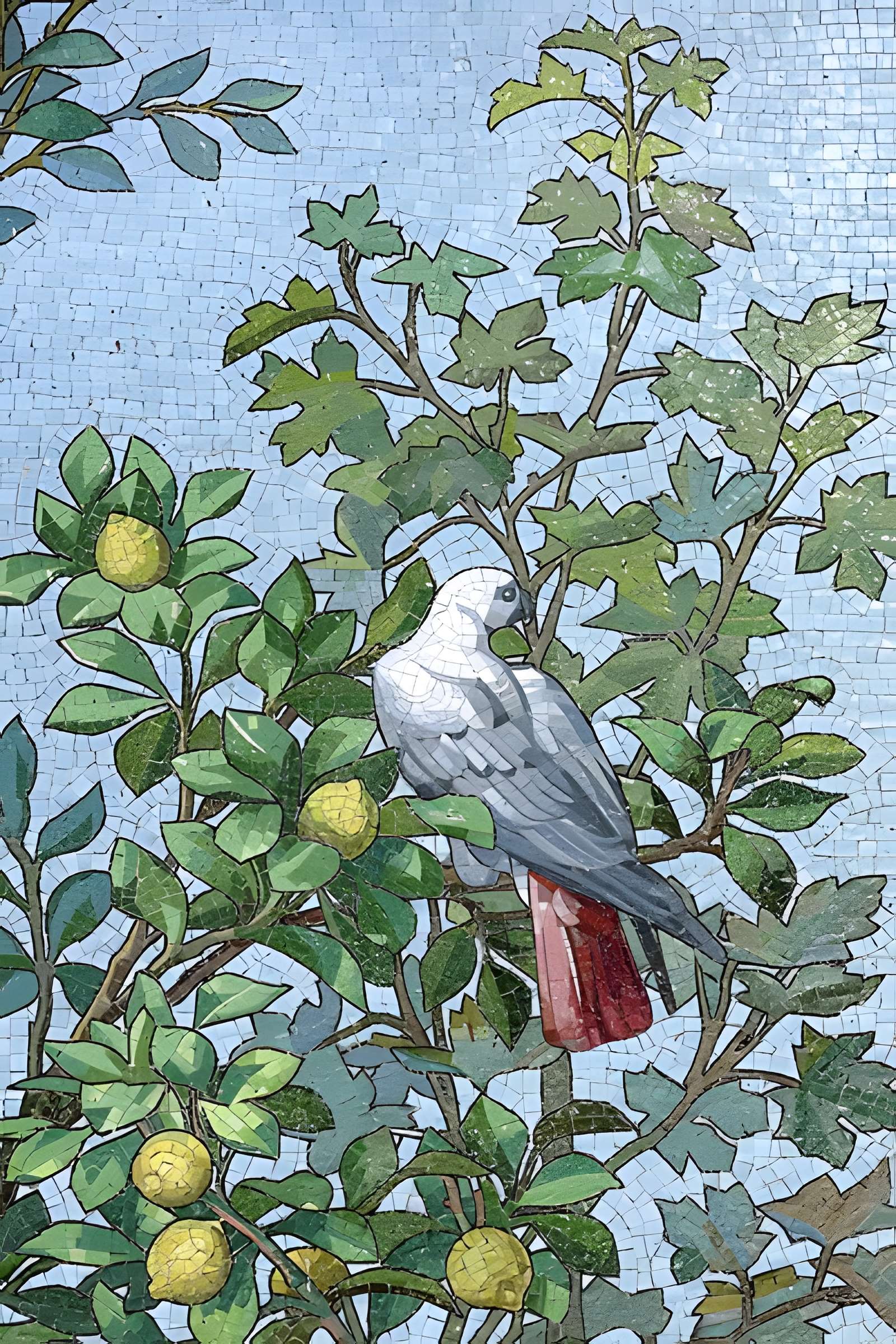
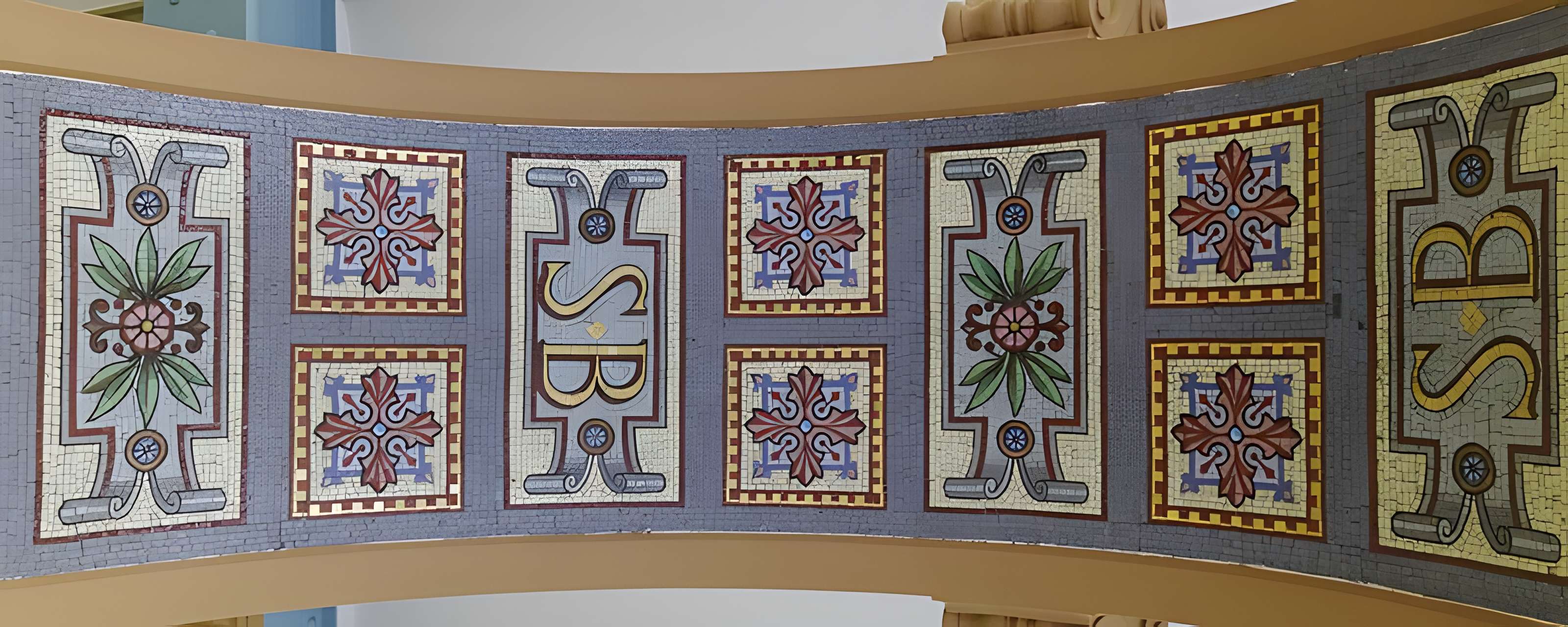
The Collège Sainte-Barbe formed prominent personalities, such as Ignace de Loyola, Gustave Eiffel, or Jean Jaurès, and its association of former students, founded in 1820, is the oldest in France. The current buildings, protected as historical monuments, retain remarkable elements such as the mosaics of Facchina, the refectory, and the amphitheatre of physics, testimony to its past prestige.

External links