First laughs under Philippe Auguste 1200 (≈ 1200)
Cobbled streets with open central channels.
1374
First vaulted sewer
First vaulted sewer 1374 (≈ 1374)
Rue Montmartre, initiative of Hugues Aubriot.
1832
Cholera epidemic
Cholera epidemic 1832 (≈ 1832)
Trigger of major remediation work.
1854-1870
Modernization by Haussmann and Belgrand
Modernization by Haussmann and Belgrand 1854-1870 (≈ 1862)
Creation of the current unitary and visitable network.
1894
Stopped Waste
Stopped Waste 1894 (≈ 1894)
Obligation of all-to-water sewer for buildings.
1930
First treatment plant
First treatment plant 1930 (≈ 1930)
Wastewater treatment plant.
Aujourd'hui
Aujourd'hui
Aujourd'hui Aujourd'hui (≈ 2025)
Position de référence.
Key figures
Eugène Belgrand - Engineer
Designer of the modern network under Haussmann.
Georges-Eugène Haussmann - Prefect of the Seine
Initiator of major sanitation works.
Pierre Emmanuel Bruneseau - Inspector of work
Cartographer of sewers in the 19th century.
Hugues Aubriot - Provost of Paris
Sponsor of the first vaulted sewer (1374).
Philippe Auguste - King of France
Order the paving of the streets with slugs.
Eugène Poubelle - Prefect of the Seine
Instaurator of the sewer (1894).
Origin and history
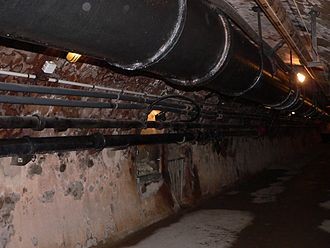
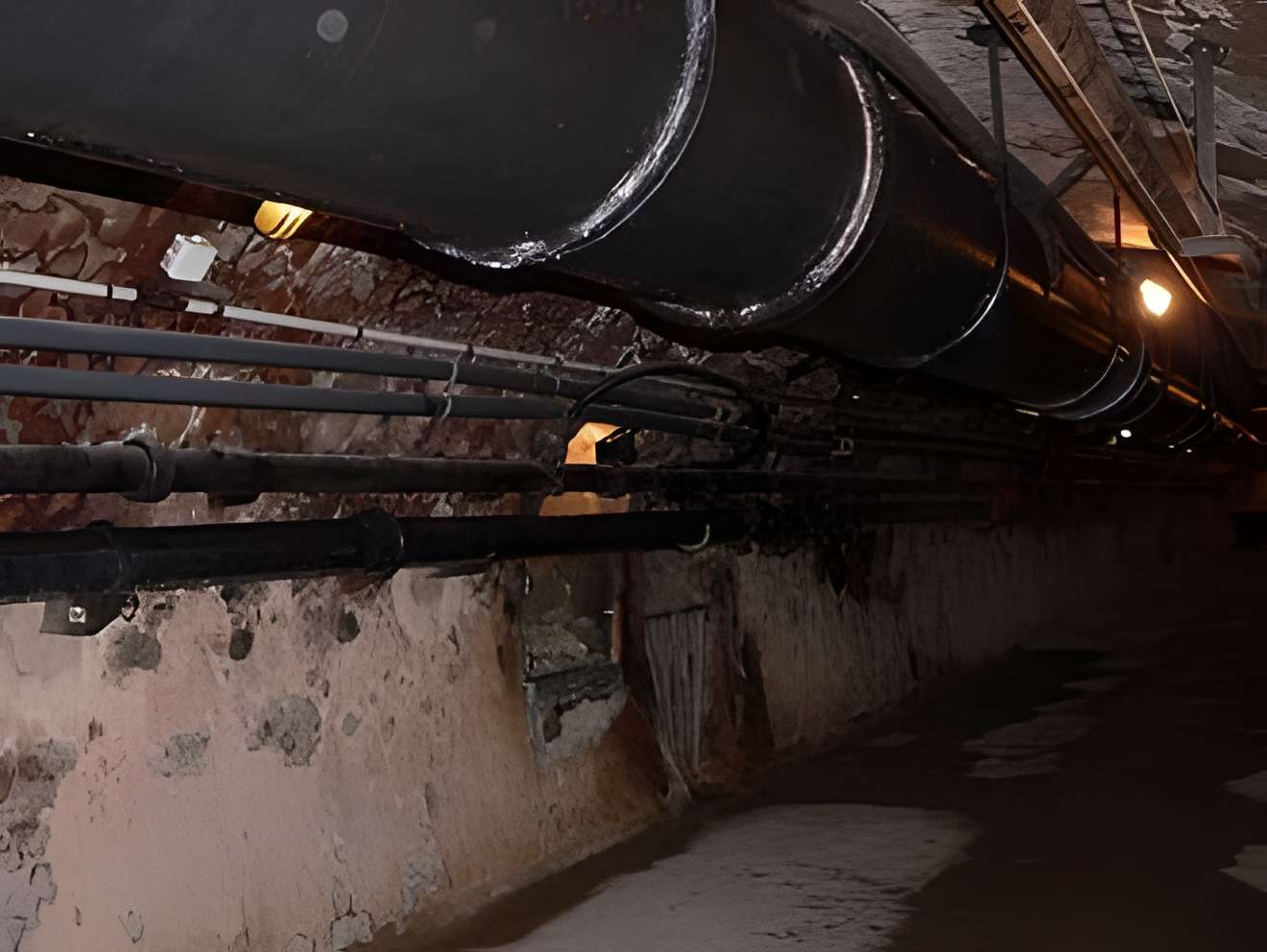
The Paris sewers, about 2,600 kilometres long, form an underground network designed to evacuate runoff and sewage from the capital. Their history dates back to ancient times, with Roman remains discovered under the thermal baths of Cluny, but it was in the Middle Ages that the first open-air sewers appeared, often unsanitary and poorly maintained. These ducts, initially central drains in the streets paved by Philippe Auguste, gradually evolve towards vaulted systems, as the sewer of the rue Montmartre built in 1374 under Hugues Aubriot.
In the 17th and 18th centuries, the network spreads and partially covers, but remains inefficient due to lack of slope and mud accumulation. Sewers, often obstructed, emit nausea and contribute to epidemics, such as cholera in 1832. This health crisis prompted the city to modernize the system: between 1832 and 1853, the network grew from 24 to 143 kilometres, thanks to the work of Pierre Emmanuel Bruneseau, cartographer of sewers, and the adoption of ovoid sections in mill, more economical and easy to maintain.
The major transformation took place under the Second Empire, when prefect Haussmann and engineer Eugène Belgrand designed a modern and interconnected network. All neighbourhoods are equipped with double-street sewers, and five large collectors replace the old large belt sewer. The system becomes unitary (mixed wastewater and rainwater), gravitary (without pumps) and fully visitable, an innovation for the time. The Bièvre, once an open-pit sewer, is diverted to underground collectors, and the water is now treated downstream of Paris, in Clichy and then in Achères, where sewage plants were built from 1930.
Today, the sewers in Paris are managed by the City of Paris and the SIAAP (Interdepartmental Union for Sanitation). The system, maintained by sewerers, includes prioritized collectors, settling ponds and tunnels-reservoirs to manage stormwater. A museum, located near the Alma Bridge, allows the public to discover this technical heritage, while recent innovations, such as the recovery of calories for district heating, illustrate its adaptation to contemporary issues.
Culturally, sewers inspired literary works, such as Victor Hugo's Les Misérables, where Jean Valjean lost in 1832, or cinematographic works, such as La Grande Vadrouille (1966). They are home to a limited fauna (rats, blattes) and remain a symbol of the hygienist modernisation of Paris, while posing environmental challenges, such as the management of pollutants or the upgrading of sewage sludge.
Propose an amendment
Future
In Paris, sewers are one of the capital's tourist attractions. They can be visited: an access is open to the public on the left bank of the Seine, at the foot of the Alma bridge. This "s sewer museum" welcomes nearly 95,000 visitors a year. The route gives information on the history and functioning of the Parisian sewer system.